Protein Alternatives Market Overview and Introduction
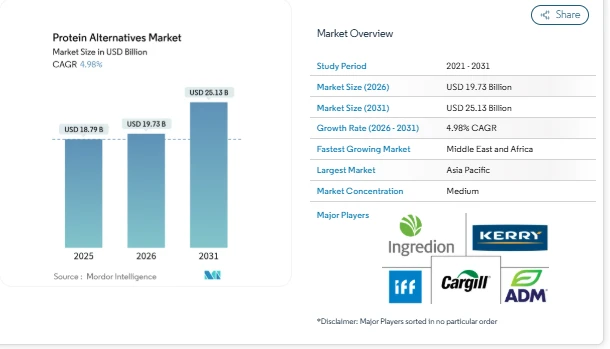
The Protein Alternatives Market reached USD 19.73 billion in 2026 and is projected to grow to USD 25.13 billion by 2031, expanding at a CAGR of 4.98% during the forecast period. The steady rise in demand reflects changing food preferences, increasing interest in sustainable protein sources, and ongoing developments in fermentation-based production.
The Protein Alternatives Industry includes plant proteins, microbial proteins, and insect proteins used across food and beverage, dietary supplements, animal feed, and personal care applications. Consumers are seeking protein sources that align with dietary preferences such as vegan, lactose-free, and allergen-aware choices. At the same time, manufacturers are working to scale production from pilot facilities to commercial operations to improve cost efficiency and product consistency.
Key Protein Alternatives Market Trends Shaping Industry Expansion
Growth in Precision-Fermented Proteins
One of the most important Protein Alternatives Market Trends is the rise of precision fermentation. This method uses microorganisms to produce animal-identical proteins such as whey, casein, and egg proteins without relying on livestock. These proteins offer similar taste, texture, and nutritional profiles to conventional animal products while being lactose-free.
Rising Adoption in Quick-Service Restaurants
Quick-service restaurants have played a major role in introducing plant-based options to mainstream consumers. Many chains now offer plant-based burgers, chicken alternatives, and dairy-free menu items. Although not every product launch has achieved long-term success, the restaurant channel remains a testing ground for consumer acceptance.
Increasing Demand for Sustainable Food Sources
Sustainability remains central to the Protein Alternatives Market Forecast. Consumers are paying closer attention to environmental impact, including greenhouse gas emissions, water use, and land requirements. Alternative proteins are often positioned as lower-impact options compared to conventional animal-based products.
Lactose Intolerance and Allergen Awareness
A growing number of consumers experience lactose intolerance or seek allergen-friendly food choices. Precision-fermented dairy proteins and plant-based alternatives provide options that maintain nutritional quality without lactose content. Manufacturers are also strengthening allergen monitoring and labeling practices to expand consumer confidence.
Supply Chain and Regulatory Considerations
Despite positive growth indicators, the Protein Alternatives Industry faces challenges. Climate-related fluctuations have affected pulse crop yields, impacting the supply of peas and fava beans used in plant-protein isolates. Manufacturers are responding by diversifying sourcing strategies and exploring microbial protein production.
Insect protein adoption remains limited in certain markets due to regulatory complexity and consumer perception. Authorization processes and labeling requirements continue to influence the pace of expansion in this segment.
Protein Alternatives Market Segmentation Analysis
By Source
-
Plant Proteins
-
Soy protein
-
Wheat protein
-
Pea protein
-
Rice protein
-
Hemp protein
-
Other plant sources
-
Microbial Proteins
-
Mycoprotein
-
Algal protein
-
Insect Proteins
-
Cricket protein
-
Black soldier fly larvae
-
Other insect sources
By Form
-
Protein isolates
-
Protein concentrates
-
Textured proteins and TVP
-
Hydrolysates and peptides
By Production Technology
-
Dry and wet fractionation
-
Extrusion and texturization
-
Precision fermentation
-
Cellular agriculture
By Application
-
Food and beverage
-
Plant-based meat analogues
-
Dairy and dairy alternatives
-
Bakery and confectionery
-
Beverages
-
Other packaged foods
-
Dietary supplements and sports nutrition
-
Animal feed and pet food
-
Personal care and cosmetics
Key Players in the Protein Alternatives Market
-
Archer Daniels Midland Company (ADM)
-
Cargill Inc.
-
International Flavors & Fragrances Inc. (IFF)
-
Kerry Group plc
-
Ingredion Inc
Conclusion
The Protein Alternatives Market is steadily gaining wider acceptance as consumers look for plant-based, dairy-free, and sustainable protein options. Expanding use across food and beverage, dietary supplements, and other applications reflects the growing maturity of the Protein Alternatives Industry. Improved taste, better texture, and broader retail availability are helping alternative proteins move beyond niche segments into everyday consumption.
Looking ahead, the Protein Alternatives Market Growth will continue to be supported by sustainability concerns, lactose intolerance awareness, and ongoing product development. As companies strengthen supply chains and scale production technologies, the Protein Alternatives Market Share is expected to expand further, reinforcing a stable and positive Protein Alternatives Market Forecast.