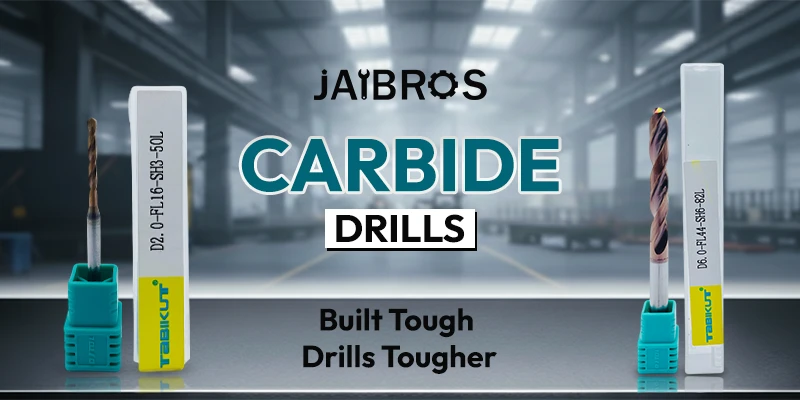
Discover how carbide drill geometry, including point angle, helix design, and flute structure, affects cutting performance, tool life, and machining efficiency.
How Carbide Drill Geometry Impacts Cutting Speed & Tool Life
In modern machining, tool geometry plays a critical role in determining accuracy, efficiency, and tool life. Even small design variations can significantly influence chip evacuation, cutting forces, heat generation, and surface finish. In precision drilling, the geometry of a carbide drill directly affects overall cutting performance. From point angle to flute design, every structural element is engineered to optimise results across different materials and machining conditions.
Understanding how drill geometry works allows manufacturers to select the right tool for improved productivity and reduced operational costs.
Why Drill Geometry Matters in Machining
Drill geometry refers to the structural design features of a cutting tool. These include:
-
Point angle
-
Helix angle
-
Flute design
-
Web thickness
-
Margin width
-
Coating and edge preparation
Each of these elements influences how the tool enters the material, removes chips, and manages heat. A well-designed carbide drill reduces vibration, improves hole accuracy, and extends tool life.
1. Point Angle and Its Impact on Cutting
The point angle is the angle formed at the tip of the drill. It determines how aggressively the tool penetrates the material.
-
118° Point Angle – Suitable for softer materials like aluminium and mild steel.
-
135° Point Angle – Better for harder materials and reduces walking.
-
140°+ Point Angle – Used for high-strength alloys and tough applications.
A sharper point angle reduces thrust force but may wear faster. A wider angle distributes cutting forces more evenly, increasing durability. In high-performance machining, selecting the right point angle in a carbide drill ensures consistent penetration and reduced tool stress.
2. Helix Angle and Chip Evacuation
The helix angle refers to the spiral angle of the flutes. It plays a major role in chip evacuation and cutting smoothness.
-
Low Helix (12°–20°): Ideal for hard and brittle materials.
-
Medium Helix (25°–35°): General-purpose drilling.
-
High Helix (35°–45°): Best for soft materials and deep-hole drilling.
Efficient chip removal prevents clogging and overheating. Poor chip evacuation can damage both the tool and the workpiece. This is why many carbide drills are designed with optimised helix angles to ensure smooth material flow during high-speed operations.
3. Flute Design and Surface Finish
Flutes are the grooves that allow chips to escape. Their shape, depth, and polish affect cutting stability.
A well-polished flute reduces friction and heat buildup. Advanced flute geometry improves chip control, especially in deep-hole drilling. In solid carbide drill tools, flute design is carefully engineered to maintain rigidity while maximising chip evacuation.
Improper flute geometry may cause chip packing, leading to tool breakage and poor hole quality.
4. Web Thickness and Tool Strength
The web is the core thickness at the centre of the drill. A thicker web increases strength but also increases thrust force. A thinner web reduces cutting resistance but may compromise durability.
Modern carbide drill designs balance web thickness to achieve both strength and cutting efficiency. In high-precision applications, optimised web geometry minimises deflection and enhances hole straightness.
5. Margin Width and Hole Accuracy
Margins are the narrow lands on the outer diameter of the drill. They guide the tool inside the hole and maintain dimensional accuracy.
Wider margins improve stability but increase friction. Narrow margins reduce contact but may affect alignment. The right-margin design ensures smoother hole walls and an improved surface finish.
A well-designed carbide drill bit can significantly enhance tolerance control when margins are optimised correctly.
6. Coatings and Edge Preparation
While geometry forms the structure, coatings enhance performance. Common coatings include:
-
TiN (Titanium Nitride)
-
TiAlN (Titanium Aluminium Nitride)
-
AlTiN (Aluminium Titanium Nitride)
These coatings reduce friction and improve heat resistance. Edge preparation also plays a vital role. A micro-honed cutting edge increases durability and reduces chipping.
Manufacturers often evaluate carbide drill bits' price based on coating quality, geometry precision, and expected tool life.
Solid Carbide vs Other Drill Types
A solid carbide drill provides superior rigidity compared to HSS or insert-based tools. Its monolithic construction reduces vibration and improves accuracy.
When comparing performance across applications, a carbide drill consistently delivers higher cutting speeds and better wear resistance. However, tool selection must consider material type, machine capability, and budget.
For workshops, purchasing a carbide drill bit set, understanding geometry helps in selecting the right configuration for different materials.
Geometry and Material Compatibility
Different materials demand specific geometric features:
-
Aluminium: High helix, sharp cutting edge
-
Stainless Steel: Medium helix, stronger web
-
Cast Iron: Lower helix, durable edge
-
Hardened Steel: Wider point angle, heat-resistant coating
Matching geometry with material ensures maximum productivity and reduced downtime.
Impact on Cutting Speed and Tool Life
Geometry directly affects:
-
Cutting speed capability
-
Feed rate stability
-
Heat generation
-
Tool wear pattern
Improper geometry can lead to:
-
Chipping
-
Excessive vibration
-
Oversized holes
-
Premature tool failure
On the other hand, optimised carbide drills improve chip control, reduce energy consumption, and enhance machining consistency.
Productivity and Cost Efficiency
While upfront tooling costs matter, long-term productivity is more important. Investing in precision geometry improves:
-
Tool life
-
Machining speed
-
Surface finish quality
-
Operational reliability
Although some buyers compare carbide drill bits price before purchasing, the overall return on investment depends largely on geometry performance.
Future Trends in Drill Geometry
Advancements in CAD design and material science are leading to innovative geometries tailored for specific industries such as aerospace and automotive manufacturing.
Modern carbide drill tools now feature variable helix designs and multi-facet point geometries that improve stability and reduce harmonic vibration. These developments continue to push machining efficiency forward.
FAQs
1. Why is drill geometry important in machining?
Drill geometry determines how efficiently the tool cuts, evacuates chips, and handles heat, directly affecting tool life and hole quality.
2. What is the best point angle for hard materials?
A 135° or wider point angle is generally recommended for hard materials as it distributes cutting forces more evenly.
3. How does helix angle affect performance?
The helix angle influences chip evacuation and cutting smoothness. Higher helix angles are better for soft materials.
4. Are solid carbide drills better than HSS drills?
Yes, solid carbide drills offer higher rigidity, better heat resistance, and improved performance in high-speed machining.
5. How do coatings improve drill performance?
Coatings reduce friction, enhance heat resistance, and extend tool life, especially in demanding machining applications.
Conclusion
Drill geometry plays a decisive role in determining cutting efficiency, hole accuracy, and tool longevity. From point angle and helix design to web thickness and coatings, each structural element contributes to machining performance. Selecting the right carbide drill geometry ensures smoother operations, higher productivity, and reduced tool wear. Manufacturers that understand these design principles can significantly enhance their drilling outcomes and overall production efficiency.
About Jaibros:
Jaibros is a reliable supplier of precision cutting tools engineered for durability and high performance. With a focus on quality and innovation, Jaibros delivers advanced drilling solutions tailored to modern industrial machining needs.