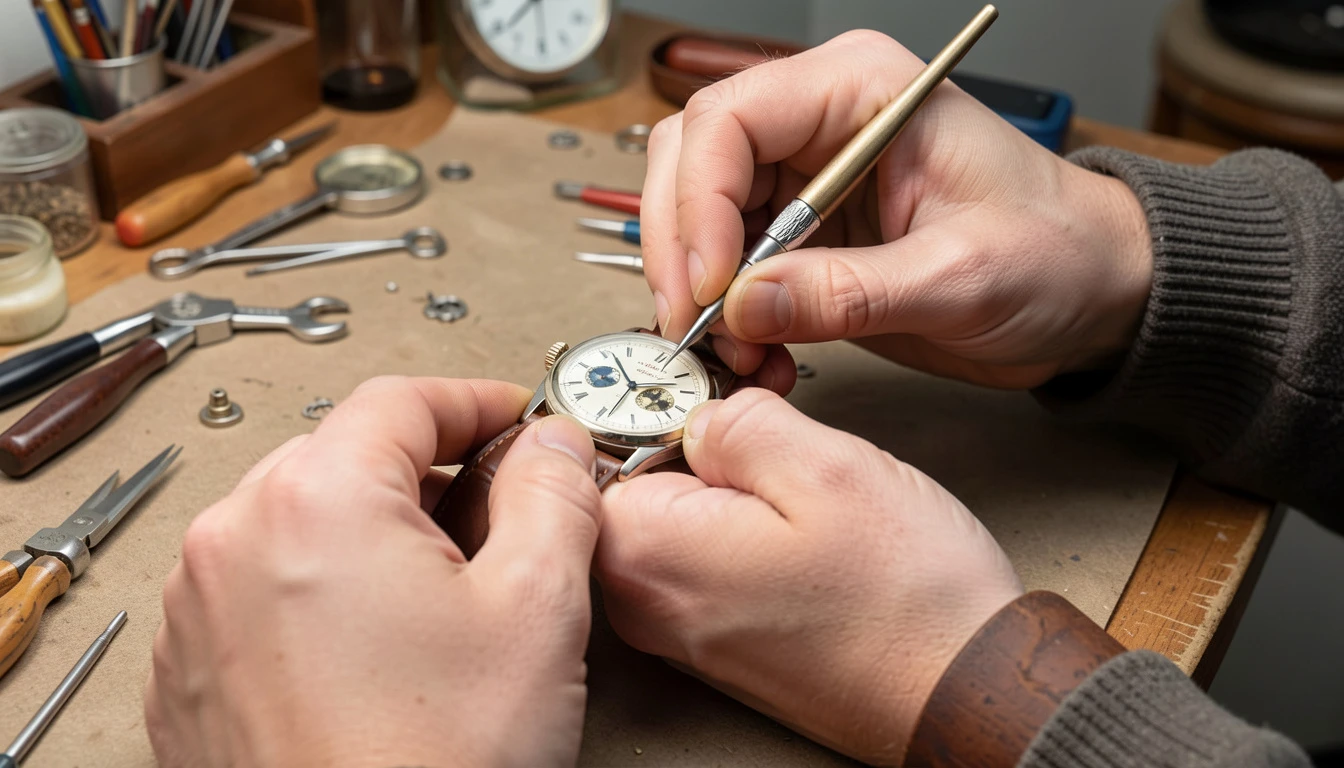
Time is strange, isn’t it? We measure it in seconds and minutes, but we feel it in memories. A graduation. A wedding. The first big promotion. And somewhere in those moments, there’s often a watch quietly ticking on someone’s wrist.
That’s why watch repair isn’t just about fixing gears and springs. It’s about protecting something that has been there through years you can’t get back.
You might think a watch is just a tool. But if that were true, you wouldn’t hesitate when it stops working. You wouldn’t feel that small drop in your chest when the second hand freezes mid-tick. And yet… most people do.
Let’s talk about what really happens when a timepiece needs attention. And why expert watch repair matters more than we usually admit.
Why Professional Watch Repair Actually Matters?
Maybe it’s running slow. Maybe it stopped completely. Or maybe there’s that faint fog under the crystal after you forgot to take it off before swimming. Small things, right?
Not always.
Modern watches, especially mechanical ones, are complex. Inside that case are dozens, sometimes hundreds, of tiny components working together in precise harmony. A slight imbalance, a bit of dried lubricant, or microscopic debris can throw everything off.
A proper watch repair service doesn’t just swap out a battery and call it a day. It begins with diagnosis. Careful inspection. Listening to the movement. Sometimes even just watching how the second hand glides. Or stutters.
And here’s the part people overlook. DIY fixes can cause permanent damage. Opening the case without the right tools can compromise water resistance. Installing the wrong gasket can invite moisture. One rushed attempt can turn a minor issue into a major overhaul.
Professional watch repair protects more than function. It protects longevity. And honestly, it protects value too.
When Your Watch Is Quietly Asking for Help?
Not every issue announces itself loudly.
Sometimes your watch is still ticking… just not quite right. Running a few minutes fast every day. Needing constant adjustment. Or making a faint rattling sound when you move your wrist.
That sound, by the way, is not something you want to ignore.
Here are subtle signs it might be time for expert watch repair:
-
Inconsistent timekeeping
-
Moisture under the crystal
-
Crown feels loose or stiff
-
Date function misaligns
-
Power reserve drains too quickly
And then there’s the obvious one. It just stops.
Quartz watches may simply need a battery. Mechanical watches, though, often require cleaning and lubrication every few years. Oils dry out. Parts wear down. It’s mechanical life. Nothing dramatic. Just physics doing its thing.
Still, waiting too long can mean more wear on internal components. And that leads to more extensive watch repair later.
It’s a bit like ignoring a strange noise in your car. You can. For a while.
The Difference with Luxury Watch Repair
Luxury timepieces are different. Not just because of the price tag.
Brands like Rolex, Omega, Patek Philippe, and Audemars Piguet build movements that are engineered with extreme tolerances. The margins are tight. The craftsmanship is intricate. Servicing them requires specialized tools, brand knowledge, and sometimes access to genuine manufacturer parts.
That’s where luxury watch repair becomes its own category.
A standard technician may handle everyday quartz models just fine. But a high-end mechanical chronograph? That’s another story. The disassembly process alone can take hours. Each component must be cleaned, inspected under magnification, and reassembled with calibrated precision.
And here’s something people don’t talk about enough. Improper servicing can actually reduce the resale value of a luxury watch. Collectors care about authenticity. They care about original parts. They care about who performed the repair.
So yes, luxury watch repair costs more. But it also demands more. More expertise. More patience. More care.
It’s the kind of work you can’t rush.
Inside a Professional Watch Repair Service
What actually happens when you hand over your watch?
First comes evaluation. A technician will inspect the exterior, check the movement, test time accuracy, and assess water resistance. Sometimes they open the case immediately. Other times they observe first. It depends.
Then, if needed, the watch is fully disassembled. Every gear. Every screw. Every spring.
Parts are cleaned in ultrasonic machines designed to remove microscopic debris. Worn components are replaced. Lubricants are carefully applied to specific contact points. Not too much. Not too little.
Reassembly follows. Which sounds simple, but it isn’t.
After that, timing tests begin. Mechanical watches are measured in multiple positions to ensure consistent accuracy. Water resistance is pressure-tested. Functions like chronographs and calendars are recalibrated.
A proper watch repair service doesn’t stop when the watch starts ticking again. It stops when the watch performs as it should.
That difference matters.
Choosing the Right Expert Watch Repair Specialist
So how do you know who to trust?
Certifications are a good start. Experience helps. But sometimes it’s simpler than that. Pay attention to transparency. Does the technician explain the issue clearly? Do they provide a detailed estimate? Do they offer a warranty on the work?
Expert watch repair is about skill, yes. But it’s also about integrity.
Reviews can help, though they’re not everything. Reputation in local communities often says more than glossy marketing.
And ask about parts. Genuine components maintain performance and value. Especially in luxury watch repair situations.
You want someone who treats your timepiece like it matters. Because to you, it does.
Preventative Care So You Need Less Watch Repair
Here’s something people forget. The best watch repair is the one you don’t need urgently.
Mechanical watches typically require servicing every three to five years. Quartz watches need battery replacements before leakage occurs. Water resistance should be tested annually if you expose your watch to moisture frequently.
Store watches in dry environments. Avoid extreme heat. Keep them away from strong magnetic fields. Wipe them down occasionally. It sounds basic. It is basic.
But small habits prevent bigger problems.
And honestly, taking care of your watch feels good. There’s something grounding about winding it in the morning. Hearing that faint click. Feeling the metal warm against your skin.
It’s not the shine. It’s the ritual.
The Emotional Side of Watch Repair
I once heard someone say they kept wearing their father’s watch even after it stopped working. They never fixed it. Just wore it as it was.
I get that. Sort of.
But there’s something powerful about restoring a timepiece. About bringing it back to life. The moment it ticks again after professional watch repair… it feels almost personal.
Maybe that sounds dramatic. Maybe it is.
Still, watches aren’t just objects. They mark time, sure. But they also carry it.
And sometimes restoring them is a quiet way of preserving something we’re not ready to lose.
FAQs
Q. How often should I schedule watch repair service for a mechanical watch?
Most mechanical watches benefit from servicing every three to five years. This prevents lubricant breakdown and internal wear. Waiting longer can increase the cost and complexity of watch repair.
Q. Is luxury watch repair really different from standard repairs?
Yes. Luxury watch repair involves brand-specific tools, genuine parts, and advanced training. High-end timepieces have intricate movements that require specialized expertise to maintain accuracy and value.
Q. How long does a typical watch repair take?
Simple services like battery replacement can be completed quickly. Full mechanical servicing may take several weeks, depending on parts availability and the complexity of the repair. Quality expert watch repair takes time for proper testing and calibration.