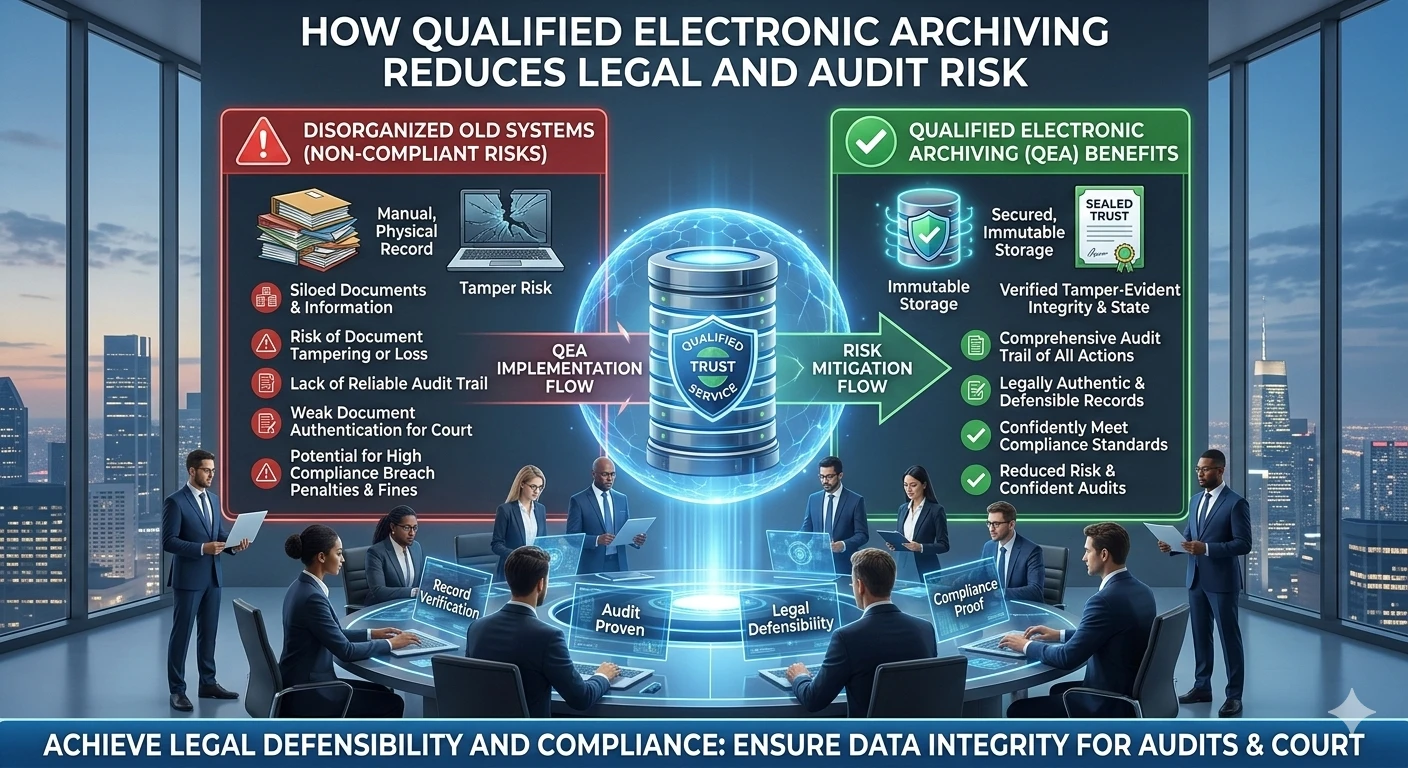
In a regulatory climate where one missing document can trigger fines, lawsuits, or reputational damage, Qualified Electronic Archiving has moved from being a technical upgrade to a legal safeguard. Organizations today face growing scrutiny from regulators, auditors, and courts, and the way digital records are stored can determine whether evidence holds up or falls apart. If compliance, defensibility, and operational stability matter, this topic deserves attention.
According to a 2023 report from IBM, the global average cost of a data breach reached 4.45 million dollars. Beyond cybersecurity threats, regulatory penalties are rising as well. GDPR fines alone have surpassed billions in cumulative penalties across Europe. The message is clear: poor information governance is expensive. Proper archiving is no longer optional.
The Legal Risks of Poor Record Management
Every organization generates contracts, invoices, HR records, financial statements, and communications that may later become legal evidence. The problem is not volume. It is integrity.
If records can be altered, deleted, or stored without traceability, they lose evidentiary value. Courts and regulators increasingly require proof that documents are authentic, untampered, and retained according to strict retention rules. Basic digital storage systems often fail this test.
A survey by Deloitte found that 40 percent of organizations struggle to retrieve accurate records during audits. That delay alone can increase investigation time, legal costs, and internal disruption. In worst case scenarios, missing or unverifiable documents can lead to sanctions or adverse judgments.
This is where Qualified Electronic Archiving changes the equation. Instead of simple file storage, it ensures immutability, timestamp validation, and compliance with recognized legal frameworks. Documents are preserved in a way that demonstrates integrity from creation to long term retention. That difference can decide whether evidence is admissible or questioned.
Consider a financial services firm undergoing regulatory review. If archived contracts are stored in a non certified system, auditors may question authenticity. If they are stored in a qualified environment with verifiable timestamps and audit trails, the review becomes structured and defensible. Risk decreases immediately.
Audit Readiness and Regulatory Confidence
Audits are stressful because they expose weaknesses. But the real cost of an audit often comes from internal inefficiencies. Teams scramble to locate documents, verify versions, and confirm retention timelines. Time is lost. Confidence drops.
Research from PwC shows that organizations with mature information governance programs reduce audit preparation time by up to 30 percent. Structured archiving directly contributes to this maturity.
Qualified Electronic Archiving supports compliance by embedding control mechanisms into the storage process. Records cannot be modified without detection. Access logs are recorded. Retention rules are enforced automatically. When auditors request documentation, organizations can provide validated records quickly.
The ripple effect is significant. Faster retrieval reduces labor hours. Automated retention reduces accidental over retention or premature deletion. Clear audit trails improve transparency. In regulated industries such as healthcare, banking, and public administration, these capabilities are not advantages. They are expectations.
Another factor is cross border compliance. Multinational organizations often face overlapping regulatory frameworks. Storing information in a legally recognized qualified archive simplifies governance. Instead of managing fragmented policies, companies operate under a structured archiving standard that supports regulatory alignment.
Confidence during an audit changes internal culture as well. When compliance officers trust the system, they focus less on defensive firefighting and more on strategic risk management.
Long Term Risk Reduction and Business Continuity
Legal risk is not always immediate. Sometimes it emerges years later. Litigation can arise long after a transaction occurred. Regulatory reviews may target historical records. Without a secure archival framework, long term exposure remains hidden.
Qualified Electronic Archiving ensures that documents remain authentic and accessible over extended periods. This matters because legal retention requirements often span five, seven, or even ten years depending on jurisdiction and industry.
The International Data Corporation estimated that global data will reach 175 zettabytes by 2025. As data grows, so does complexity. Organizations that rely on informal storage methods risk losing control. Structured electronic archiving reduces that chaos by defining clear policies, lifecycle controls, and preservation standards.
There is also a financial angle. According to Gartner, poor data quality costs organizations an average of 12.9 million dollars per year. While data quality includes many factors, improper retention and fragmented storage systems contribute heavily. Investing in robust archiving reduces redundancy, prevents data sprawl, and improves governance efficiency.
Business continuity planning also benefits. In crisis scenarios such as cyber incidents or system failures, having legally compliant archives ensures critical records remain intact. This resilience supports insurance claims, regulatory reporting, and operational recovery.
In simple terms, Qualified Electronic Archiving transforms records from vulnerable assets into legally defensible resources. That transformation reduces exposure across litigation, compliance reviews, and operational disruptions.
Conclusion
Legal and audit risk rarely announce themselves in advance. They surface when systems are tested. Organizations that rely on basic storage often discover weaknesses at the worst possible time. Those that implement structured archiving frameworks are prepared.
By ensuring document integrity, automating retention compliance, and providing defensible audit trails, Qualified Electronic Archiving reduces uncertainty and strengthens regulatory posture. The statistical evidence is clear. Poor information governance is costly. Structured archiving reduces that cost.
If compliance, operational stability, and long term protection matter, it is worth evaluating how records are currently stored. The right archiving approach does more than organize files. It protects reputation, reduces financial exposure, and builds confidence when scrutiny arrives.