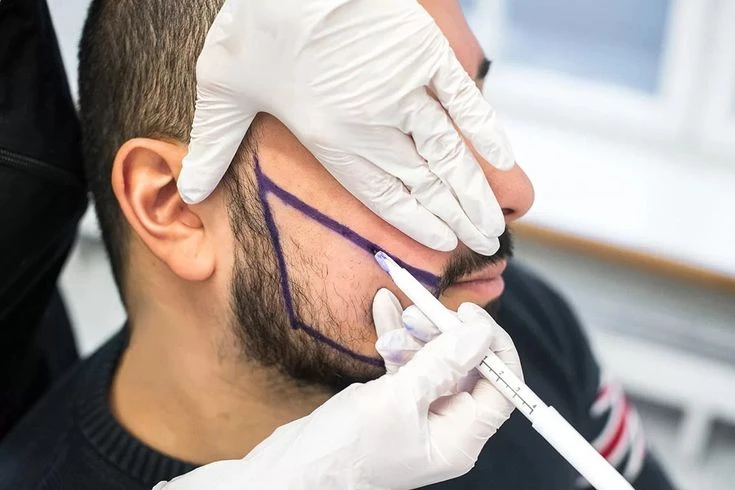
When discussing facial hair restoration, most of the focus naturally lands on the face. However, the success of a beard hair transplant in dubai is fundamentally dependent on the "donor site"—the area, usually at the back of the head, from which the hair is taken. The health, density, and quality of this donor hair determine not only how much of a beard can be built but also how natural the final texture will feel. Understanding the relationship between the scalp and the face is a key part of the clinical process for any man seeking a permanent, high-density beard.
The Role of the Occipital Region in Restoration
The back of the scalp, known as the occipital region, serves as the primary reservoir for hair restoration. In our clinical experience, this hair is chosen because it is genetically resistant to the hormones that cause thinning. For a beard hair transplant in dubai, we look specifically for hair follicles that match the caliber of facial hair. While scalp hair is generally slightly thinner than beard hair, the follicles from the lower back of the head often provide the closest match in terms of "coarseness," ensuring that once transplanted, the hair looks like it belongs on the jawline.
The Mechanism of Selective Follicular Harvesting
The "mechanism" of a successful transplant involves the selective extraction of different types of follicular units. A single follicular unit can contain anywhere from one to four hairs. For the "cheek line" of a beard, a surgeon must harvest single-hair units to create a soft, natural edge. For the chin and goatee area, two or three-hair units are preferred for maximum opacity. What patients typically report during recovery is that the donor area heals incredibly fast—often within 3 to 5 days—because the micro-incisions used in modern FUE are smaller than a millimeter in diameter.
The Purpose of Protecting Donor Site Health in Beard hair transplant in dubai
The primary purpose of a medically responsible harvesting strategy is to ensure that the donor area remains looking full and natural. We follow a "safe extraction limit" to prevent the back of the head from appearing thin or "moth-eaten" after the procedure. The purpose is to achieve the desired beard density without sacrificing the aesthetics of the scalp. By spreading the extraction sites across a wide area of the permanent zone, the surgeon ensures that the removal of 2,000 or 3,000 follicles is virtually undetectable to the naked eye once the hair grows back.
Benefits of High-Quality Donor Hair Selection
Selecting the right hair from the donor site provides several distinct advantages for the patient's final beard style.
-
Textural Harmony: We select hairs that naturally have a slight wave or thickness to mimic beard "wiriness."
-
Future-Proofing: By only taking hair from the "safe zone," we ensure the new beard won't thin out later in life.
-
Minimal Trauma: Healthy, robust follicles are easier to extract and have a higher "take rate" in the face.
-
Uniformity: Careful selection ensures the beard doesn't have patches of hair that look vastly different in color or thickness.
Identifying the Ideal Donor Candidate
The ideal candidate is a man with high hair density at the back of his head. During the consultation, we use a densitometer to check how many hairs per square centimeter are available. In our clinical experience, even men with some scalp thinning can often still undergo a beard hair transplant in dubai because the "permanent zone" near the neck is usually the last area to be affected by hair loss. If you have thick, healthy hair in this region, you are an excellent candidate for a dense and successful facial restoration.
Step-by-Step Donor Management for Beard hair transplant in dubai
-
Zone Mapping: Marking the areas on the back of the head where the hair is thickest and healthiest.
-
Shaving or Trimming: The donor area is typically trimmed to 1–2mm to allow for the precision use of the micro-punch tool.
-
Local Anesthesia: Numbing the scalp thoroughly so the patient remains comfortable throughout the extraction phase.
-
Scattered Extraction: Removing follicles in a "checkerboard" pattern to maintain even density in the donor area.
-
Post-Extraction Care: Applying a soothing antibiotic ointment and a light dressing to protect the scalp for the first 24 hours.
Common Treatment Zones and Donor Allocation
The number of grafts harvested depends on the "target zones" on the face. A full beard reconstruction (cheeks, mustache, and chin) requires a larger "withdrawal" from the donor bank than a simple mustache fix. In our clinical experience, we prioritize the "chin" for the thickest grafts, as this is the focal point of the face. By strategically allocating the best donor hair to the most visible areas, we ensure the beard hair transplant in dubai provides the highest possible visual impact.
| Facial Zone | Graft Requirement | Donor Hair Type Preferred |
| Cheek Lines | 500 - 800 per side | Fine, single-hair units |
| Goatee/Chin | 800 - 1,200 | Thick, multi-hair units |
| Mustache | 300 - 500 | Medium-caliber units |
| Sideburns | 200 - 400 | Fine to medium units |
Success Factors in Donor Site Management
The success of the donor site's healing is just as important as the face. A beard hair transplant in dubai should never result in "over-harvesting," which happens when too many follicles are taken from one small spot. What patients typically report during recovery is that the back of the head feels slightly "tight" for the first 48 hours, but they are able to sleep comfortably by the third night. Using a medically responsible approach, we ensure the donor site is preserved for the future, should the patient ever want a scalp touch-up later in life.
Safety Protocols and Medical Responsibility Aftercare
We emphasize a total-health approach to the procedure. This includes ensuring the scalp is free of any infections or dandruff before we begin extraction. What patients typically report during recovery is that the detailed instructions on how to wash the donor area—using a gentle, circular motion after the fifth day—helped the small extraction points disappear within a week. A professional clinic monitors both the donor and recipient sites with equal care to ensure a 360-degree success story for the patient.
Long-Term Outlook for the Donor Area
Once the donor area has healed, the remaining hair grows back to its normal length, completely hiding the sites where the follicles were removed. Because the follicles were taken from the "permanent zone," the back of your head will continue to look natural for decades. You can continue to get "fade" haircuts or keep your hair long without any visible signs of the procedure. Since the hair we moved to your face is also permanent, you have effectively optimized your hair distribution for a better aesthetic balance.
Conclusion
The donor site is the unsung hero of every successful beard restoration. By treating the scalp with medical respect and precision, we can harvest the perfect "building blocks" for your new facial profile without leaving any trace behind. At Tajmeels Clinic, we take donor site health seriously, ensuring that every follicle we move contributes to a thicker beard while preserving your natural scalp density. The journey to a full beard is a collaborative effort between your body's resources and our surgical expertise. Learn if this treatment is right for your lifestyle by booking a scalp and facial hair assessment with our team.