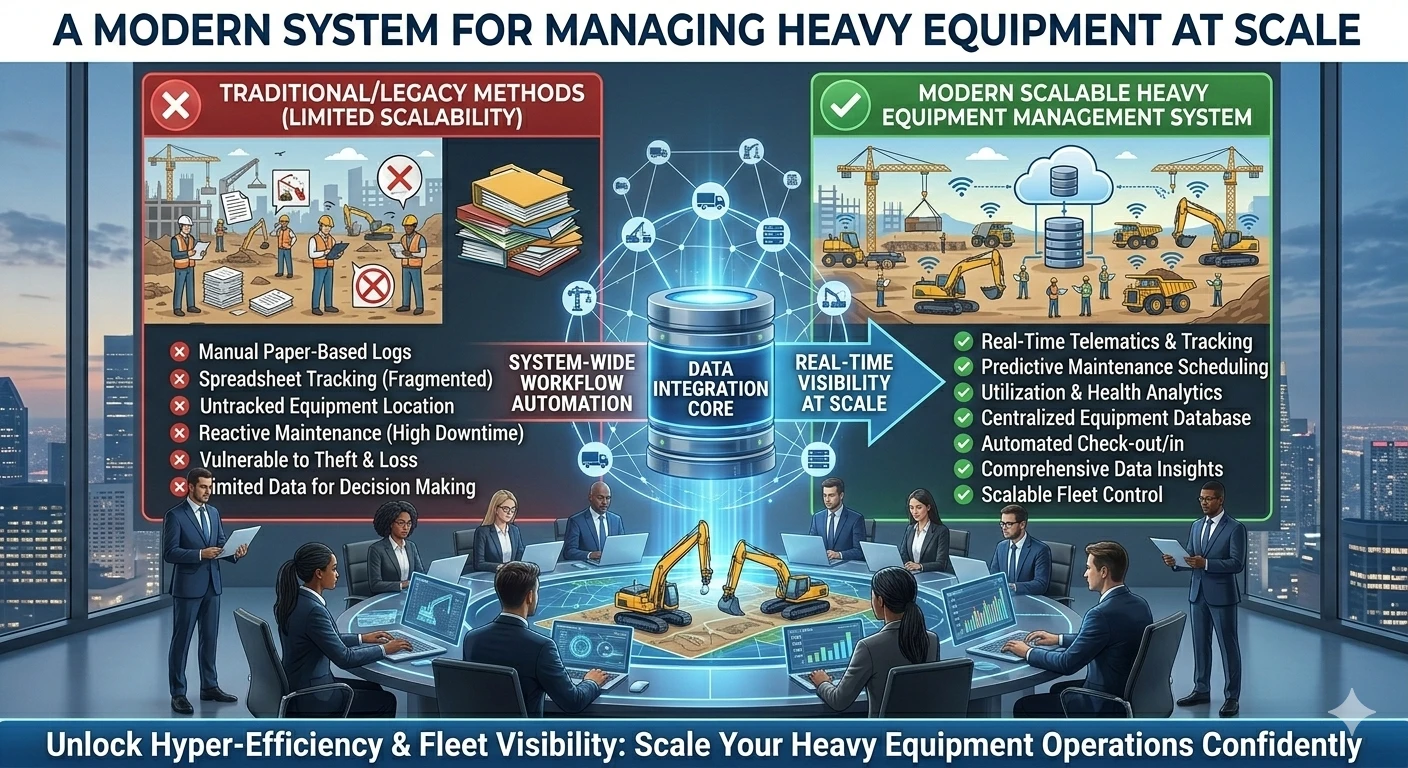
Large construction fleets create opportunity and complexity at the same time. As equipment counts grow across multiple job sites, visibility often decreases. Managers struggle to track utilization, maintenance intervals, operator accountability, and true operating costs. Spreadsheets and manual logs rarely keep pace with expanding operations.
A modern approach relies on structured digital oversight. Construction equipment management software provides centralized control over assets, performance data, maintenance workflows, and cost tracking. For contractors operating at scale, structured systems reduce uncertainty and support informed decision making across projects.
The Challenge of Scale in Heavy Equipment Operations
Managing a handful of machines differs significantly from overseeing hundreds of assets spread across multiple regions. As fleets expand, several operational pressures emerge:
-
Limited visibility into real time equipment location
-
Inconsistent maintenance documentation
-
Difficulty measuring utilization accurately
-
Delays in identifying downtime patterns
-
Manual reporting processes that consume administrative time
Without centralized systems, data remains fragmented. Project managers, mechanics, and financial teams may rely on separate records that do not align. This disconnect affects productivity and cost control.
Centralized Asset Visibility
A modern management framework begins with accurate asset visibility. Construction equipment management software consolidates machine data into a single platform. Equipment identification numbers, service histories, inspection records, and utilization metrics become accessible through unified dashboards.
Centralization enables leadership teams to:
-
Review fleet distribution across job sites
-
Identify idle equipment
-
Monitor machine hours in real time
-
Access service history instantly
When information is organized and accessible, operational blind spots diminish.
Utilization Tracking for Performance Clarity
Utilization is one of the most important performance indicators in heavy equipment operations. Machines that sit idle while projects require additional rentals represent inefficiency. Conversely, overused equipment without proper rotation increases wear and accelerates maintenance costs.
Structured systems allow contractors to analyze:
-
Actual run time versus available time
-
Idle percentages
-
Project specific deployment patterns
-
Seasonal usage trends
Accurate utilization tracking supports smarter redeployment decisions and reduces unnecessary rental expenses.
Maintenance Coordination at Scale
Preventive maintenance becomes more complex as fleets grow. Manual scheduling increases the risk of missed service intervals, incomplete inspections, or inconsistent documentation.
Construction equipment management software automates maintenance tracking by aligning service intervals with machine hours or calendar based schedules. Digital work orders allow maintenance teams to log completed tasks, record parts used and track technician labor.
Automated maintenance coordination supports:
-
Reduced unexpected downtime
-
Consistent compliance with manufacturer recommendations
-
Clear service documentation for audit purposes
-
Improved asset longevity
Structured scheduling reduces the likelihood of overlooked service events.
Downtime Analysis and Root Cause Tracking
Unexpected breakdowns disrupt job site productivity. Without detailed tracking, identifying recurring failure patterns can be difficult.
Modern management platforms capture downtime events, categorize fault types, and log repair durations. Over time, contractors can analyze:
-
Frequent component failures
-
Average repair times by equipment type
-
Parts consumption trends
-
Patterns linked to operator usage
Data driven insight allows teams to address root causes rather than repeating reactive repairs.
Financial Oversight and Cost Allocation
Heavy equipment represents significant capital investment. Accurate cost allocation across projects supports profitability analysis and bidding accuracy.
Centralized systems provide structured reporting on:
-
Fuel consumption
-
Maintenance expenses
-
Repair parts inventory
-
Depreciation tracking
-
Cost per operating hour
By linking expenses directly to specific assets and job sites, contractors gain clarity on true equipment ownership costs.
Multi Site Coordination
Large contractors often operate across multiple job sites simultaneously. Equipment moves between locations based on project demands. Without centralized tracking, miscommunication can occur regarding availability or transfer timing.
Digital management systems support:
-
Real time location monitoring
-
Transfer documentation between projects
-
Clear status updates for dispatch teams
-
Inventory reconciliation
Improved coordination reduces equipment misplacement and scheduling conflicts.
Standardized Inspection Workflows
Field inspections ensure safety and operational reliability. Paper forms, however, can be misplaced or completed inconsistently.
Modern platforms enable standardized digital inspections that include:
-
Required checklist completion
-
Photo documentation
-
Timestamped records
-
Automated alert generation for flagged issues
Digital inspection records improve accountability and simplify compliance reporting.
Scalability and System Integration
As fleets grow, management systems must scale accordingly. Construction equipment management software designed for enterprise level operations accommodates expanding asset counts without sacrificing performance.
Integration capabilities allow synchronization with:
-
Telematics providers
-
Enterprise resource planning systems
-
Accounting platforms
-
Fuel management systems
System integration reduces manual data entry and ensures alignment across departments.
Supporting Leadership Decision Making
Executive leadership relies on accurate data to guide strategic planning. Fleet expansion, equipment replacement cycles, and capital allocation decisions depend on performance insight.
Comprehensive dashboards provide visibility into:
-
Fleet age distribution
-
Maintenance cost trends
-
Utilization rates by asset class
-
Return on investment analysis
Structured reporting strengthens long term planning and reduces reliance on assumptions.
Risk Mitigation and Compliance
Regulatory compliance and safety oversight remain critical in heavy construction. Documented inspection histories and maintenance records support compliance with industry standards.
Digital management platforms assist with:
-
Audit ready documentation
-
Maintenance verification records
-
Incident tracking
-
Equipment certification monitoring
Clear documentation reduces exposure to regulatory penalties and supports safe operations.
Building a Culture of Accountability
Operational scale can dilute accountability if processes lack structure. When asset data is transparent and accessible, teams gain clarity regarding responsibilities.
Digital logs and automated reporting encourage:
-
Consistent operator inspections
-
Timely maintenance updates
-
Accurate cost tracking
-
Clear communication between departments
Accountability strengthens operational discipline and improves performance outcomes.
Conclusion
Managing heavy equipment at scale requires more than manual coordination and fragmented reporting. Expanding fleets demand structured oversight that integrates asset visibility, maintenance scheduling, utilization tracking, and financial analysis into a unified system.
Construction equipment management software provides the framework necessary to support large scale operations. Through centralized data, automated workflows, and detailed reporting, contractors gain clarity across job sites and departments.
A modern system transforms equipment oversight from reactive tracking into proactive management. For contractors operating at scale, structured digital control supports efficiency, accountability, and long term operational stability.