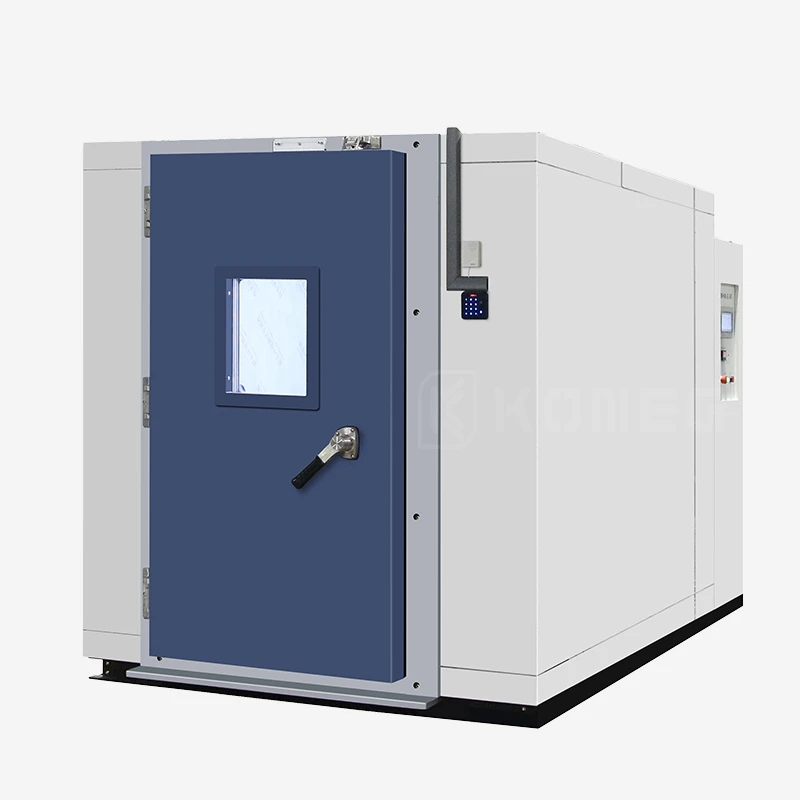
I. Definition and Core Concept
A stability test chamber is a high-precision environmental simulation device capable of long-term, stable control of parameters such as temperature, humidity, and light. It is used to evaluate the quality change patterns and shelf life of products, including pharmaceuticals, food, cosmetics, medical devices, and electronic components during storage, transportation, and use.
Simply put, it answers one core question by simulating the environmental conditions a product may encounter throughout its lifecycle:
“How long can this product remain effective under specific environmental conditions?”
II. Why Are Stability Test Chambers Necessary?
1. Determining Product Shelf Life
Both pharmaceuticals and food products have clear expiration dates. Stability test chambers provide the scientific basis for determining product shelf life through long-term and accelerated testing. For example, by placing a drug in an environment of 40°C and 75% relative humidity for six months, observing its compositional changes allows calculation of its shelf life under normal temperature conditions.
2. Ensuring Product Quality and Safety
Products must prove they can maintain their original performance and safety under various environmental conditions, such as high temperature, high humidity, and light exposure, before market release. This is not only a quality control requirement but also a guarantee of consumer safety.
3. Essential for Regulatory Approval
In the pharmaceutical industry, stability study data must be submitted during drug registration applications. The internationally recognized ICH guidelines specify detailed requirements for stability testing. The accuracy and reliability of stability test chambers directly determine whether this data will be accepted by regulatory authorities.
III. Application Fields
Pharmaceutical and Biotechnology Industry
Stability test chambers are primarily used for drug shelf life determination, new drug development, and batch release, testing chemical drugs, biological products, vaccines, and traditional medicines.
Food and Beverage Industry
They are used for shelf life testing and packaging material compatibility studies, testing dairy products, canned goods, beverages, and snacks.
Cosmetics and Personal Care Industry
They are utilized for product stability assessment and packaging testing, covering skincare products, color cosmetics, and cleaning products.
Medical Device Industry
They are used for material aging testing and sterilization validation, testing disposable supplies, implants, and diagnostic reagents.
Electronics and Chemical Industry
They are employed for material reliability testing and environmental adaptability assessment, testing electronic components, polymer materials, and adhesives.
IV. Stability Test Chambers vs. Constant Temperature and Humidity Test Chambers
Many people easily confuse these two concepts. Although they appear similar in appearance, their core positioning and functions are fundamentally different.
Core Purpose
A stability test chamber is designed for long-term stability investigation, while a constant temperature and humidity test chamber is intended for short to medium-term environmental simulation.
Operation Time
Stability test chambers typically require continuous operation for months or even years. Constant temperature and humidity test chambers usually operate for days to weeks.
Control Precision
Stability test chambers offer extremely high control precision, generally achieving temperature accuracy of ±0.5°C and humidity accuracy of ±3% relative humidity. Constant temperature and humidity test chambers offer relatively high precision, typically ±1°C and ±5% relative humidity.
Data Recording
Stability test chambers come standard with real-time data recording, printing, and audit trail functions. Constant temperature and humidity test chambers provide basic data recording capabilities.
Compliance Requirements
Stability test chambers must comply with ICH, GMP, and GLP regulations. Constant temperature and humidity test chambers typically meet general testing standards.
Safety Features
Stability test chambers are equipped with multiple protections, including over-temperature protection, power failure memory, and remote alarm functions. Constant temperature and humidity test chambers offer basic safety protection.
V. International Standards and Regulatory Requirements
The design and operation of stability test chambers must comply with a series of international standards.
ICH Q1A provides guidelines for stability testing of new drug substances and products.
ICH Q1B provides guidelines for photostability testing.
USP <1079> specifies requirements for drug storage and transportation in the United States Pharmacopeia.
GMP and GLP are the Good Manufacturing Practice and Good Laboratory Practice regulations, respectively.
Equipment that meets these standards typically features:
Temperature uniformity not exceeding 2°C
Temperature fluctuation not exceeding ±0.5°C
Humidity fluctuation not exceeding ±3% relative humidity
Continuous data recording capabilities
Dual over-temperature protection
Automatic recovery after a power failure
VI. KOMEG Stability Test Chamber Solutions
With over 30 years of experience in environmental test equipment research and development, KOMEG offers a series of stability test chambers that meet international standards, serving the diverse needs of the pharmaceutical, food, and electronics industries.
Product Features
Precision Control System
KOMEG stability test chambers utilize imported brand controllers, providing precise and stable temperature and humidity control that meets ICH and GMP requirements.
Long-Term Reliability
The equipment is specifically designed for continuous operation over months or even years of stability studies, with core components rigorously screened to ensure long-term operational reliability.
Comprehensive Data Management
The equipment comes standard with USB data export and a micro printer, with optional remote monitoring and audit trail systems available.
Multi-Level Safety Protection
It features independent over-temperature protection, compressor overload protection, and water shortage alarms, ensuring worry-free long-term operation.
Compliant Design
The equipment design complies with GMP requirements for materials and construction, featuring no dead corners and easy cleaning, facilitating routine maintenance and validation.
Available Models and Configurations
Volume Options
KOMEG offers multiple volume options: 150 liters, 250 liters, 500 liters, 800 liters, 1000 liters, and above, meeting testing needs at various scales.
Environmental Parameters
The standard temperature range is 0 to 65°C, and the standard humidity range is 20% to 95% relative humidity. Extended ranges are available upon request.
Optional Features
Light modules meeting ICH photostability testing requirements are available. Data interfaces include RS485, Ethernet, and USB, supporting integration with Laboratory Information Management Systems.
VII. How to Choose the Right Stability Test Chamber?
Several key factors should be considered during selection.
Testing Standards
First, clarify which testing standards you need to follow—ICH, United States Pharmacopeia, or internal company standards. Different standards have varying requirements for equipment accuracy and functionality.
Product Characteristics
Consider your product characteristics. Are your products sensitive to temperature, humidity, or light? Do they require special conditions? For example, certain biological products may require lower temperature ranges.
Sample Volume
Evaluate both current and projected future sample quantities, which will determine the chamber capacity you need.
Operating Cycle
Consider whether you are conducting short-term accelerated tests or long-term stability studies, as the latter places higher demands on equipment reliability.
Data Management Needs
Determine whether you need audit trail functionality, remote monitoring capabilities, or Laboratory Information Management System integration, as these affect equipment selection.
Budget and After-Sales Support
Comprehensively consider equipment price, maintenance costs, and the supplier’s after-sales service responsiveness to choose the most cost-effective solution.
The stability test chamber is not only an essential tool for product research and development and quality control but also a critical piece of equipment for companies to meet regulatory requirements, ensure product safety, and build market trust. Simulating the passage of time, it allows companies to understand their products’ future performance before they reach the market.
Choosing a high-precision, highly reliable stability test chamber means choosing a commitment to product quality and responsibility for consumer safety.
With over thirty years of technical accumulation and a comprehensive after-sales service system, KOMEG can provide full-process service from equipment selection to validation support.
For more information or to request a customized solution, please feel free to contact KOMEG.