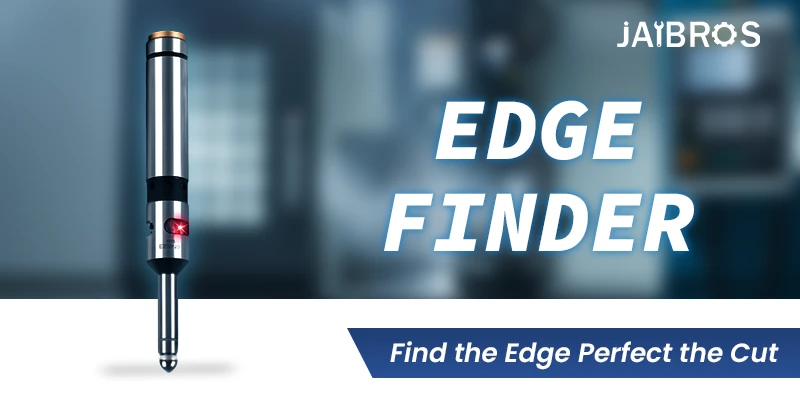
Learn the best practices for using an Edge Finder Tool in CNC machining. Improve setup accuracy, efficiency, and precision in modern workshops.
Best Edge Finder Tool Practices for CNC Operators in Modern Workshops (2026)
Precision is the foundation of modern machining. In CNC environments, even the smallest error in setup can affect the accuracy of the final product. Operators rely on several setup techniques to ensure proper alignment and positioning before machining begins. Among these methods, the edge finder tool remains one of the most reliable instruments used in workshops.
Even in 2026, when automation and advanced measurement systems are widely available, machinists continue to use this simple yet effective device to locate the exact edge of a workpiece. Correct edge detection ensures that the machine coordinates match the physical position of the material, allowing machining operations to start from the right reference point.
This article explains the best practices CNC operators should follow when using the edge finder tool and how it supports accurate and efficient machining operations.
Understanding the Role of Edge Finding in CNC Machining
Before any cutting operation begins, the operator must establish a reference point on the workpiece. This reference point acts as the starting location for the machining program. If the position is incorrect, the machine may cut in the wrong area, resulting in errors or wasted material.
The edge finder tool helps operators determine the exact position of a workpiece edge relative to the spindle. By carefully detecting this contact point, machinists can set machine coordinates accurately.
Once the edge location is determined, the operator can establish the zero point of the workpiece. This reference allows the machine program to perform precise operations such as drilling, milling, or contouring with minimal deviation.
Importance of CNC Tools in Modern Machining
Modern workshops rely on a wide range of equipment designed to improve efficiency and accuracy. A high-quality cnc tool system allows operators to perform complex operations with consistent precision.
However, the effectiveness of machining equipment depends heavily on correct setup. Even the most advanced machines require accurate positioning before they begin cutting. Edge detection tools help bridge the gap between manual setup and automated machining.
By combining traditional positioning methods with advanced CNC technology, workshops can maintain high levels of productivity while minimizing errors.
Evolution of the CNC Edge Finder Tool
Over time, the cnc edge finder tool has evolved to meet the needs of modern machining environments. Earlier models were purely mechanical and relied on visual observation to detect contact with the workpiece.
Today, many advanced versions include electronic sensors that provide visual or audible signals when the edge is detected. These improvements allow operators to locate edges more quickly and reduce the risk of human error.
Electronic edge finders are particularly useful in high-volume production environments where speed and repeatability are critical. They also improve operator confidence when working with complex machining setups.
Despite these technological improvements, the fundamental purpose of the edge finder tool remains the same: to provide a reliable method of locating the exact edge of a workpiece.
Best Practices for Accurate Edge Detection
Using the right techniques can significantly improve the accuracy and reliability of edge detection. Experienced machinists follow several best practices when working with positioning tools.
Maintain Proper Spindle Speed
The spindle should rotate at a moderate speed when locating the edge. Excessive speed may cause the tool to bounce or create inaccurate readings. A steady and controlled rotation allows the operator to observe the contact point clearly.
Ensure Clean Work Surfaces
Debris, chips, or dust on the workpiece surface can interfere with accurate measurements. Before performing edge detection, the operator should clean the surface to ensure proper contact.
Approach the Edge Slowly
Precision requires patience. Operators should approach the workpiece slowly to detect the exact moment when the tool touches the edge. This careful movement helps avoid overshooting the contact point.
Verify Measurements
After detecting the edge, it is good practice to repeat the measurement to confirm accuracy. This step ensures that the setup is correct before machining begins.
Edge Finder Tool for Milling Machine Setup
Milling machines require extremely precise alignment to produce accurate components. The edge finder tool for milling machine setups helps machinists determine the exact position of the material relative to the spindle.
During the setup process, the tool is placed in the spindle and rotated while approaching the workpiece. When the tool touches the edge, a slight shift occurs, indicating the contact point. The operator then adjusts the machine coordinates to match this position.
Accurate setup ensures that operations such as slot cutting, facing, and contour milling begin from the correct reference point. This precision helps maintain consistent quality across multiple parts.
Integration with CNC Machine Tool Systems
Modern manufacturing relies heavily on advanced cnc machine tool systems that combine automation, digital control, and high-precision cutting tools.
Although these machines are highly advanced, they still require proper setup and alignment. Edge detection tools play a crucial role in ensuring that the machine's coordinate system matches the physical location of the workpiece.
Many workshops combine edge detection techniques with digital measurement systems such as probes and sensors. This hybrid approach allows operators to verify positioning and reduce the risk of errors.
Common Mistakes CNC Operators Should Avoid
Even experienced machinists can encounter errors during setup. Understanding common mistakes can help operators improve their accuracy and efficiency.
One common issue is approaching the workpiece too quickly, which may cause the tool to move past the correct contact point. Another mistake is ignoring machine calibration, which can lead to inaccurate readings.
Improper tool maintenance can also affect performance. Worn or damaged instruments may not provide accurate results, making it important to inspect tools regularly.
By avoiding these mistakes and following proper procedures, operators can improve the reliability of their machining setups.
Future Trends in CNC Workshop Setup
Machining technology continues to advance, and workshops are adopting new systems to improve efficiency and precision. Smart manufacturing solutions now allow machines to collect and analyze performance data in real time.
Automation is also becoming more common, with robotic systems assisting in material handling and machine operation. Despite these developments, accurate setup remains essential.
Reliable positioning instruments will continue to play an important role in machining operations. Their simplicity and effectiveness ensure that they remain valuable tools in modern workshops.
About Jaibros
Jaibros is a trusted supplier of industrial machining tools and accessories designed for modern manufacturing environments. The company offers a wide range of precision tools, cutting solutions, and workshop equipment that help machinists achieve accurate and efficient results. With a commitment to quality and reliability, Jaibros supports industries by providing dependable tooling solutions for CNC and machining applications.
FAQs
1. What is the purpose of an edge finder in CNC machining?
It is used to locate the exact edge of a workpiece so operators can set accurate machine coordinates before machining begins.
2. Can edge finders be used on both manual and CNC machines?
Yes, they are commonly used in both types of machines for setup and alignment purposes.
3. Are electronic edge finders better than mechanical ones?
Electronic models can provide faster detection and clearer signals, but mechanical versions are also highly reliable when used correctly.
4. Why is accurate edge detection important in machining?
Accurate edge detection ensures that machining operations begin from the correct reference point, reducing errors and improving product quality.
5. How often should setup tools be inspected or maintained?
Tools should be inspected regularly, especially in high-production environments, to ensure they remain accurate and reliable.