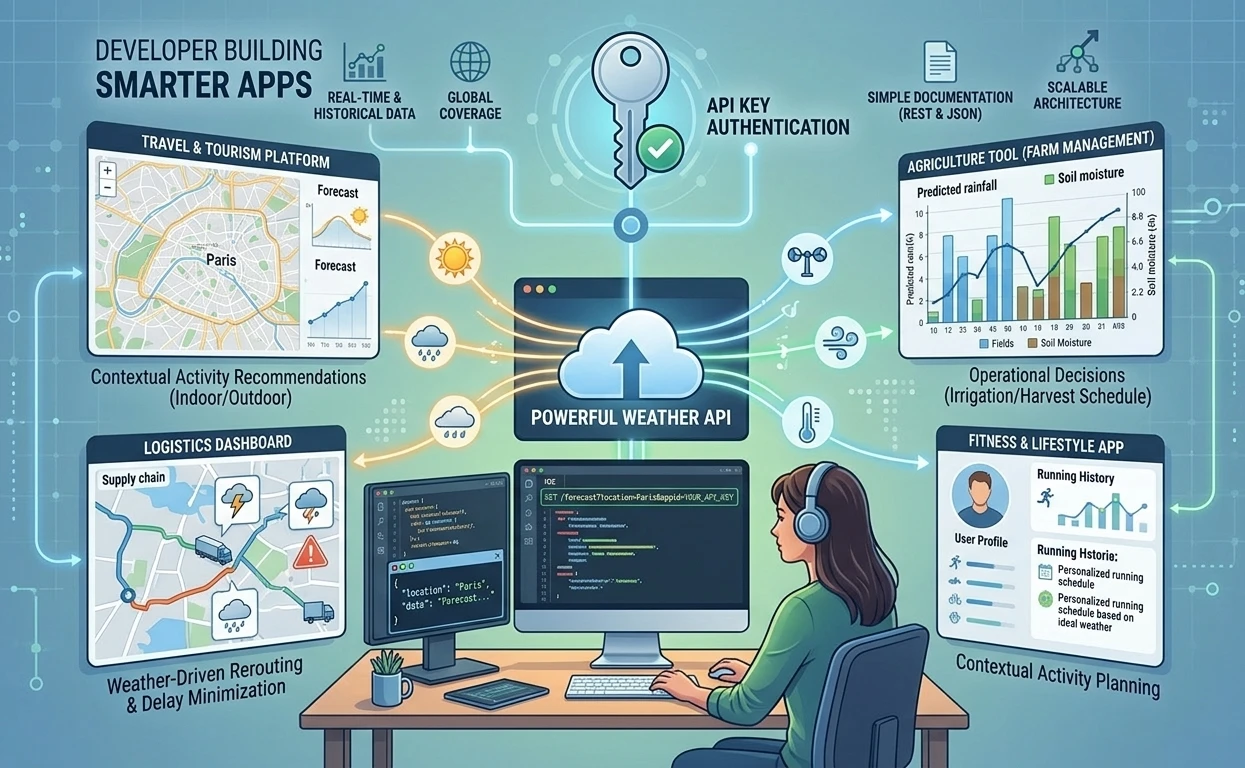
Modern applications rely heavily on data to deliver useful and engaging experiences. Among the most valuable types of data used in digital products is weather information. From travel platforms and logistics dashboards to agriculture tools and mobile lifestyle apps, weather insights can significantly enhance the way users interact with software.
A weather api allows developers to integrate real-time and forecast weather information directly into their applications without building complex weather data infrastructure from scratch. With the right integration, apps can provide accurate weather insights that improve decision-making, user engagement, and overall product functionality.
This guide explains how weather APIs work, why they are valuable for developers, and how businesses can use them to build smarter and more helpful digital products.
Why Weather Data Matters for Modern Applications
Weather conditions influence many daily decisions. People check weather forecasts before planning travel, scheduling outdoor activities, managing deliveries, or even choosing what to wear.
Applications that provide weather insights become instantly more useful because they help users plan ahead.
Developers often integrate weather data into apps for several reasons:
- To improve user experience with contextual information
- To enable location-based recommendations
- To help businesses make data-driven operational decisions
- To automate services affected by weather conditions
For example, a travel booking website can recommend indoor activities during rainy days, while a logistics company can adjust delivery schedules based on storm forecasts.
What Is a Weather Forecast API?
A weather forecast API is a service that allows developers to access weather information through simple requests. Instead of collecting weather data from sensors, satellites, and meteorological stations themselves, developers can retrieve reliable information from specialized data providers.
The API acts as a bridge between the weather data source and the application. When an application sends a request - such as asking for the weather in a particular city - the API returns structured data that the app can display or process.
Typical information returned by these services includes:
- Current temperature
- Weather conditions (rain, snow, clear sky)
- Wind speed and direction
- Humidity levels
- Hourly and daily forecasts
- Historical weather data
This information can then be presented visually in dashboards, mobile apps, websites, or automated systems.
Benefits of Using a Weather Forecast API
Integrating weather data through APIs offers several advantages compared to building a custom data system.
1. Faster Development
Creating a weather monitoring infrastructure would require massive investments in hardware, sensors, satellites, and data processing systems. APIs eliminate this complexity, allowing developers to focus on building application features instead.
2. Reliable and Accurate Data
Weather API providers collect information from global weather stations and satellite networks. This ensures the data used in applications is accurate and regularly updated.
3. Scalability
As applications grow and attract more users, API services can handle large volumes of requests without requiring additional infrastructure from the developer.
4. Global Coverage
Many weather APIs provide worldwide data coverage, making them suitable for applications that serve international audiences.
5. Flexible Integration
Weather APIs typically use RESTful architecture and return data in formats such as JSON or XML. This makes integration simple for developers working with different programming languages and platforms.
Common Use Cases for Weather APIs
Weather data can support a wide variety of industries and digital solutions. Here are some of the most common applications.
Travel and Tourism Platforms
Travel apps often integrate weather forecasts to help users plan trips and activities. For instance, a tourism platform might show the best days for outdoor sightseeing or beach visits.
Logistics and Transportation
Shipping companies, delivery platforms, and airline services rely on weather insights to manage operations. Forecast data helps avoid delays caused by storms, heavy rain, or extreme temperatures.
Agriculture and Farming Tools
Farm management platforms use weather information to support irrigation planning, crop protection, and harvesting schedules. Accurate weather forecasts help farmers reduce risks and increase productivity.
Smart Home and IoT Systems
Smart home devices can adjust settings automatically based on weather conditions. For example, irrigation systems can pause watering during rainy periods.
Fitness and Outdoor Activity Apps
Running, cycling, and hiking apps use weather data to recommend the best times for outdoor exercise and alert users about extreme weather conditions.
Key Features Developers Should Look For
Not all weather APIs provide the same capabilities. When choosing a solution, developers should evaluate features that match their application needs.
Real-Time Weather Updates
Real-time data ensures users always receive the latest weather conditions. This is particularly important for transportation, aviation, and outdoor event platforms.
Forecast Data
Forecasts help users plan future activities. APIs may provide hourly, daily, or multi-day forecasts depending on the provider.
Historical Weather Data
Access to past weather information can be valuable for analytics, research, and predictive modeling.
Location-Based Queries
Most weather APIs support location queries using city names, postal codes, or geographic coordinates.
Simple Documentation
Clear documentation makes it easier for developers to implement and maintain the integration.
Steps to Integrate Weather Data into an Application
Integrating weather data into a product is generally straightforward. Most APIs follow a similar implementation process.
1. Get an API Key
Developers typically sign up on the provider’s platform and receive a unique access key. This key authenticates requests and tracks usage.
2. Send a Request
The application sends a request to the API endpoint with parameters such as location and desired data type.
3. Receive the Data
The API returns weather information in a structured format, usually JSON.
4. Display the Information
Developers can present the data in user-friendly ways, such as weather widgets, dashboards, maps, or alerts.
How Weather Data Improves User Experience
Applications that include weather insights often deliver a more personalized and useful experience.
For example:
- A travel app can suggest activities based on forecast conditions.
- A retail platform can promote seasonal products during specific weather patterns.
- A mobility app can warn users about upcoming storms or extreme heat.
These features create a more responsive and intelligent application that adapts to real-world conditions.
Choosing an Easy Integration Solution
Developers usually prefer an Easy to use weather api that simplifies integration while still delivering powerful functionality. The best APIs provide well-documented endpoints, reliable uptime, and consistent data accuracy.
A good API should also support:
- Multiple data formats
- Flexible request limits
- Clear error handling
- Global location support
These factors ensure that developers can implement weather features quickly while maintaining stable application performance.
Future of Weather Data in App Development
Weather data will continue to play an important role in modern digital services. As artificial intelligence and predictive analytics evolve, weather APIs will become even more valuable for creating intelligent applications.
Future possibilities include:
- Predictive logistics planning based on weather patterns
- Smart city systems that respond to environmental conditions
- Personalized recommendations based on climate and seasonal trends
Applications that combine weather insights with analytics will offer deeper value to users and businesses alike.
Weather data is one of the most practical data sources developers can integrate into modern applications. From travel and agriculture to logistics and lifestyle apps, accurate forecasts help users make better decisions every day.
By integrating a reliable weather api, developers can build smarter products that respond to environmental conditions in real time. This approach not only improves functionality but also enhances user engagement and long-term product value.
Frequently Asked Questions
1. What is a weather forecast API used for?
A weather forecast API allows developers to access weather information such as temperature, humidity, wind speed, and forecast data. This information can be integrated into websites, mobile apps, and software platforms.
2. Is it difficult to integrate weather data into an application?
Most weather APIs are designed for easy integration. Developers typically only need an API key and a simple request to retrieve weather information, which can then be displayed in the application interface.
3. Can weather APIs provide historical weather data?
Yes, many weather APIs provide access to historical weather records. This data is useful for research, analytics, trend analysis, and building predictive models based on past climate conditions.
Recommended Resources:-
Numverify vs Twilio vs Vonage: Phone Verification for Your Enterprise
OpenAI Function Calling: How to Connect LLMs to The Best Free APIs (2025)