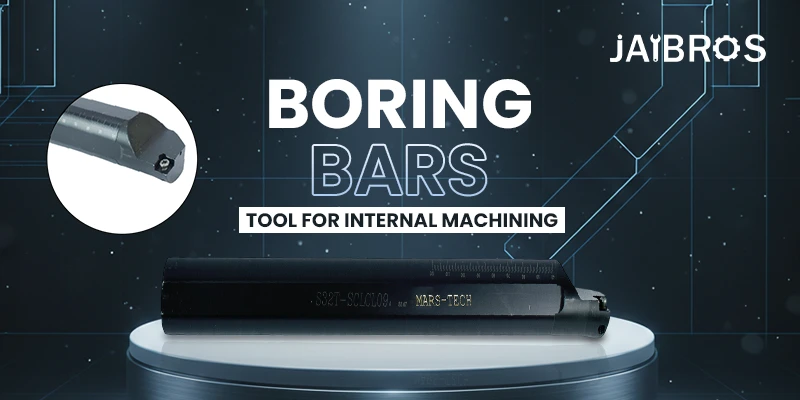
Learn practical tips to increase tool life when using a carbide boring bar. Improve CNC machining performance, reduce wear, and achieve better internal turning accuracy.
Smart Techniques to Increase Carbide Boring Bar Efficiency in CNC Work
In CNC machining, tool life plays a very important role in productivity and cost control. When tools wear out too quickly, it increases downtime, raises tooling costs, and affects machining quality. One of the most widely used tools for internal turning operations is the carbide boring bar. It is designed to perform accurate internal machining in components such as cylinders, bushings, and precision mechanical parts.
However, even the best tools will not perform well if they are not used correctly. Many operators experience rapid wear, vibration, or poor surface finish simply because the setup or cutting conditions are not optimized. Increasing tool life requires the right combination of tool selection, machine setup, cutting parameters, and maintenance practices.
Understanding Tool Life in CNC Machining
Tool life is the time a cutting tool can operate effectively before it needs replacement or reconditioning. A longer tool life means fewer tool changes, lower production costs, and improved machining efficiency.
In internal turning operations, the tool experiences high cutting forces, limited chip evacuation, and heat buildup. These conditions can accelerate wear if not properly managed. A high-quality carbide boring bar is designed to handle these challenges, but correct usage is still essential.
Operators should monitor tool wear regularly and adjust machining conditions before the tool reaches failure.
Choose the Right Boring Tool for the Job
The first step in increasing tool life is selecting the correct tool for the application. Internal machining requires tools that provide rigidity and resistance to vibration.
Many manufacturers prefer solid carbide boring bars because they offer greater stiffness than steel tools. Increased rigidity reduces deflection and improves cutting stability, especially when machining deep holes or tough materials.
When choosing a boring tool, consider these factors:
-
Hole diameter and depth
-
Workpiece material
-
Required surface finish
-
Machine spindle power
-
Cutting speed capability
Using the correct tool for the job helps keep cutting forces stable and reduces tool wear.
Maintain Proper Tool Overhang
One of the most common causes of premature tool failure is excessive tool overhang. Overhang refers to the length of the tool extending beyond the tool holder.
When the tool extends too far, it becomes less rigid and more prone to vibration. Vibration creates uneven cutting forces and damages the cutting edge.
To improve stability, the tool overhang should be kept as short as possible. A well-positioned carbide boring bar with minimal extension provides better rigidity and longer tool life.
As a general guideline, the overhang should not exceed four times the tool diameter.
Use the Correct Cutting Parameters
Cutting speed, feed rate, and depth of cut all affect tool life. Running the tool too aggressively may increase productivity for a short time, but can drastically reduce tool life.
To improve durability:
-
Use recommended cutting speeds for the material
-
Maintain a moderate feed rate
Avoid very heavy depth of cuts in deep bores
When machining difficult materials, reducing the cutting speed slightly can help extend the life of the carbide boring bar while still maintaining acceptable productivity.
Machine manufacturers and tool suppliers usually provide recommended parameter charts to follow for best results.
Select the Right Insert Geometry
The insert is the actual cutting component that removes material from the workpiece. Choosing the right insert geometry and grade can significantly increase tool life.
Important factors include:
-
Insert material and coating
-
Chip breaker design
-
Edge strength
-
Workpiece compatibility
For example, harder materials may require stronger inserts with wear-resistant coatings, while softer materials may require sharper cutting edges for smooth machining.
Proper insert selection reduces cutting resistance and improves the carbide boring bar's performance during internal turning operations.
Control Heat with Proper Coolant
Heat generation is one of the biggest causes of tool wear in CNC tools. When excessive heat builds up at the cutting edge, it weakens the tool material and accelerates wear.
Coolant helps control temperature and improves chip evacuation inside the bore.
Common coolant methods include:
-
Flood coolant systems
-
Through-tool coolant supply
-
Mist coolant applications
Applying coolant directly to the cutting zone helps maintain the cutting edge and extends the life of the carbide boring bar.
Reduce Vibration and Chatter
Chatter is a major issue during internal machining. It causes irregular cutting forces, poor surface finish, and rapid tool damage.
Several steps can help reduce vibration:
-
Use rigid tool holders
-
Reduce tool overhang
-
Ensure the workpiece is firmly clamped
-
Adjust the cutting speed if chatter occurs
Using stable, solid carbide boring bars also improves vibration resistance because carbide is much stiffer than traditional tool materials.
Stable machining conditions greatly improve tool life and surface finish quality.
Keep Tools Clean and Properly Maintained
Tool maintenance is often overlooked, but it plays an important role in increasing tool life.
Simple maintenance practices include:
-
Cleaning tools after every use
-
Inspecting inserts for wear or damage
-
Replacing worn inserts before they fail
-
Keeping tools stored properly in racks or cabinets
Many workshops prefer using a carbide boring bar set so they can easily select the right tool size for different hole diameters without forcing one tool to perform multiple tasks.
Proper tool management ensures that each tool performs efficiently and lasts longer.
Monitor Tool Wear Regularly
Tool wear occurs gradually, and monitoring it helps prevent sudden failures. Operators should inspect tools at regular intervals during machining operations.
Common signs of tool wear include:
-
Increased cutting noise
-
Poor surface finish
-
Dimensional inaccuracies
-
Visible edge wear on the insert
If these signs appear, the tool should be replaced or adjusted before it damages the workpiece.
A properly monitored carbide boring bar will deliver consistent results and reduce the chances of production errors.
Balance Cost and Quality When Purchasing Tools
Tool quality also affects durability and performance. While some tools may seem cheaper initially, they may wear out faster and increase overall production costs.
Many workshops compare carbide boring bar price from different suppliers before purchasing tools. However, the focus should not only be on price but also on quality, brand reputation, and performance reliability.
Investing in high-quality tools often results in longer tool life, better machining results, and reduced downtime.
Train Operators and Follow Best Practices
Even the best tools require skilled operators to achieve optimal results. Proper training helps machinists understand how to adjust cutting conditions, select inserts, and troubleshoot machining problems.
Workshops should encourage operators to follow best machining practices, including proper tool setup, machine maintenance, and safety procedures.
With the right knowledge and techniques, operators can significantly extend the life of every carbide boring bar used in CNC machining operations.
Conclusion
Increasing tool life in CNC machining requires a combination of the right tools, proper setup, and optimized cutting conditions. Internal turning operations place significant stress on cutting tools, making stability and heat control essential.
By selecting the correct tools, maintaining proper overhang, controlling cutting parameters, and reducing vibration, machinists can achieve better machining results while extending tool durability.
Using high-quality tools such as solid carbide boring bars further improves rigidity and stability during internal machining. Regular maintenance, tool monitoring, and proper coolant usage also contribute to longer tool life.
When these practices are followed consistently, CNC operators can improve productivity, reduce tool costs, and maintain high machining accuracy.
FAQs
1. What factors affect the life of a carbide boring bar?
Tool life depends on cutting speed, feed rate, tool overhang, insert quality, coolant usage, and the material being machined.
2. Why are solid carbide boring bars preferred for internal machining?
They provide higher rigidity and better vibration resistance, which improves machining stability and tool durability.
3. How can vibration be reduced during boring operations?
Vibration can be reduced by minimizing tool overhang, using rigid holders, adjusting cutting parameters, and ensuring proper workpiece clamping.
4. Does coolant improve tool life in CNC machining?
Yes, coolant reduces heat at the cutting edge, improves chip removal, and helps extend tool life.
5. How do I choose the right carbide boring bar set?
Choose a set that includes different sizes suitable for your machining range, hole diameters, and workpiece materials.