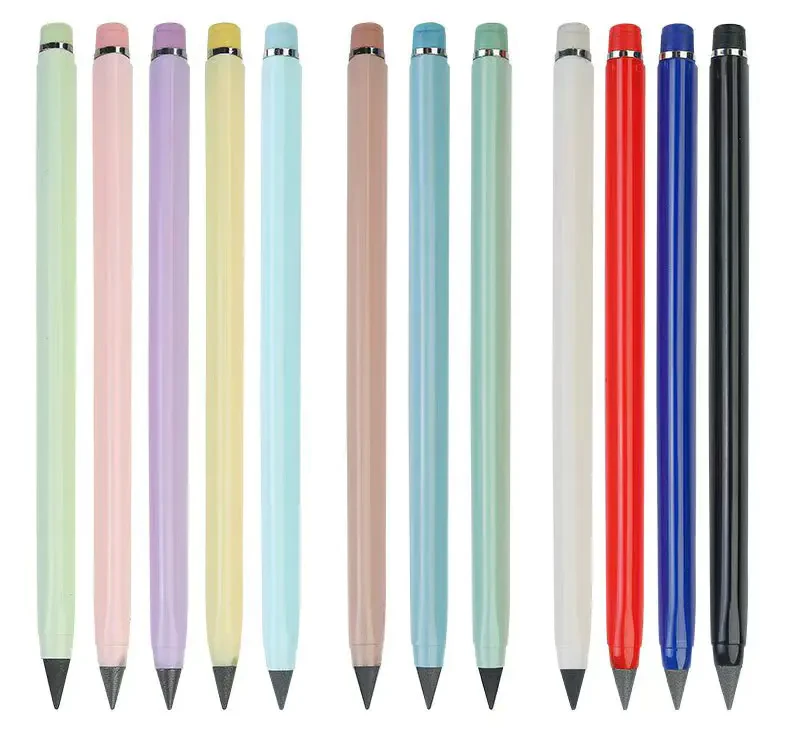
When you hold a pencil in your hand, you might not think about the meticulous process that goes into making it. But for pencil manufacturers, crafting this simple tool is an art form, driven by precision and attention to detail. The pencil may seem like an ordinary object, but it has a long history of innovation and improvement, making it a crucial part of our daily lives.
The journey begins in the forests, where pencil manufacturers source the wood, usually from sustainable, managed forests. The wood must meet certain criteria for thickness, durability, and ease of shaping. The next step involves milling the wood into thin slats that will form the body of the pencil. These slats are carefully cut and planed to ensure that they fit together perfectly, making the pencil easy to sharpen and comfortable to use.
The core of the pencil, the part that leaves marks on paper, is typically made of a mixture of clay and graphite. The proportions of these materials affect the pencil’s writing quality. Pencil manufacturers must ensure the correct balance between smoothness and hardness. A soft lead allows for dark, smooth writing, while a harder lead creates fine, precise lines but might not be as dark. Some manufacturers even offer specialized leads for different purposes, such as sketching or technical drawing.
Once the core is prepared, it’s inserted into the wood slats. This step is followed by gluing the slats together and pressing them into a single, smooth unit. The slats are then shaped into the familiar hexagonal or round form that most people recognize as a pencil. During this process, pencil manufacturers take extra care to ensure that the wood doesn’t split and the lead remains centered within the casing.
Pencil manufacturers also consider the aesthetics of their products. While the classic yellow pencil is popular, many manufacturers experiment with different colors and designs to appeal to various consumer tastes. For instance, artistic pencils often feature intricate designs or are made with eco-friendly materials to attract environmentally conscious consumers.
Despite the challenges, pencil manufacturers remain dedicated to creating quality products that serve a wide range of purposes. Their continued innovation shows that even the simplest tools can have a significant impact on how we work, learn, and create.