Vietnam has firmly established itself as a powerhouse in the global coffee industry. Over the past decade, the country has transformed from a regional producer into one of the most influential exporters worldwide. Today, vietnam coffee exports play a critical role in shaping global coffee supply chains, pricing trends, and trade dynamics.
According to recent vietnam customs data, the country achieved a record-breaking export value of $5.62 billion in 2024, marking a 12% increase from the previous year. Despite a decline in export volume due to production challenges, the surge in global coffee prices significantly boosted revenue. This shift highlights Vietnam’s evolving role—not just as a volume exporter but as a value-driven player in international markets.
As we move into 2025, vietnam coffee exports are expected to reach new milestones, driven by rising demand, strong pricing, and expanding global partnerships.
Vietnam Coffee Exports Reach New Heights
The year 2025 is shaping up to be a landmark period for vietnam coffee exports. With projections indicating a total export value of around $7 billion, the industry continues to demonstrate resilience and growth despite global uncertainties.
In the first five months alone, export revenue reached approximately $4.7 billion. This impressive performance was fueled by strong demand from key markets such as the European Union and the United States. In May 2025, Vietnam exported nearly 149,000 tons of coffee worth $860 million, reflecting both volume recovery and exceptional price growth.
Although export volumes showed slight fluctuations, the overall value surged by more than 60% due to record-high coffee prices averaging over $5,700 per ton. This trend underscores a significant transformation in vietnam exports, where quality and pricing power are becoming as important as production capacity.
The Role of Vietnam Coffee Production
A key factor behind the success of vietnam coffee exports is the country’s robust agricultural foundation. Vietnam coffee production has expanded across more than 30 provinces, with regions like Dak Lak, Lam Dong, and Gia Lai leading the way. These areas benefit from ideal climatic conditions, fertile soil, and well-established farming practices.
Vietnam is the world’s second-largest coffee producer, trailing only Brazil. The country is particularly known for its dominance in Robusta coffee, which accounts for nearly 95% of total output. Arabica beans, though smaller in volume, are gradually gaining traction in premium markets.
In 2024, total vietnam coffee production reached approximately 1.74 million tons. However, adverse weather conditions, including drought, caused a temporary drop in output. Despite this, higher global prices ensured that export revenues remained strong.
Looking ahead, production is expected to recover in 2025–26, with favorable rainfall supporting crop growth. This recovery will further strengthen the position of vietnam coffee exporters in global markets.
Key Export Markets Driving Growth
The success of vietnam coffee exports is closely tied to its diversified export destinations. The European Union remains the largest market, accounting for a significant share of total exports. Countries such as Germany, Italy, and Spain consistently import large volumes of Vietnamese coffee.
Germany leads as the top importer, with imports worth $705 million, followed by the United States at $610 million. Other major markets include Italy, Japan, and Spain. These countries value Vietnamese coffee for its affordability, strong flavor profile, and consistent quality.
Emerging markets in Asia are also playing an increasingly important role. Countries like the Philippines, South Korea, and China are witnessing rising demand, driven by changing consumer preferences and growing coffee culture.
This geographical diversification ensures that vietnam coffee exports remain resilient even in the face of regional economic challenges.
Leading Vietnam Coffee Exporters
The growth of vietnam coffee exports is supported by a strong network of established companies. These vietnam coffee exporters are instrumental in connecting local farmers with global buyers and maintaining quality standards.
Top companies such as Intimex Group, Vinh Hiep Co., Ltd, and Louis Dreyfus Vietnam dominate the export landscape. Multinational players like Nestlé Vietnam and Olam Vietnam also contribute significantly to the country’s export performance.
These vietnam coffee exporters focus on expanding their global reach, investing in processing technologies, and enhancing supply chain efficiency. Their efforts have helped Vietnam maintain its competitive edge in the global coffee market.
Additionally, the growing emphasis on value-added products such as roasted and soluble coffee is creating new opportunities for exporters to increase profitability.
Price Trends and Market Dynamics
One of the most notable developments in recent years is the sharp increase in coffee prices. According to vietnam customs data, the average export price rose from around $3,792 per ton in 2023–24 to over $5,600 per ton in early 2025.
This surge is largely attributed to reduced global supply, weather-related production challenges, and rising demand. Interestingly, Vietnamese Robusta coffee has occasionally surpassed Arabica prices—a rare occurrence in the global market.
Domestic prices have also climbed significantly, with farmgate prices reaching up to VND 139,000 per kilogram. This has encouraged farmers to hold back stocks in anticipation of further price increases, impacting short-term supply.
For vietnam coffee exporters, managing price volatility has become a key challenge. Flexible contracts and strategic inventory management are now essential for maintaining competitiveness.
Trade Policies and Challenges
While the outlook for vietnam coffee exports remains positive, the industry faces several challenges. One of the most significant is the imposition of tariffs by the United States. Since April 2025, Vietnamese Robusta coffee has been subject to a 46% tariff, impacting its competitiveness in the US market.
In response, exporters are shifting their focus դեպի alternative markets such as the EU and Asia. Trade agreements like the ASEAN-India Free Trade Agreement provide tariff-free access to India, offering new growth opportunities.
These policy changes highlight the importance of diversification in vietnam exports. By expanding into new markets and reducing reliance on any single region, Vietnam can mitigate risks and sustain long-term growth.
Emerging Trends in Vietnam Coffee Industry
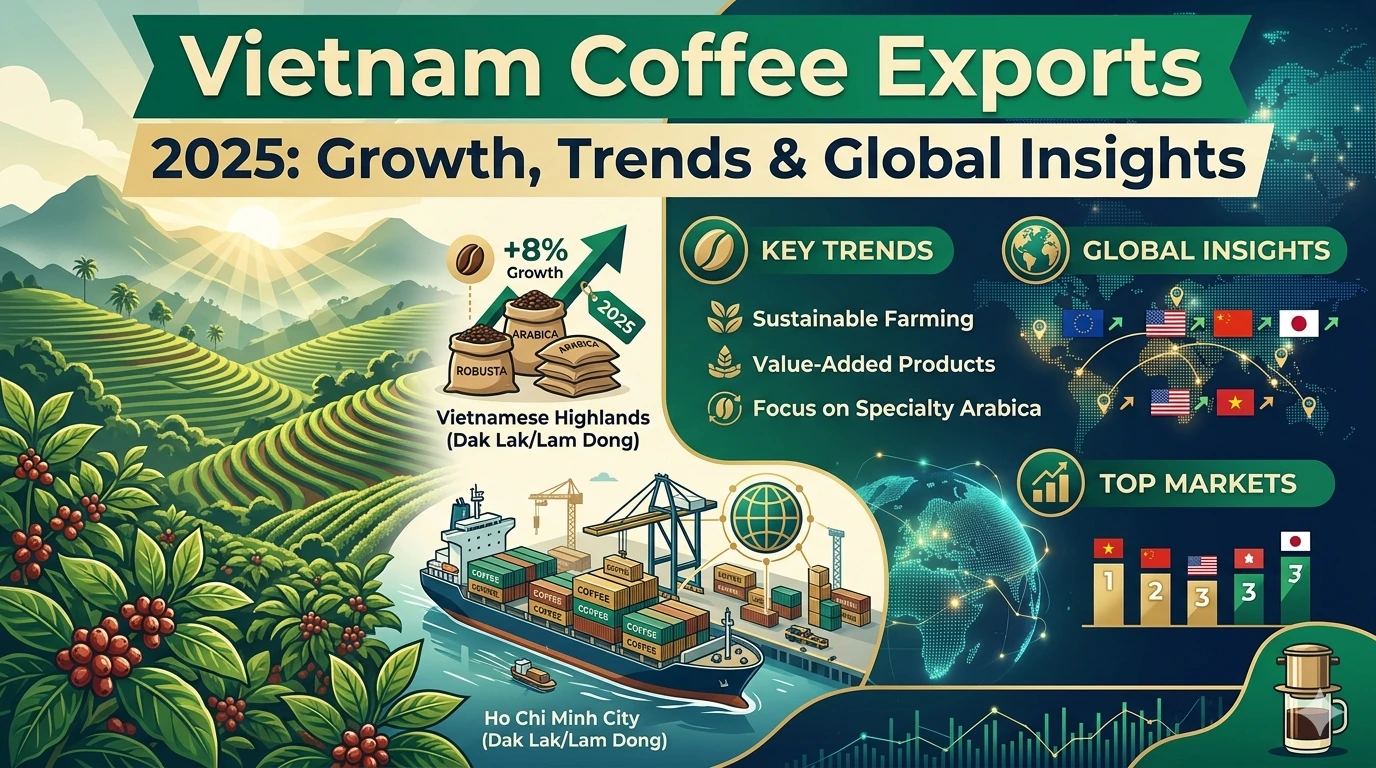
Several key trends are shaping the future of vietnam coffee exports:
1. Shift Toward Value-Added Products
Processed coffee, including roasted and soluble variants, is gaining popularity. This segment is expected to grow significantly, accounting for a larger share of total exports.
2. Expansion into Asian Markets
Asia is emerging as a high-growth region, with increasing demand for premium coffee. This trend is creating new opportunities for vietnam coffee exporters.
3. Sustainable Farming Practices
Sustainability is becoming a priority, with efforts to improve farming techniques, reduce environmental impact, and ensure long-term productivity.
4. Digital Trade and Data Utilization
Access to vietnam customs data and trade analytics is enabling businesses to make informed decisions, identify new markets, and optimize supply chains.
Historical Growth of Vietnam Coffee Exports
Over the past decade, vietnam coffee exports have shown remarkable growth. From $3.31 billion in 2014 to $5.62 billion in 2024, the industry has experienced steady expansion despite occasional fluctuations.
The sharp increase in 2024 and 2025 highlights a shift toward higher-value exports. This transformation reflects the growing maturity of Vietnam’s coffee industry and its ability to adapt to changing market conditions.
Opportunities for Global Buyers
For international buyers, Vietnam offers a reliable and diverse supply of coffee. The country’s strong production base, competitive pricing, and established export network make it an attractive sourcing destination.
By leveraging vietnam customs data, buyers can identify trusted suppliers, analyze market trends, and make strategic purchasing decisions. Working with experienced vietnam coffee exporters ensures consistent quality and timely delivery.
Conclusion
Vietnam’s coffee industry is entering a new era of growth and transformation. With rising global demand, strong pricing, and expanding market reach, vietnam coffee exports are set to achieve unprecedented success in 2025 and beyond.
The combination of robust vietnam coffee production, advanced export capabilities, and strategic trade partnerships positions the country as a global leader in the coffee market.
Despite challenges such as tariffs and climate variability, the resilience of vietnam coffee exporters continues to drive the industry forward. By embracing innovation, sustainability, and market diversification, Vietnam is well-equipped to maintain its competitive edge.
As global coffee consumption continues to rise, Vietnam’s role in the international trade landscape will only grow stronger, making it a key player to watch in the years ahead.