Manufacturing decisions made inside a factory rarely surface in everyday conversation, yet they quietly shape the objects people use without a second thought. Pressurised containers are a good example. The difference between a Two-Piece Aerosol Can and a three-piece version is not just a component count. It reflects a fundamentally different way of thinking about how a container should be built, and that thinking runs through every stage of production.
Three-piece construction was the standard for a long time, and it is worth understanding why it held that position. A cylindrical body is rolled from flat sheet metal and seamed along its length. A separate top and a separate bottom are then crimped on at either end. Three components, three forming operations, three sets of joins. Each join is engineered to hold, and in most cases it does, but seams are still interruptions in the material. Internal pressure does not care about the engineering intention behind a seam; it finds concentration points wherever the surface is not continuous, and crimped edges and weld lines are exactly those places.
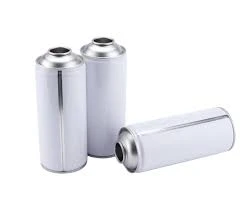
The two-piece approach sidesteps this entirely for the lower portion of the can. Deep drawing presses a flat metal blank into a seamless cylinder with an integrated base, no side seam, no crimped bottom. The forming happens progressively, the metal thinning and lengthening under controlled pressure until the shape is complete. One join remains where the dome is added at the top, but the can body itself arrives at the filling stage as a structurally continuous piece. That matters more than it sounds when you consider how consistently pressure needs to be maintained across the life of the container.
Production flow changes considerably as a result. Three-piece lines need to coordinate three separate component streams before assembly can begin. Body blanks, top discs, bottom discs, each produced separately, each needing to meet dimensional tolerances that allow them to fit together cleanly. When one stream runs slightly off, the whole line adjusts. Two-piece production simplifies that picture. The body arrives complete. The filling and closing operation deals with one incoming component rather than three, and the opportunities for misalignment at assembly shrink accordingly.
Scrap is another thing worth mentioning. Deep drawing does trim the edges of blanks during forming, so it is not a zero-waste process. But the absence of a separately produced base component removes one entire source of material rejection. If a base disc in a three-piece line comes out of spec, it gets pulled. In two-piece production, the base is already part of the body, formed in the same operation, so that category of rejection does not exist in the same way.
There is also the surface question. A side seam on a three-piece can body is visible. It interrupts labels, catches the eye on shelf, and creates a minor but real inconsistency in how printed decoration sits on the surface. Two-piece bodies are smooth all the way around. Labels adhere evenly, print registration holds cleanly, and the finished product looks more cohesive. For consumer products where visual presentation influences purchasing, this is not a trivial consideration.
Neither construction method is inherently wrong for every application. Some products need materials or pressure ratings that suit three-piece construction better. Volume thresholds, capital investment in tooling, and the specific requirements of the fill content all factor in. But across a widening range of pressurised products, the shift toward seamless construction reflects something straightforward: fewer joins, more consistent pressure handling, cleaner surfaces, and simpler production add up to a container that is genuinely easier to make well. Bluefire applies careful construction thinking across its pressurised product range. The full lineup is available at https://www.bluefirecans.com/product/ .