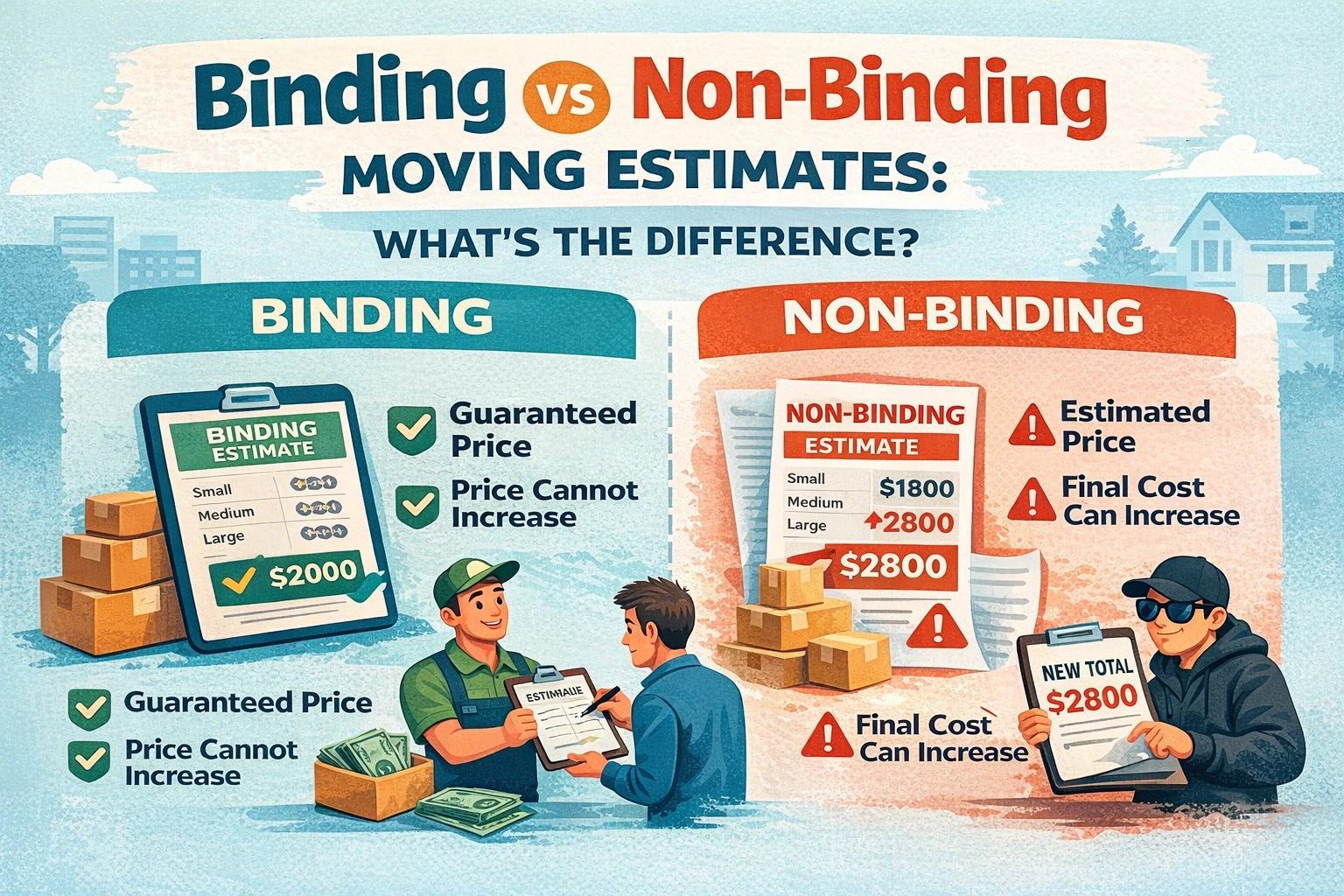
When someone is planning a move, one of the first things they hear from moving companies is “estimate.” It sounds simple, but not all estimates are the same. In fact, understanding the difference between Binding vs Non-Binding Moving Estimates can save a person from unexpected costs and even stressful situations on moving day.
This is something many people overlook, and later, they end up sharing unpleasant Moving Scam Stories. So, it is always better to understand how these estimates work before signing anything.
What Is a Binding Moving Estimate?
A binding estimate is exactly what it sounds like—it binds the price. This means the moving company agrees to complete the move for a fixed cost, regardless of the actual weight or time involved (as long as nothing changes in the inventory).
For example, if a mover gives a binding estimate of $3,000, that is what the customer will pay, even if the shipment ends up weighing more than expected.
According to industry data, nearly 40% of long-distance customers prefer binding estimates because they offer price certainty. This is especially helpful for families working within a strict budget.
However, it is important to remember one thing: if the customer adds extra items later, the price can change. So accuracy during the initial survey is key.
What Is a Non-Binding Moving Estimate?
A non-binding estimate is more flexible—but also less predictable. In this case, the mover provides an estimated cost based on the expected weight and services, but the final price depends on the actual shipment.
For instance, a mover may quote $2,500, but if the shipment weighs more than expected, the final cost could increase significantly.
Statistics show that over 30% of customers experience price increases with non-binding estimates, mainly due to underestimations or last-minute changes.
This type of estimate can work well if the person is confident about their inventory and wants a potentially lower initial quote. But it does come with a level of risk.
Key Differences Between Binding and Non-Binding Estimates
When explaining Binding vs Non-Binding Moving Estimates to someone face-to-face, the simplest way to put it is this:
- A binding estimate gives price certainty
- A non-binding estimate gives price flexibility
Here are the main differences:
Price Stability:
Binding estimates lock the price, while non-binding ones can fluctuate.
Risk Factor:
Binding estimates have low financial risk. Non-binding estimates can lead to unexpected charges.
Flexibility:
Non-binding estimates adjust based on actual weight and services, while binding estimates stay fixed unless changes are made.
Industry Insight:
According to the American Moving & Storage Association, disputes are more common with non-binding estimates due to misunderstandings about final costs.
Why Understanding Estimates Matters
Many people only realize the importance of estimates after something goes wrong. This is where real Moving Scam Stories come into play.
For example, some customers report being quoted a very low non-binding estimate, only to face charges that are 50% to 100% higher on delivery day. These situations often happen because the customer did not fully understand the estimate type.
If someone wants to avoid these scenarios, it is important to learn from trusted resources like this Binding vs Non-Binding Moving Estimates Guide, which explains the process in detail and helps people make informed decisions.
When Should Someone Choose a Binding Estimate?
A binding estimate is a great option when:
- The person has a fixed budget
- They want peace of mind
- They prefer no surprises on moving day
In fact, surveys show that 65% of first-time movers choose binding estimates once they understand the risks of fluctuating costs.
It is especially useful for long-distance or interstate moves, where unexpected charges can quickly add up.
When Is a Non-Binding Estimate a Better Choice?
A non-binding estimate might be suitable when:
- The inventory is small or simple
- The person is flexible with the budget
- They trust the moving company’s accuracy
However, it is always recommended to monitor weight and services closely. Even small miscalculations can lead to higher final bills.
To better understand real experiences, many people read Moving Scam Stories to learn how pricing misunderstandings can impact a move.
Tips to Avoid Moving Estimate Problems
If someone is trying to avoid stress and unexpected costs, a few simple steps can make a big difference:
- Always request a written estimate
- Ask whether it is binding or non-binding
- Provide a detailed inventory list
- Avoid unusually low quotes (they can be red flags)
- Read reviews and past customer experiences
Data suggests that customers who compare at least three estimates reduce overpayment risks by 25%.
Final Thoughts
At the end of the day, understanding Binding vs Non-Binding Moving Estimates is not just about pricing—it is about making a smart, informed decision.
When someone explains it in simple terms, it becomes clear: binding estimates offer security, while non-binding estimates offer flexibility. Both have their place, but the right choice depends on the person’s needs, budget, and comfort level.
By staying informed and learning from real Moving Scam Stories, anyone can avoid common pitfalls and ensure a smooth moving experience.