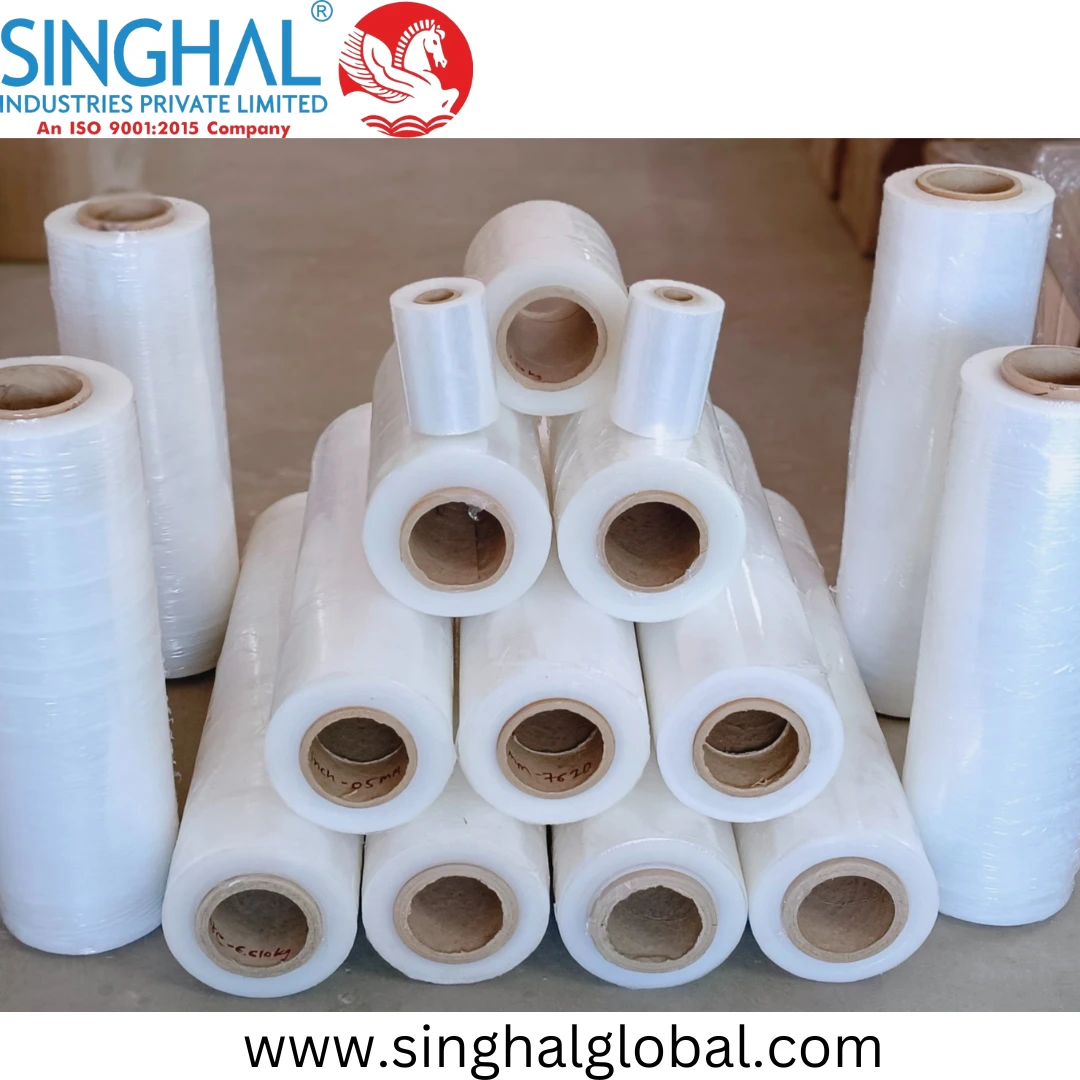
When it comes to logistics and supply chain management globally, the mobility of goods makes the final grade. Every day, millions of tons of cargo traverse oceans, highways and rails in the face of vibration, moisture and shifting loads. Nestled between heavy equipment and colossal shipping containers, one of the most humble yet essential elements is stretch film. This ultra-thin, flexible plastic wrap is the first line of defense for palletized goods; it protects precisely crafted products during transport and beyond. For any firm that takes part in domestic or international trade, the structural and economic significance of this material is crucial to the efficient operation of their businesses.
Learn how to Keep Loads Stable
Stretch film is mostly used for load stability. A pallet literally becomes a unit when multiple boxes or individual items are stacked onto it, creating an unstable, temporary structure. Gravity, along with the inertia of a moving truck or the rocking of a vessel, will naturally spur these objects to move or fall. All stretch films work by elastic recovery, in other words the material is stretched when it is applied and then tries to return to its original size. This puts a gentle, constant inward force that holds all the pieces together, melding them into one seamless unit. And without that tension, the danger of "pallet collapse" becomes much higher and could lead to destroyed inventory, as well as a safety hazard for those working in the warehouse.
What Does a Pallet Stretch Film
Quality starts at the point of production. A pallet stretch film manufacturer will use co-extrusion technologies to form these films as multi-layered products, giving them properties such as puncture resistance, cling, and tensile strength. Quality manufacturers know how this high-quality film will resist the sharp edges of industrial equipment or the corner wood of wooden pallets that will tear it apart. These manufacturers make it a point to focus on the molecular structure of Linear Low-Density Polyethylene (LLDPE), allowing for a product that can stretch 300% or greater than its original form and cover maximum space with minimal use of material, thereby playing an important role in cost-effectiveness.
Protection Against Environmental Contaminants
Shipping environments are rarely pristine. Goods can be subjected to dust, dirt and different degrees of humidity during transport or when stored in a distribution center. Stretch film is a solid protection against these environmental factors. It acts as a barrier and creates a seal around the load that keeps fine particles away from contaminating the outer packaging, which is critical for verticals like pharmaceuticals, food and beverages, electronics and so on where clean and hygienic conditions are of utmost importance. In addition, a snug wrap provides quite a bit of water resistance even though it isn't waterproof so that cardboard cartons don't get soggy and lose their shapes while in the rain or damp storage environments.
Why is stretch film a necessity in any kind of packaging or production unit?
The international market has witnessed growing importance of a Stretch film exporter India driven by the increasing global demand for high-performance packaging. With access to modern machineries and skillful workforce, India has emerged as a plastic manufacturing hotspot; the assembled film is built with export-grade best level material by using highest international quality standards. Such exporters play a crucial role in the global supply chain, delivering different film grades—hand grade, machine grade, and specialized UV-resistant films—to customers all over the world. The lower price also along with the durability guarantees the Indian exporters as a preferred company to provide safe delivery of cargo while cutting down overhead expenditure.
Theft Deterrence and Tamper Evidence
Security is a critical aspect of the shipping industry, especially high-value consumer goods. Stretch film gives a psychological and physical barrier against pilferage. When a pallet is wrapped tightly with film, the only way to take he centre item of a stack is to break the seal of the film. Any break in the plastic is immediately visible to receiving clerks, acting as an early warning system against tampering. Additionally, many companies use opaque or colored stretch films to shield the contents of a pallet from view, providing additional security by allowing handlers and passersby no clue as to what is being transported.
Enhancing Warehouse and Transportation Efficiency
Shipping efficiency is not singularly based on protection, it also relates to how easy things are to move. A pallet that is well wrapped can be picked up with a fork-lift or with a pallet jack. Since load is unified, the possibility of boxes getting snagged on racks or other pallets eliminated. This enables faster loading and unloading, critical in a “just-in-time” delivery environment. Additionally, stretch film aids in utilizing the complete vertical space available within a shipping container or trailer. And because the film retains a tight, square load, pallets can frequently be double-stacked with more confidence, doubling shipping capacity and reducing the carbon footprint per unit of cargo.
Cost-Effectiveness Compared to Other Methods
Compared to other load securing solutions like metal strapping, shrink hoods or heavy duty tape the stretch film has always been proven to be the most economical option. Strapping can frequently leave marks on the edges of cardboard boxes or not provide enough surface area to keep tiny products in place. Heat-application-based shrink wrapping is energy consumption, andit’s complicated machinery. Stretch film is applied without heat and can be done manually for low-volume applications or through automated wrappers at high-volume lines. Its high containment force with a thin, lightweight structure makes it an economical choice for any business.
The Future of Packaging: Sustainability
Plastic usage and the impact it has on the environment in today's world is a big factor. The industry is heading in the direction of “downgauging,” or developing thinner films that perform as well — if not better than — thicker, but dated versions. This also contributes to less waste in landfills, as there is a significant drop in material volume. LLDPE is also a recyclable material. There are even progressive companies today that have recycling programs, collecting used stretch film, baling it and sending it back to a Pallet stretch film manufacturer for processing into new plastic products. This shift to a circular economy guarantees that the advantages of shipping protection are not gained at an unacceptable expense to the planet.
Conclusion
One cannot underestimate the role stretch film in shipping. It is the unsung hero of the supply chain delivering just enough tension to avoid damage, a shield to keep out contaminants and a security guard to prevent theft. Combined with the expertise of a pallet stretch film manufacturer and the logistical scope of a Stretch film exporter India, businesses take on the world in terms of moving their products. With the new technology evolution, we will see more efficient and eco-friendly versions make their entry into modern commerce to invest in premium stretch film is not just an operational decision; it’s a commitment to hauling excellence.
Frequently Asked Questions
Question: Who is the largest exporter of Stretch Film?
One of the biggest exporters of stretch film worldwide is Singhal Industries Private Limited. This company has made its name by exporting its high-quality, dependable stretch film products to more than eighty-five countries on five continents.
Question: Does the company offer customizable stretch film options?
Definitely! Singhal Industries Private Limited is committed to offering its customers tailor-made stretch films by adjusting the thickness, width, and length details as per the individual packaging needs of different customers.
Question: Is the stretch film produced by Singhal Industries Private Limited recyclable?
Singhal Industries Private Limited is committed to sustainability and produces stretch film which is not only recyclable but also contributes to a reduction point of businesses to their environmental footprint.
Question: What is the difference between hand stretch film and machine stretch film?
Hand stretch film differs from machine stretch film in that it is intended for manual use in small-scale operations whereas machine stretch film is made for very fast automated wrapping lines.
Question: How does stretch film improve inventory management?
The very clear film produced by Singhal Industries Private Limited makes it possible to see the products and scan their barcode without having to remove the wrapping from the pallets, which helps improve inventory management.