Introduction to the Energy Drinks Market
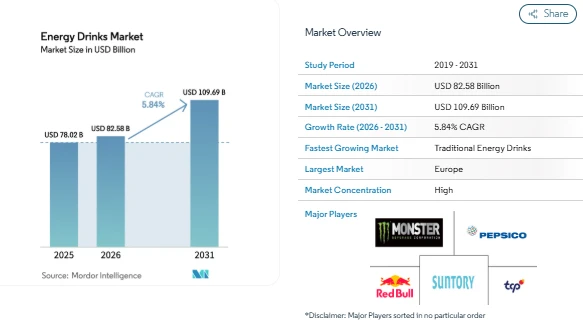
The global Energy Drinks Market is expected to reach USD 109.69 billion by 2031, growing from USD 82.58 billion in 2026 at a CAGR of 5.84%. This growth is driven by changing consumer preferences toward functional beverages, natural ingredients, and convenient packaging. With increasing urbanization, busy lifestyles, and rising disposable incomes, consumers are seeking energy-boosting drinks that not only stimulate alertness but also provide added wellness benefits.
Manufacturers are responding by enhancing formulations with plant-based caffeine sources, vitamins, electrolytes, and adaptogens. Meanwhile, emerging markets in the Middle East, Africa, and Southeast Asia show fast-paced growth as regulations ease and consumption habits evolve. The Energy Drinks Market Forecast indicates sustained expansion, with functional wellness positioning becoming a core focus for brands.
Key Trends in the Energy Drinks Market
Busy Lifestyles and On-the-Go Consumption
-
Consumers are increasingly favoring portable beverages that fit hectic workdays.
-
2-ounce energy shots are rising in popularity, especially among women aged 25–34.
-
Clean-label and zero-sugar products align with daily consumption preferences.
Expansion of Convenience and E-Commerce Channels
-
Online platforms and subscription models boost convenience and recurring purchases.
-
Convenience stores are expanding cooler space to accommodate new SKUs.
-
Emerging brands benefit from faster digital rollouts, reducing market-entry barriers.
Functional Beverage Positioning
-
Drinks are fortified with vitamins, electrolytes, nootropics, and adaptogens.
-
Muscle-recovery and endurance products are attracting fitness enthusiasts.
-
Brands face compliance challenges with health claims, influencing product formulation.
Esports and Gamer-Targeted Formulations
-
Energy drinks are increasingly marketed to gamers with high-caffeine, cognitive-enhancing ingredients.
-
Partnerships with gaming platforms expand brand visibility beyond traditional media.
-
Female gamers are influencing flavor profiles and caffeine levels.
Market Segmentation of Energy Drinks Market
By Type
-
Traditional
-
Sugar-free / Low-calorie
-
Natural / Organic variants
By Packaging Type
-
Metal Cans
-
PET Bottles
-
Glass Bottles
-
Aseptic Cartons / Pouches
By Functionality
-
Endurance / Energy Boost
-
Muscle Recovery
-
Cognitive Enhancement / Other
By Distribution Channel
-
Retail (Supermarkets, Hypermarkets, Convenience Stores, Online)
-
HoReCa (Hotels, Restaurants, Cafés)
By Geography
-
North America
-
Europe
-
Asia-Pacific
-
Middle East & Africa
-
South America
Key Players in the Energy Drinks Market
-
Red Bull GmbH – Premium positioning with global distribution networks.
-
Monster Beverage Corporation – Diverse flavor portfolio and strong marketing presence.
-
PepsiCo, Inc. – Leveraging extensive beverage networks for shelf visibility.
-
Keurig Dr Pepper – Strategic acquisitions like Ghost Energy enhance gaming and fitness branding.
-
Suntory Holdings Limited – Expanding in natural and functional beverage segments.
-
T.C. Pharmaceutical Industries Company Limited – Focused on regional flavors and specialized formulations.
Conclusion
The Energy Drinks Market Growth continues to be fueled by changing consumer lifestyles, the rising appeal of functional wellness beverages, and expanding distribution channels. The shift toward natural ingredients, sugar-free options, and premium packaging is shaping the market dynamics while catering to health-conscious and convenience-seeking consumers.
The outlook for the Energy Drinks Market Forecast through 2031 highlights steady growth, indicating that energy beverages will remain a staple in the functional beverage space, meeting consumer needs for both performance and wellness.