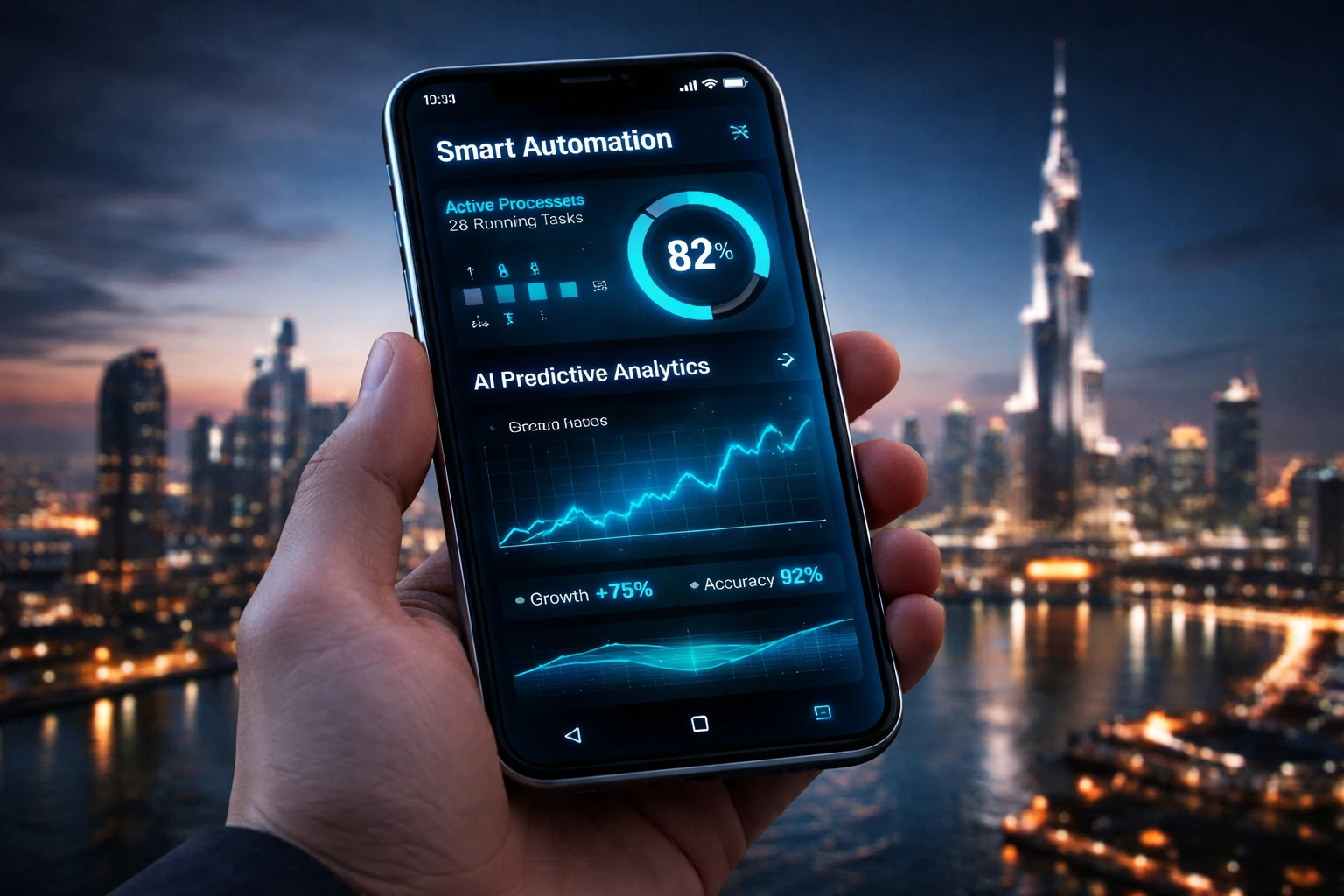
I was recently talking to a business owner who wanted to "add AI" to his app. When I asked him why, he couldn't give me a straight answer. He just thought he had to because everyone else was talking about it.
That is the biggest trap right now. AI isn't a magic button you press to make an app better. If your app is slow or confusing, adding a chatbot isn't going to save it. But if you use automation to fix the boring stuff, everything changes.
The future of development isn't about robots taking over. It is about making apps that actually feel like they have a brain. It is about an app knowing what you want before you even tap the screen.
Predicting the next move
The smartest apps don't just wait for you to do something. They learn your habits. Think about how you use your phone. Do you open the same food delivery app every Friday at 7:00 PM?
A well-built app should already have your favourite order ready. It should know your address and have a discount waiting. That isn't magic. It is just basic pattern recognition.
This is where a Custom Mobile App Development Agency in Dubai can actually help. They build the logic that watches these patterns. The goal is to reduce the number of taps it takes to get things done. Every tap you remove makes the user more likely to stay. When an app anticipates a need, it stops being a tool and starts being a partner.
Automation behind the curtain
Most people think of AI as something they can see, like a voice assistant. But the real power is in the stuff you never see. It is in the way the app manages its own data.
In the past, developers had to manually fix every tiny bug. Now, automated systems can watch an app's performance in real-time. If the server starts to lag, the system can often fix itself before a human even knows there is a problem. This is about more than just convenience; it is about absolute reliability.
This kind of "self-healing" tech is becoming standard. It means less downtime for your business. It means your customers don't get frustrated by a spinning loading wheel while they are trying to pay. It’s the invisible work that keeps a brand’s reputation intact during high-traffic moments.
Why Personalised usually means Annoying
We have all been chased around the internet by an ad for a pair of shoes we already bought. That is bad automation. It feels creepy and lazy. It shows a complete lack of understanding of the user's actual journey.
The future of AI is about being helpful without being loud. It is an app that notices you are near a store and reminds you that you have a return to make. Or a banking app that notices your spending is higher than usual and quietly suggests a budget.
It is about context. If the app doesn't understand your current situation, it is just noise. Getting this right takes a lot of trial and error. You need a Mobile App Development Agency in Dubai that understands the difference between a helpful nudge and a spammy notification. True intelligence is knowing when to stay silent.
The end of the One Size Fits All interface
Why should my app look exactly like yours? If I only use the search bar, why is it buried at the bottom? If you only use the favourites tab, why should you have to navigate through five menus to find it?
We are moving toward apps that change their layout based on who is using them. If you are a power user, the app gives you all the advanced buttons. If you are a beginner, it stays simple and clean.
Automation allows the interface to morph in real-time. It studies how you move through the menus and brings your favourite features to the front. It makes the app feel like it was built specifically for you, adapting to your unique workflow rather than forcing you to adapt to its design.
The security problem nobody talks about
With all this data being collected to "learn" your habits, security becomes a massive headache. You can't just store this stuff on a messy spreadsheet anymore.
Automated security is the only way to keep up with modern threats. Hackers use bots to find holes in your code. You need your own bots to find them first. This isn't just about firewalls; it's about behavioural analysis that can spot a breach before data is even touched.
This is the "arms race" of app development. The apps that survive will be the ones that use AI to guard the gates. If a user's login looks suspicious, the system should catch it instantly, not three days later when the data is already gone. Privacy isn't a feature anymore—it's the foundation.
Is it worth the investment?
Building an app with these features is not cheap. It takes more time and more testing. But think about the alternative.
If your competitor has an app that learns and adapts, and yours is just a static menu, you’ve already lost. People have zero patience for "dumb" technology anymore. They expect the software to work for them, not the other way around.
The transition doesn't happen overnight. You start small. You automate one repetitive task. You add one smart filter. You build the foundation first, ensuring that every piece of AI you add serves a clear, human purpose.
Keeping it human
The irony of all this automation is that it should make the app feel more human, not less. It should feel like a helpful assistant who knows your name and remembers your preferences without being prompted.
If the AI makes the experience feel cold or robotic, it has failed. The tech should stay in the background. The user should just feel like the app is incredibly easy to use. Success is when a user says, That was easy without ever realising how much complex math went into making it so.
Do you remember when we had to manually enter our credit card details every single time we bought something? That feels like the Stone Age now. In five years, searching for things in an app will feel just as old-fashioned. The app will just know.
It is a big shift, but it is a necessary one. The businesses that embrace it now are the ones that will still be around to see what comes next. It’s about being ready for a world where technology finally starts thinking for us.