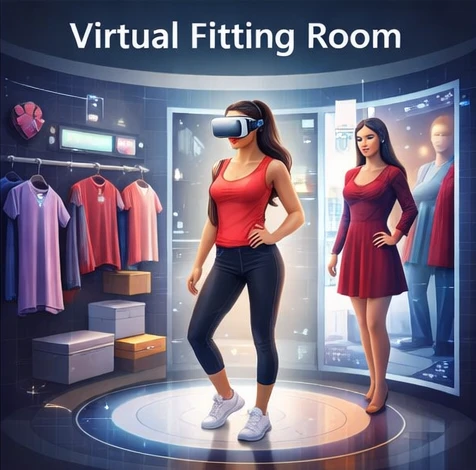
Understanding the Rise of Virtual Fitting Room Technology
The evolution of e-commerce has brought significant changes to how consumers shop, and one of the most innovative developments is the emergence of virtual fitting room technology. This technology allows customers to try on clothing, accessories, and even cosmetics digitally, eliminating the uncertainty often associated with online shopping. By combining artificial intelligence, augmented reality, and 3D visualization, virtual fitting rooms provide a highly interactive and personalized experience. As online shopping continues to grow, the demand for accurate and engaging try-on solutions is driving the expansion of the virtual fitting room market.
Growth of the Virtual Fitting Room Market
The virtual fitting room market is experiencing rapid growth as retailers adopt advanced technologies to enhance customer experience and reduce return rates. Consumers are increasingly seeking convenience and personalization, and virtual fitting rooms address both by offering real-time visualization and tailored recommendations.
Recent projections highlight the strong growth potential of this space. The global virtual fitting room market size was estimated at USD 5.57 billion in 2024 and is projected to grow at a CAGR of 24.6% from 2025 to 2030. This significant expansion reflects the increasing adoption of digital solutions by retailers and the rising demand for immersive shopping experiences among consumers.
The Role of Virtual Fitting Room Apps in Modern Retail
The popularity of smartphones has led to the rapid adoption of the virtual fitting room app, making digital try-on experiences more accessible than ever. These apps allow users to try products using their device cameras, enabling a seamless and convenient shopping journey. Retailers are investing heavily in app-based solutions to engage customers and improve conversion rates.
Virtual fitting room apps are also integrating advanced features such as AI-driven recommendations and personalized styling suggestions. By analyzing user preferences, body measurements, and purchase history, these apps provide tailored experiences that enhance customer satisfaction and loyalty.
AI and AR Driving Innovation
Artificial intelligence and augmented reality are at the core of modern virtual fitting room technology. AI algorithms analyze user data to recommend the best sizes and styles, reducing the likelihood of returns. Augmented reality enables real-time visualization, allowing customers to see how products look on them before making a purchase.
In addition to AR, 3D body scanning technology is gaining traction, enabling the creation of digital avatars that accurately represent a user’s body shape. These avatars provide a realistic simulation of how clothing fits, making the virtual fitting experience more precise and reliable. This level of innovation is transforming the way consumers interact with online retail platforms.
Enhancing Customer Experience and Reducing Returns
One of the key benefits of virtual fitting room technology is its ability to improve customer confidence and reduce product returns. By providing accurate fit and style visualization, virtual fitting rooms help customers make informed purchasing decisions. This not only enhances user satisfaction but also reduces operational costs for retailers associated with returns and exchanges.
The integration of virtual fitting room solutions with e-commerce platforms further enhances the shopping experience. Customers can seamlessly transition from browsing products to trying them on virtually, creating a more engaging and efficient purchasing journey.
Sustainability and the Future of Retail
Sustainability is becoming an important consideration in the virtual fitting room market. By reducing the number of returned products, virtual fitting rooms contribute to lower carbon emissions associated with shipping and packaging. This aligns with the growing demand for environmentally responsible retail practices.
As retailers continue to adopt omnichannel strategies, virtual fitting rooms are bridging the gap between online and in-store experiences. Customers can enjoy a consistent and interactive shopping journey across multiple channels, enhancing brand engagement and customer loyalty.
Future Outlook of Virtual Fitting Room Technology
The future of virtual fitting room technology looks promising, with continuous advancements expected to drive further innovation. Emerging technologies such as virtual reality and machine learning will enhance the realism and accuracy of digital try-on experiences. Additionally, the integration of social and gamified elements will make virtual fitting rooms more interactive and engaging.
As the virtual fitting room market continues to grow, businesses that invest in advanced technology and user-centric solutions will gain a competitive advantage. The increasing adoption of virtual fitting room apps and technologies will play a crucial role in shaping the future of online retail.
Conclusion
Virtual fitting rooms are revolutionizing the e-commerce landscape by offering personalized, interactive, and efficient shopping experiences. With the rapid growth of the virtual fitting room market and continuous advancements in technology, digital try-on solutions are becoming an essential tool for modern retailers. As innovation continues to evolve, virtual fitting room technology will remain a key driver of transformation in the retail sector.