Introduction: Functional Water Market Overview
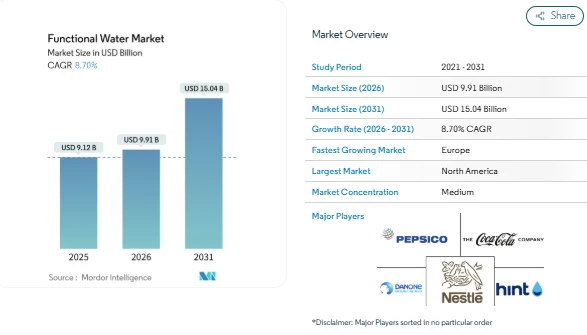
The Functional Water Market is witnessing steady growth as consumers increasingly seek beverages that go beyond basic hydration. The market size is expected to rise from USD 9.91 billion in 2026 to USD 15.04 billion by 2031, growing at a CAGR of 8.70% during this period. Functional water has evolved from simple vitamin or mineral enhancements to beverages that support immunity, energy, digestion, cognition, and skin health.
The Functional Water Market Size and growth potential reflect its shift from a niche category to a mainstream beverage segment, providing opportunities for both established players and new entrants focused on natural and clean-label products.
Key Trends in the Functional Water Market
Rising Health Awareness Drives Functional Ingredients
Consumers are increasingly reading ingredient labels and choosing beverages with added vitamins, minerals, and electrolytes. Functional waters offer low-calorie hydration with essential nutrients such as B-vitamins, vitamin C, zinc, and magnesium. Regulatory frameworks in the U.S. and Europe allow these nutrients to be added safely without classifying products as dietary supplements, supporting the Functional Water Market Growth globally.
Demand for Low-Calorie Alternatives
Health-conscious consumers are moving away from sugary drinks, opting for zero- or low-calorie functional waters. Products fortified with vitamins but sweetened with approved non-nutritive sweeteners, like stevia or erythritol, are gaining traction. Urban markets in the Asia Pacific are also driving this trend due to rising awareness about sugar reduction and diabetes prevention.
Convenience for Busy Lifestyles
Fast-paced lifestyles are increasing demand for functional water packaged in bottles and cans that are portable and easy to consume. These beverages provide hydration with additional benefits such as energy support, immune boosting, and digestive aid. Millennials, fitness enthusiasts, and professionals with limited time are a key consumer base, contributing to sustained Functional Water Market Trends.
Functional Water Market Segmentation
-
By Product Type:
-
Vitamin-Fortified
-
Protein
-
Electrolyte/Mineral
-
Others
-
By Packaging:
-
PET Bottle
-
Can
-
Others
-
By Flavor:
-
Flavored
-
Non-Flavored
-
By Distribution Channel:
-
Supermarkets/Hypermarkets
-
Convenience/Grocery Stores
-
Online Retail Stores
-
Other Distribution Channels
-
By Geography:
-
North America
-
Europe
-
Asia-Pacific
-
Middle East & Africa
-
Latin America
Key Players in the Functional Water Industry
-
The Coca-Cola Company – Offers vitaminwater and Glaceau Smart Water, including zero-sugar fortified options.
-
PepsiCo, Inc. – Known for LIFEWTR and VitaminWater, leveraging extensive retail networks.
-
Nestlé S.A. – Provides mineral-enriched functional waters with established brand recognition.
-
Danone S.A. – Focuses on fortified beverages and global distribution reach.
-
Hint Inc. – Smaller brand specializing in clean-label, naturally flavored functional waters.
Conclusion
The Functional Water Market is set for steady growth over the next five years, supported by rising consumer interest in health and wellness, low-calorie alternatives, and convenient hydration options. The market offers opportunities for both large established players and innovative smaller brands.
By focusing on clean-label formulations, sustainable packaging, and consumer education, companies can capture growing market opportunities while meeting evolving preferences. The future of the Functional Water Industry points to an accessible, diverse, and health-oriented beverage landscape.