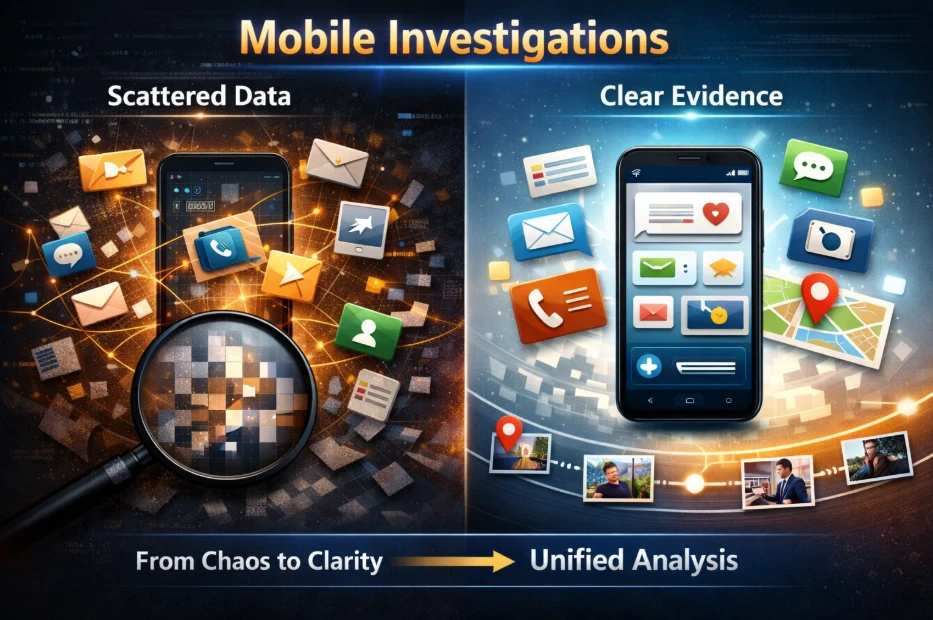
Mobile devices have quietly become the center of modern investigations. They are no longer just communication tools they are complete records of human activity. From messages and emails to locations and media, almost every action leaves a trace.
The real challenge today is not finding data. It is understanding scattered data and turning it into clear evidence.
Investigations Now Begin with Mobile Devices
A few years ago, investigations started with desktops and servers. Today, they begin with smartphones.
People use mobile devices for:
-
Communication through apps
-
Sending and receiving emails
-
Sharing files and media
-
Tracking locations
Think of a mobile device like a control room. Every action is recorded, every movement logged. For investigators, this becomes a map of behavior and intent.
The Real Problem: Too Much Scattered Data
Even though mobile devices hold valuable evidence, the data is often scattered across multiple platforms.
Common challenges include:
-
Data spread across different apps
-
Multiple formats from different tools
-
Large volumes of information
-
Limited time for analysis
It’s like having all the pieces of a puzzle, but no clear way to connect them. The data exists, but the story remains hidden.
What Kind of Evidence Exists in Mobile Devices
Mobile devices store different types of evidence that, when combined, tell a complete story:
-
Messages (SMS and chat apps)
-
Emails and attachments
-
Photos and videos
-
Call logs
-
Location history
Each piece adds context. Together, they help investigators understand what happened, when it happened, and why it happened.
Why Traditional Methods Fall Short
Traditional investigation methods rely heavily on manual processes and multiple tools.
For example, an investigator may:
-
Extract mobile data using one tool
-
Analyze emails separately
-
Manually review files and logs
This leads to:
-
Slow investigations
-
Higher chances of missing evidence
-
Difficulty in connecting data
-
Increased dependency on manual effort
It is similar to analyzing a case where files are stored in different rooms. Without bringing everything together, important connections are lost.
Making Sense of Complex Mobile Data
Mobile forensic data is often large and complex. Without proper organization, it becomes difficult to understand.
To handle this, investigators need a structured approach that helps them:
-
Focus on important evidence
-
Reduce manual effort
-
Speed up investigations
In real cases, data often comes from multiple forensic tools and formats. This includes sources like MSAB, Oxygen, and UFED, which can make analysis more complicated when handled separately.
Instead of managing different formats, investigators need a way to work with everything in one place.
A Smarter Way to Handle Investigations
A modern approach focuses on clarity instead of complexity.
When data is organized properly, investigators can:
-
Analyze communication patterns in one place
-
Understand relationships between data points
-
Build clear timelines of events
This is where tools like MailXaminer help simplify the process. By bringing email evidence and mobile data together, it allows investigators to move from scattered information to structured, meaningful insights.
From Data to Clear Evidence
Think of the difference between a cluttered desk and a clean workspace.
Before:
-
Data scattered across tools
-
Difficult to connect evidence
-
Time-consuming analysis
After:
-
Organized information
-
Clear connections
-
Faster and more confident decisions
This shift is what makes modern investigations more effective. We hope you now understood why mobile devices are critical in modern investigations.
Conclusion
Mobile devices have become the most important source of evidence in today’s investigations. They hold valuable data, but the real challenge lies in making sense of it.
Traditional methods often fall short because they treat data separately. Modern investigations require a unified approach where mobile and email data are analyzed together.
When data is connected and clearly understood, it transforms from scattered information into reliable evidence that solves cases.