
What This Is Really About
Home lighting design is the intentional planning of how light works in every room of your house. It covers what type of fixtures you use, where you place them, how bright they are, and how they serve your daily activities.
It is not about picking pretty lamps from a catalog. It is about making your rooms functional, comfortable, and visually balanced.
Most people treat lighting as an afterthought. They move into a home and live with whatever ceiling fixture was already installed. That single decision, or lack of one, affects how their space looks, how they feel in it, and how well they can actually use it.
Why It Deserves Your Attention
Poor lighting causes real problems that people rarely trace back to the source.
-
Eye strain while reading
-
A kitchen that feels dim even during the day
-
A living room that looks flat and uninviting no matter how well it is furnished
Good lighting solves these problems quietly. When it is done right, nobody notices the lighting itself. They just notice that the room feels right.
Here is what proper planning actually impacts:
-
Functionality: Can you chop vegetables safely on your counter? Can you read in bed without squinting?
-
Mood: Warm light in the evening relaxes you. Cool, harsh light does the opposite.
-
Visual appeal: Shadows, layers, and focal points make rooms look finished and intentional.
-
Energy bills: The right fixtures and bulbs in the right places reduce unnecessary electricity use.
The Three Layers Every Room Needs
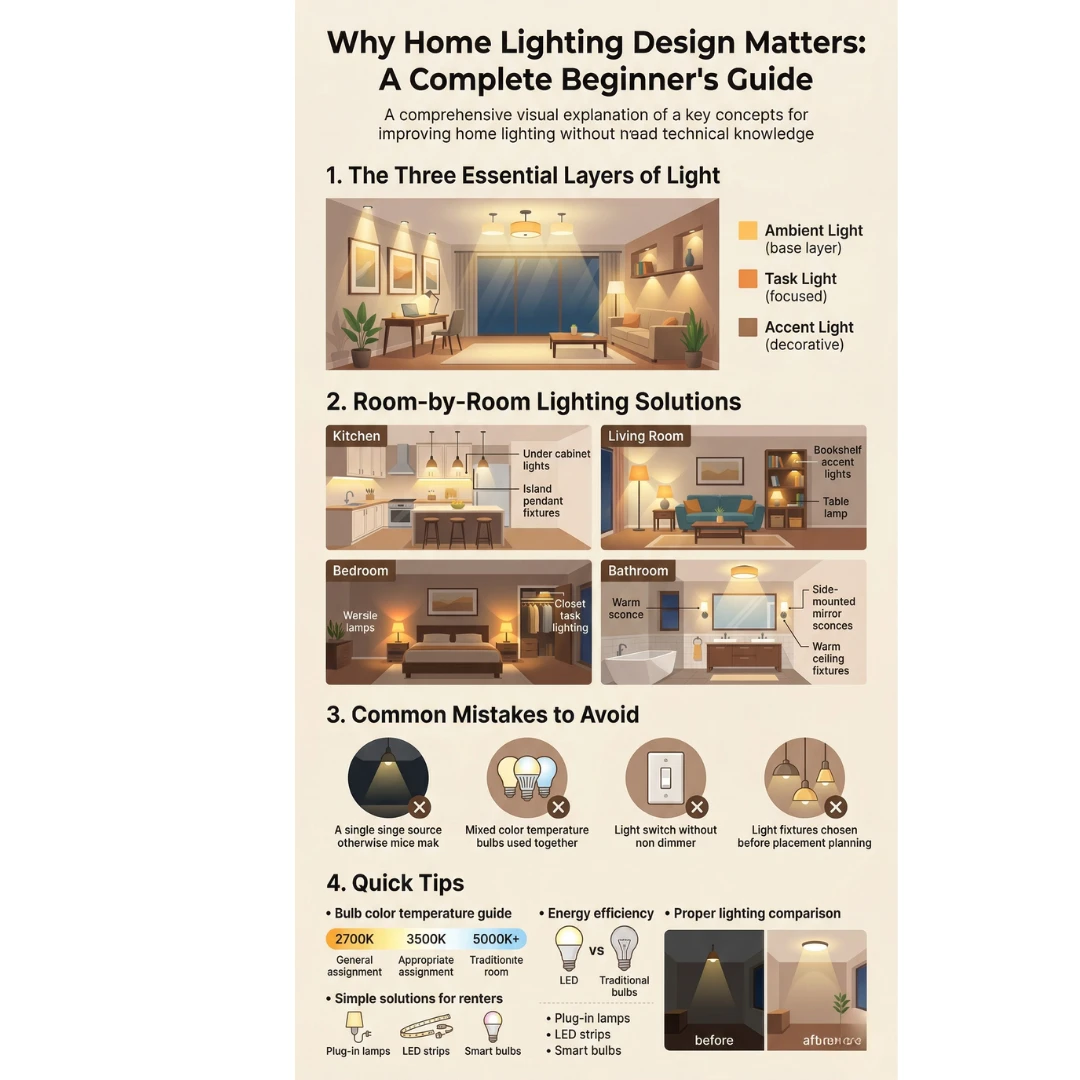
If you remember one concept from this entire guide, let it be this: every room needs three types of light working together.
Ambient Light
This is your base layer. It fills the room with general brightness. Think of ceiling fixtures, recessed cans, or even a large floor lamp that throws light upward.
Without ambient light, everything else feels spotty and inconsistent.
Task Light
This is light aimed at a specific activity. A desk lamp for work. Under cabinet strips for kitchen prep. A reading light next to your chair.
Task lighting prevents you from straining your eyes during focused activities.
Accent Light
This is the layer most beginners skip, and it is the one that makes the biggest visual difference. Accent light draws attention to a piece of art, a textured wall, or architectural detail.
It creates depth. Without it, a room can look flat even with plenty of brightness.
Room by Room: What Actually Works
Kitchen
Kitchens need the most layered approach. Overhead lighting alone creates shadows right where you are working.
-
Under cabinet lights solve this instantly
-
A pendant over an island adds both function and visual interest
Living Room
Avoid relying on a single overhead fixture.
-
A floor lamp in one corner
-
A table lamp on a side table
-
A small accent light on a bookshelf
These will make the room feel warm and dimensional.
Bedroom
Keep it soft.
-
Bedside lamps with warm bulbs work better than bright overhead lights
If you have a closet or dressing area, add focused task lighting there separately.
Bathroom
The mirror area matters most.
-
Side mounted sconces at face level reduce shadows far better than a light placed above the mirror
For the rest of the bathroom, a simple ceiling fixture with a warm tone works fine.
Mistakes Beginners Make
-
Using only one light source per room
This is the most common mistake and the easiest to fix. Even adding one extra lamp changes how a room feels. -
Ignoring color temperature
Bulbs come in warm (2700K), neutral (3500K), and cool (5000K+) tones. Mixing them in the same room creates visual confusion.
Stick to one temperature per space:-
Warm for living and sleeping areas
-
Neutral or cool for workspaces
-
-
Overlooking dimmers
A dimmer switch costs very little but gives you full control over mood and brightness throughout the day. It is one of the most practical upgrades you can make. -
Choosing fixtures before planning placement
The look of a fixture matters less than where it sits and what job it does. Start with function, then find a fixture that fits.
When to Bring in a Professional
If you are building a new house or doing a major renovation, working with someone who specializes in home lighting design is worth the cost.
They will plan circuits, fixture placement, and control systems before walls go up. Fixing lighting after construction is expensive and limited.
For smaller projects, you can handle most decisions yourself using the layering approach above.
-
Start with one room
-
Live with it for a week
-
Adjust
-
Then move to the next room
Conclusion
Lighting is one of the few elements in a home that affects both how a space looks and how it works on a daily basis.
You do not need a large budget to make meaningful changes. Start by identifying what each room is used for, add layers of light to support those activities, and pay attention to color temperature and placement.
Small, intentional choices add up to rooms that feel noticeably better.
Frequently Asked Questions
Q.1 What is the best color temperature for home lighting?
For living rooms and bedrooms, warm white (2700K to 3000K) works best. For kitchens and home offices, neutral white (3500K to 4000K) is more practical.
Avoid mixing different temperatures in the same room.
Q.2 How many light sources does a room need?
Most rooms benefit from at least three sources covering ambient, task, and accent layers. A single overhead fixture is almost never enough for a well lit room.
Q.3 Are LED bulbs worth switching to?
Yes. LEDs use significantly less electricity, last much longer than incandescent bulbs, and now come in a wide range of color temperatures. The upfront cost pays for itself quickly.
Q.4 Can I improve my home lighting design without rewiring?
Absolutely.
-
Plug in lamps
-
Peel and stick LED strips
-
Battery operated puck lights
-
Smart bulbs with adjustable brightness
All can make a big difference without any electrical work.
Q.5 Do I need a professional for lighting in a small apartment?
In most cases, no. The layering principle works regardless of space size.
Focus on placing different types of light at different heights and positions. A professional becomes more valuable for large homes or complex renovation projects.




