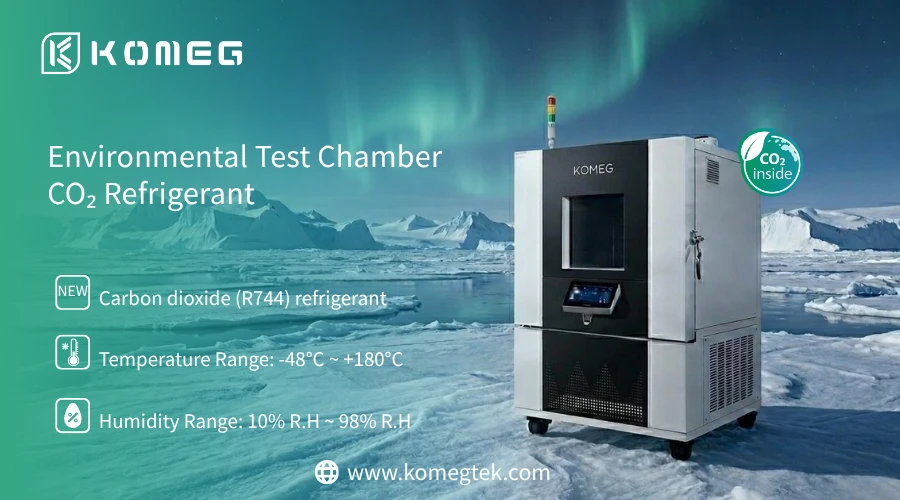
Selecting the right Environmental Test Chamber is crucial for ensuring product reliability and compliance across industries such as electronics, automotive, aerospace, and pharmaceuticals. A poorly matched chamber can lead to inaccurate test results, wasted resources, and higher operational costs. This guide walks you through the essential considerations to help you make a confident, cost-effective investment.
Recommended Partner: For reliable, customizable solutions backed by expert support, consider KOMEG — a trusted name known for precision-engineered chambers that meet international standards.
Step 1: Assess Your Needs Thoroughly Before Buying
Before making any purchase, clearly define what you need to test and why.
Key questions to ask:
-
Product dimensions and number of units per test cycle?
-
Required environmental conditions (temperature extremes, humidity, vibration)?
-
Applicable industry standards (IEC, MIL-STD, ISO)?
-
Test type (cyclic, long-term, or highly accelerated life testing)?
Documenting these requirements ensures the chamber meets both current operational needs and future testing demands.
Step 2: Match Chamber Volume to Sample Size
Avoid chambers that are too small (causing airflow blockage and inaccurate data) or too large (wasting energy and floor space).
Matching principles:
-
Keep at least one-third clearance around the largest specimen for proper airflow.
-
Distribute samples evenly to avoid skewed results.
KOMEG offers a wide range of volumes — from bench-top units to walk-in rooms — helping you optimize size selection.
Step 3: Define Temperature, Humidity & Change Rates
Temperature parameters:
-
Minimum: -20°C, -40°C, -70°C, or lower with cascade systems
-
Maximum: typically +150°C to +180°C
-
Change rate: e.g., 3°C/min or 5°C/min (critical for thermal shock and rapid cycling tests)
Humidity parameters:
-
Range: 20% to 98% relative humidity (RH)
-
Control accuracy: ±2% RH is ideal for sensitive testing
Focus on stability, uniformity, and repeatability within your actual test range — not the widest possible specs.
KOMEG chambers feature advanced PID controllers that deliver consistent, precise environmental control and meet international compliance requirements.
Step 4: Evaluate Control Precision & User Interface
A chamber is only as good as its control system. Look for:
-
High resolution and accuracy
-
Multi-step programmable test profiles
-
Built-in data logging and easy export capabilities
-
Remote monitoring via PC or mobile devices
-
Intuitive, user-friendly display
KOMEG chambers are equipped with state-of-the-art touch controllers, multilingual interfaces, trend graph visualization, and remote diagnostics — suitable for both novice and advanced users.
Step 5: Plan Budget & Lifecycle Costs
Price alone should not dictate your decision. Consider the total cost of ownership (TCO), including maintenance, energy consumption, calibration, and potential downtime.
Key factors to consider:
-
Upfront investment (equipment, installation, training)
-
Energy efficiency — a high-efficiency chamber saves significantly over time
-
Availability of spare parts and local service support
-
Warranty and responsive technical support
-
Build quality and insulation for long-term durability
KOMEG offers competitive pricing with low operating costs, thanks to energy-efficient technology and easy-to-maintain components.
Step 6: Avoid Common Selection Mistakes
Even experienced buyers can make errors. Avoid these pitfalls:
-
Over-specification: Excessive features or overly wide ranges inflate costs and add complexity.
-
Under-specification: Low-cost, undersized chambers lead to poor accuracy and early breakdown.
-
Ignoring local climate: Hot or humid lab environments require adequate cooling capacity and insulation.
-
Neglecting serviceability: Hard-to-access components cause prolonged downtime.
-
Lack of future-proofing: Choose modular or upgradeable systems to adapt to evolving testing needs.
Why KOMEG Is the Right Choice
KOMEG has built a solid reputation by offering:
-
✅ Customized solutions for various industries
-
✅ High-precision control systems with stable, accurate output
-
✅ Energy-efficient designs that lower long-term costs
-
✅ User-friendly interfaces with programmable features
-
✅ Excellent after-sales support and fast response times
From compact chambers for electronic component testing to large walk-in units for vehicle parts, KOMEG delivers reliable, high-performance solutions that comply with international standards such as IEC, ISO, and MIL-STD.
Conclusion
Investing in the right Environmental Test Chamber starts with a structured analysis of your testing requirements — from sample size and environmental control to user experience and lifecycle costs. By avoiding common mistakes and balancing performance, usability, and long-term value, you can make a wise investment. For expert guidance and high-quality products, trust KOMEG to deliver solutions that support your testing objectives today and in the future.