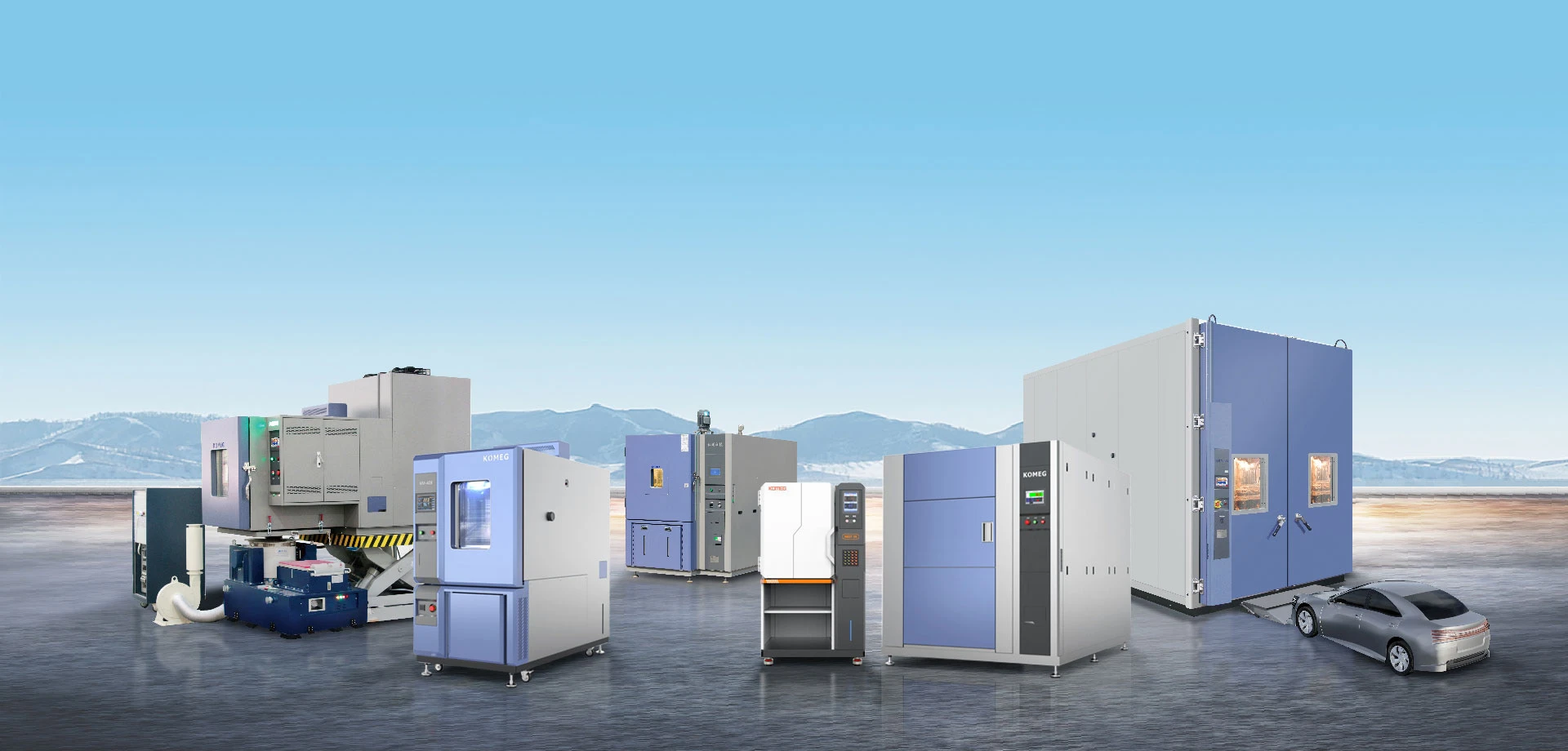
In an era where product reliability, safety, and durability are paramount, environmental test chambers have become indispensable to quality assurance processes across industries. As technological advancements evolve and new industrial sectors emerge, the demand for replicating real-world environmental conditions has grown exponentially.
By 2026, environmental test chambers will have become more automated, intelligent, and adaptable than ever before, catering to a diverse range of fields from electronics and aerospace to pharmaceuticals. This article explores the definition of environmental test chambers and delves into their top 10 key applications in today’s industrial landscape.
What is an Environmental Test Chamber?
An environmental test chamber is a controlled facility designed to precisely simulate a broad spectrum of environmental conditions—from extreme temperature ranges to varying humidity levels. These advanced pieces of equipment serve as critical tools for manufacturers and researchers, allowing them to conduct stringent tests to assess how products, materials, or components perform under specific environmental stressors.
Artificial environments are carefully crafted to mimic the pressures that machinery and materials may encounter in real-world settings. Here, repeated cycles of heat and cold, the dampness of high humidity, and other environmental factors converge to replicate a wide array of scenarios.
This enables accelerated testing of environmental exposure, uncovering how products might respond under conditions that are not commonly encountered in daily use. The outcome is a deeper insight into product durability and performance, ensuring that items can withstand even the most severe environmental conditions.
Commonly Simulated Environmental Conditions
- Extreme temperatures (both hot and cold)
- Humidity variations
- Thermal shock
- Ultraviolet (UV) exposure
- Corrosive environments (such as salt spray)
- Altitude and pressure fluctuations
Applications of Environmental Test Chambers
Environmental test chambers are essential instruments employed across multiple industries to replicate environmental conditions and evaluate product durability and efficiency. Below are detailed explanations of their major applications:
1. Automotive Testing
With the rapid development of electric vehicles (EVs), autonomous driving technologies, and advanced driver-assistance systems (ADAS), the automotive industry relies heavily on test chambers to simulate extreme heat, cold, and vibration. The durability of EV batteries, the performance of electronic sensors, and the functionality of climate control systems are all rigorously tested to ensure real-world reliability.
2. Aerospace and Defense
In 2026, aerospace components must be able to withstand harsh environments such as high altitude, vacuum pressure, and extreme temperature swings. Environmental test chambers simulate these conditions to test avionics, missile components, and satellite equipment, ensuring their reliability in mission-critical scenarios.
3. Electronics and Semiconductors
Cellphones, printed circuit boards, microprocessors, and sensors are exposed to thermal cycling, humidity, and dust to ensure their performance across various operating environments. As the trend of miniaturization continues, thermal stability and moisture resistance have become increasingly crucial factors.
4. Renewable Energy Systems
Solar panels, wind turbine components, and energy storage systems undergo rigorous testing, including weather simulation, ultraviolet (UV) exposure, and corrosion assessments. These tests are designed to replicate real-world environmental conditions, enabling manufacturers to evaluate product performance under diverse climates—from extreme heat and heavy rainfall to strong winds.
5. Pharmaceuticals and Medical Devices
Environmental test chambers play a pivotal role in pharmaceutical stability testing, especially for vaccines and biologics. They also validate the shelf life and performance of medical devices under different temperature and humidity conditions to ensure patient safety. These chambers help regulate product consistency and effectiveness throughout storage, transportation, and end-use, supporting public health and global distribution efforts.
6. Consumer Electronics
In a world where technology is seamlessly integrated into daily life, consumer devices like VR headsets and smartwatches are designed not only for functionality but also for resilience. These advanced gadgets must endure unexpected accidents, extreme temperatures, and moisture-related challenges. To meet these rigorous requirements, environmental test chambers simulate a variety of conditions to carefully evaluate their wearability and durability.
7. Building and Construction Materials
To ensure structural durability and long-term performance, materials such as insulation, sealants, paint, and plastics undergo strict testing to assess their resistance to UV radiation, temperature changes, water penetration, and long-term environmental degradation.
8. Food and Beverage Industry
Environmental testing ensures shelf life, packaging integrity, and refrigeration reliability by simulating real-world conditions. Test chambers replicate temperature fluctuations, humidity, and handling stress during storage and transportation, helping to maintain consistent food safety, freshness, and quality throughout the supply chain.
9. Research and Development
Universities, start-ups, and research and development (R&D) centers utilize environmental test chambers to drive material innovation, conduct performance benchmarking, and optimize product prototypes. By accurately simulating real environments, these chambers facilitate rapid advancements in fields such as nanotechnology, sustainable materials, biomedical devices, and next-generation IoT solutions.
10. Telecommunication Equipment
5G and edge computing equipment require highly ruggedized hardware capable of operating in harsh conditions. Environmental test chambers analyze base stations, routers, and antennas for resistance to temperature variations, wind exposure, humidity, and other adverse outdoor environments, ensuring faultless network operation and zero downtime.
As product expectations rise and technologies become increasingly sophisticated, environmental test chambers remain an essential tool across all industries. By 2026, their role extends far beyond quality assurance—these chambers are driving innovation, ensuring regulatory compliance, and fostering consumer confidence.
From enhancing the safety of electric vehicles and extending the lifespan of solar panels to maintaining the sterility of medical devices, environmental test chambers bridge the gap between laboratory performance and real-world application.