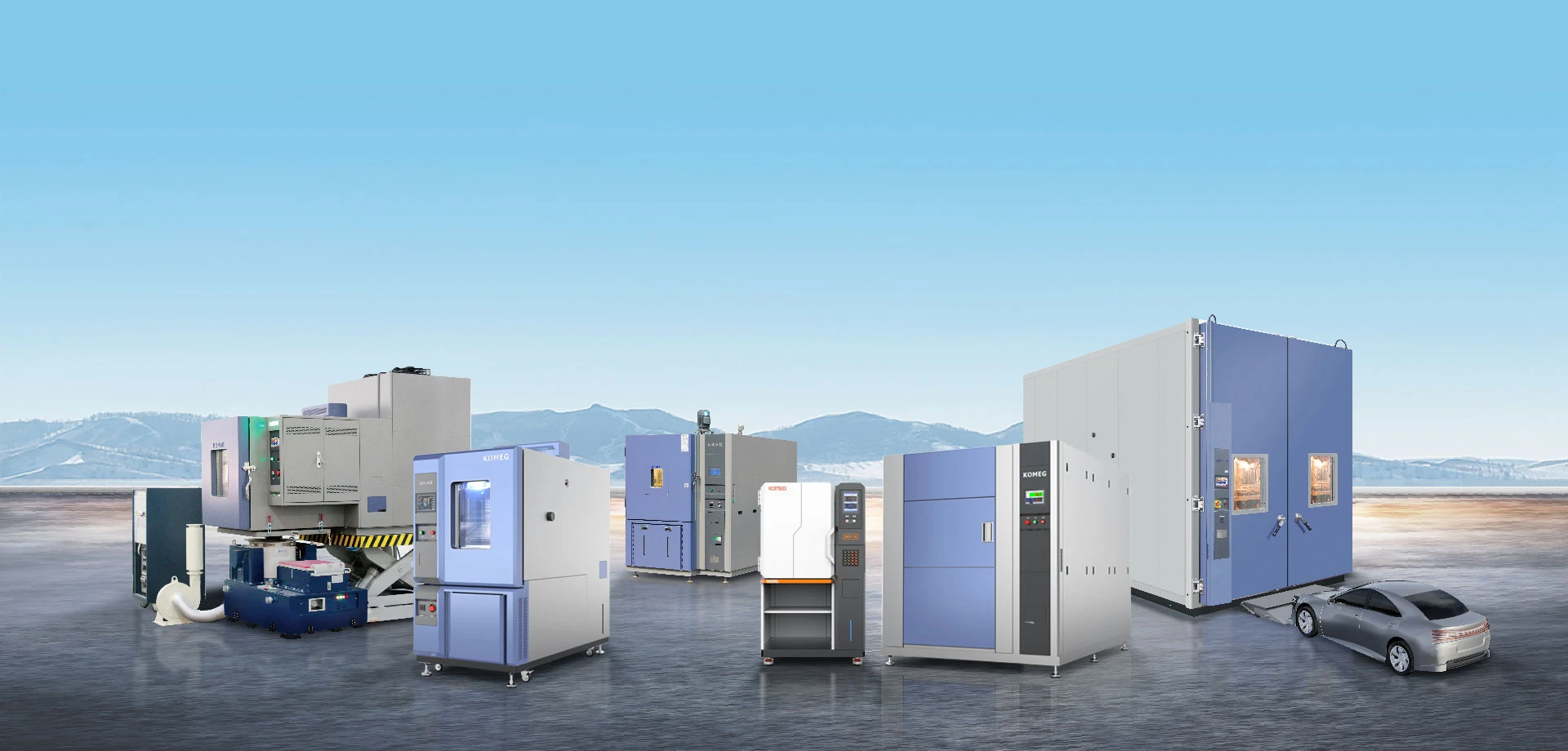
Temperature Test Chambers are precision environmental simulation devices designed to create stable, controllable, and repeatable temperature conditions within a closed space. Their primary purpose is to test the reliability, durability, and performance stability of materials, components, and finished products when exposed to various temperature stresses, ensuring that these products can meet the required quality standards in real-world application scenarios.
The core functions of Temperature Test Chambers revolve around environmental simulation, accelerated aging testing, quality and reliability verification, and failure analysis. By replicating real-world temperature conditions—such as the extreme cold of arctic areas, high temperatures of tropical regions, or rapid temperature fluctuations—these chambers allow manufacturers and researchers to evaluate how products will perform during storage, transportation, and actual use. Accelerated aging testing, which involves subjecting products to harsher-than-normal temperature conditions, helps speed up the aging process, enabling accurate prediction of product service life. Additionally, these chambers are used to verify whether products comply with relevant industry standards for temperature adaptability, while also helping identify design flaws or material weaknesses by exposing products to extreme temperature conditions.
In terms of technical performance, standard Temperature Test Chambers typically feature a temperature range of -70°C to +180°C with a precision of ±0.1°C to ±0.5°C. The uniformity of temperature within the chamber is generally ≤±1.0°C. The temperature rate of change varies by model, with standard models offering 1 to 3°C per minute and fast-rate models reaching 5 to 15°C per minute, catering to different testing requirements.
A standard Temperature Test Chamber consists of four integrated systems that work together to ensure stable and accurate test conditions. The chamber body adopts a double-layered structure, with a SUS304 stainless steel interior for corrosion resistance and easy cleaning, a rugged exterior for durability, and thick polyurethane insulation to maintain stable internal temperatures and reduce energy consumption. The air circulation system, equipped with fans and ducts, realizes forced-air circulation to ensure uniform distribution of temperature throughout the chamber, avoiding local temperature deviations that could affect test results.
The temperature control system relies on nickel-chromium electric heaters for heating and hermetic compressors for mechanical refrigeration, enabling precise adjustment of the internal temperature within the specified range. The control system is equipped with a microprocessor (PLC) and a touchscreen interface, adopting PID algorithms for closed-loop control to achieve high-precision regulation of temperature. It also supports programmable test profiles and data logging, facilitating the recording and analysis of test data.
Temperature Test Chambers are available in various types to meet different testing needs. Benchtop (Table-Top) models are compact with a small capacity ranging from 20 to 100 liters, making them ideal for testing laboratory samples and small components. Vertical (Floor-Standing) models, with a standard capacity of 80 to 1000 liters, are the most commonly used type for general research and development (R&D) and quality control (QC) testing. Walk-in or Drive-in models are large-scale test rooms designed for testing large products or entire assemblies, such as automotive components or industrial equipment.
These test chambers find wide applications across multiple industries. In the electronics industry, they are used to test printed circuit boards (PCBs), semiconductors, and connectors for their resistance to temperature cycling, ensuring the stability of electronic products in different environments. In the automotive industry, they evaluate materials, interiors, and electronic components to ensure their adaptability to extreme climates. In the aerospace and defense sector, they simulate high-altitude or freezing conditions to test avionics and materials used in aircraft and military equipment.
In the pharmaceutical and food industries, Temperature Test Chambers are used to test the stability and shelf-life of products under controlled temperature conditions, ensuring product safety and quality. In materials science, they assess the dimensional stability and corrosion resistance of plastics, rubbers, metals, and coatings, providing valuable data for material selection and product design.
To ensure the accuracy and reliability of test results, Temperature Test Chambers are designed to comply with major international testing standards, including IEC 60068 for environmental testing, MIL-STD-810 for U.S. military applications, and Chinese National Standards such as GB/T 2423 and GB/T 10586. Compliance with these standards ensures that test results are recognized and accepted globally, providing a reliable basis for product quality evaluation and certification.