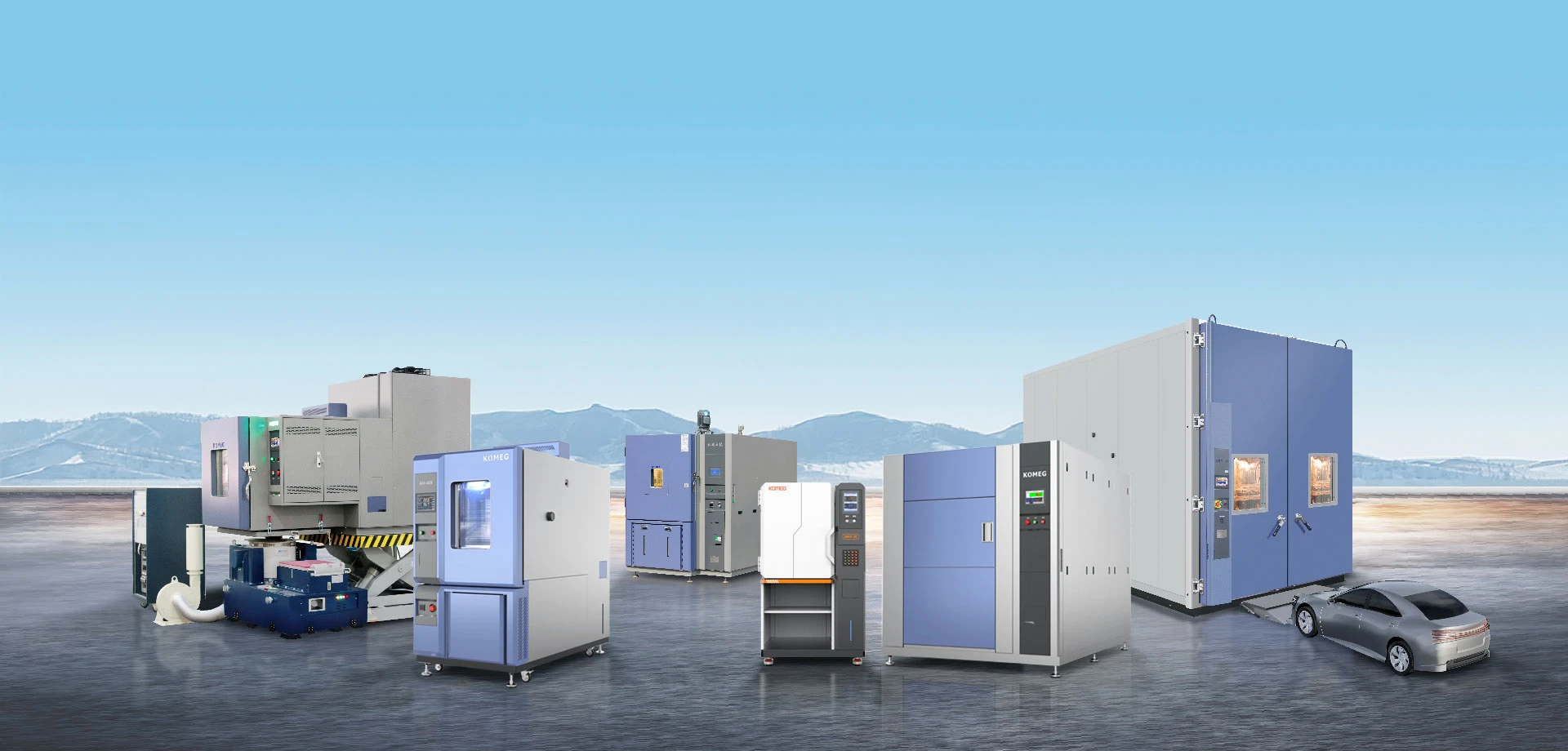
Rapid-Rate Thermal Cycle Chambers (also known as Fast Thermal Cycle Chambers or Thermal Shock Chambers in some contexts) are high-precision environmental simulation devices specifically designed to create rapid and controllable temperature changes within a closed space. Unlike standard temperature test chambers, their core advantage lies in achieving fast temperature transition rates, which are essential for testing the resistance of materials, components, and finished products to extreme and sudden temperature fluctuations, ensuring their reliability and performance stability in harsh or dynamic thermal environments.
The core functions of Rapid-Rate Thermal Cycle Chambers focus on rapid thermal cycle simulation, accelerated stress testing, reliability verification, and failure analysis. These chambers are capable of replicating extreme and sudden temperature changes that products may encounter in real-world scenarios—such as rapid transitions from high-temperature environments (e.g., engine compartments, desert climates) to low-temperature environments (e.g., arctic regions, high-altitude areas) or vice versa. By subjecting products to such rapid thermal cycles, manufacturers and researchers can evaluate how products perform under acute thermal stress, identify potential material fatigue, structural deformation, or functional failures that may not be detected by standard temperature testing. Accelerated stress testing via rapid thermal cycling also helps shorten the test cycle, enabling faster prediction of product service life and optimization of product design.
In terms of technical performance, the defining feature of Rapid-Rate Thermal Cycle Chambers is their fast temperature transition rate, which typically ranges from 5°C to 50°C per minute (depending on the model and chamber size), significantly higher than the 1-3°C per minute of standard temperature test chambers. The temperature range of these chambers is usually -70°C to +180°C (or wider for specialized models), with a temperature precision of ±0.1°C to ±0.5°C and temperature uniformity of ≤±1.0°C within the chamber. These parameters ensure that the rapid temperature changes are stable, repeatable, and accurate, providing reliable test data.
A standard Rapid-Rate Thermal Cycle Chamber consists of four key integrated systems that work in coordination to achieve rapid and stable temperature cycling. The chamber body adopts a double-layered structure with a SUS304 stainless steel interior (resistant to corrosion and thermal fatigue), a rugged exterior, and high-density polyurethane insulation. This insulation design not only minimizes heat loss to maintain energy efficiency but also prevents condensation and external temperature interference, ensuring stable internal thermal conditions during rapid cycles. The air circulation system is equipped with high-performance fans and optimized ducting to achieve forced-air circulation, ensuring uniform temperature distribution throughout the chamber and avoiding local temperature gradients that could affect test results, especially during rapid temperature transitions.
The temperature control system is the core component that enables rapid thermal cycling. It typically uses high-power nickel-chromium electric heaters for rapid heating and high-efficiency hermetic compressors (often with cascade refrigeration systems for ultra-low temperature models) for rapid cooling. The control system is equipped with a high-performance microprocessor (PLC) and a touchscreen interface, adopting advanced PID algorithms for closed-loop control to precisely regulate the temperature transition rate, holding time, and cycle times. It also supports programmable test profiles, allowing users to set custom thermal cycle parameters (e.g., number of cycles, high/low temperature set points, transition rates) and data logging for post-test analysis.
Rapid-Rate Thermal Cycle Chambers are available in various types to meet different testing requirements. Benchtop (Table-Top) models are compact with a small capacity (20–100 liters), suitable for testing small components, electronic chips, and laboratory samples. Vertical (Floor-Standing) models, with a capacity of 80–1000 liters, are the most common type for general research and development (R&D) and quality control (QC) testing of components, assemblies, and medium-sized products. Walk-in or Drive-in models are large-scale test rooms designed for testing large products or entire assemblies, such as automotive modules, aerospace components, and industrial equipment.
These chambers are widely used across industries that require products to withstand rapid temperature changes. In the electronics industry, they are used to test printed circuit boards (PCBs), semiconductors, connectors, and batteries, ensuring their stability and reliability under rapid thermal cycling (e.g., during device operation or environmental changes). In the automotive industry, they evaluate automotive electronics, engine components, and interior materials to verify their adaptability to extreme temperature fluctuations (e.g., from hot engine bays to cold outdoor environments).
In the aerospace and defense sector, Rapid-Rate Thermal Cycle Chambers simulate the rapid temperature changes encountered by aircraft, satellites, and military equipment during high-altitude flight or space missions, testing the performance of avionics, materials, and structural components. In the pharmaceutical and medical device industries, they are used to test the stability of drugs, vaccines, and medical devices under rapid temperature variations, ensuring product safety and efficacy. In materials science, they assess the thermal fatigue resistance, dimensional stability, and corrosion resistance of plastics, rubbers, metals, and coatings, providing critical data for material selection and product design.
To ensure the accuracy and reliability of test results, Rapid-Rate Thermal Cycle Chambers are designed to comply with major international testing standards, including IEC 60068 (Environmental testing), MIL-STD-810 (U.S. Military), and Chinese National Standards such as GB/T 2423 and GB/T 10586. Compliance with these standards ensures that test results are recognized globally, providing a reliable basis for product quality evaluation, certification, and market access.