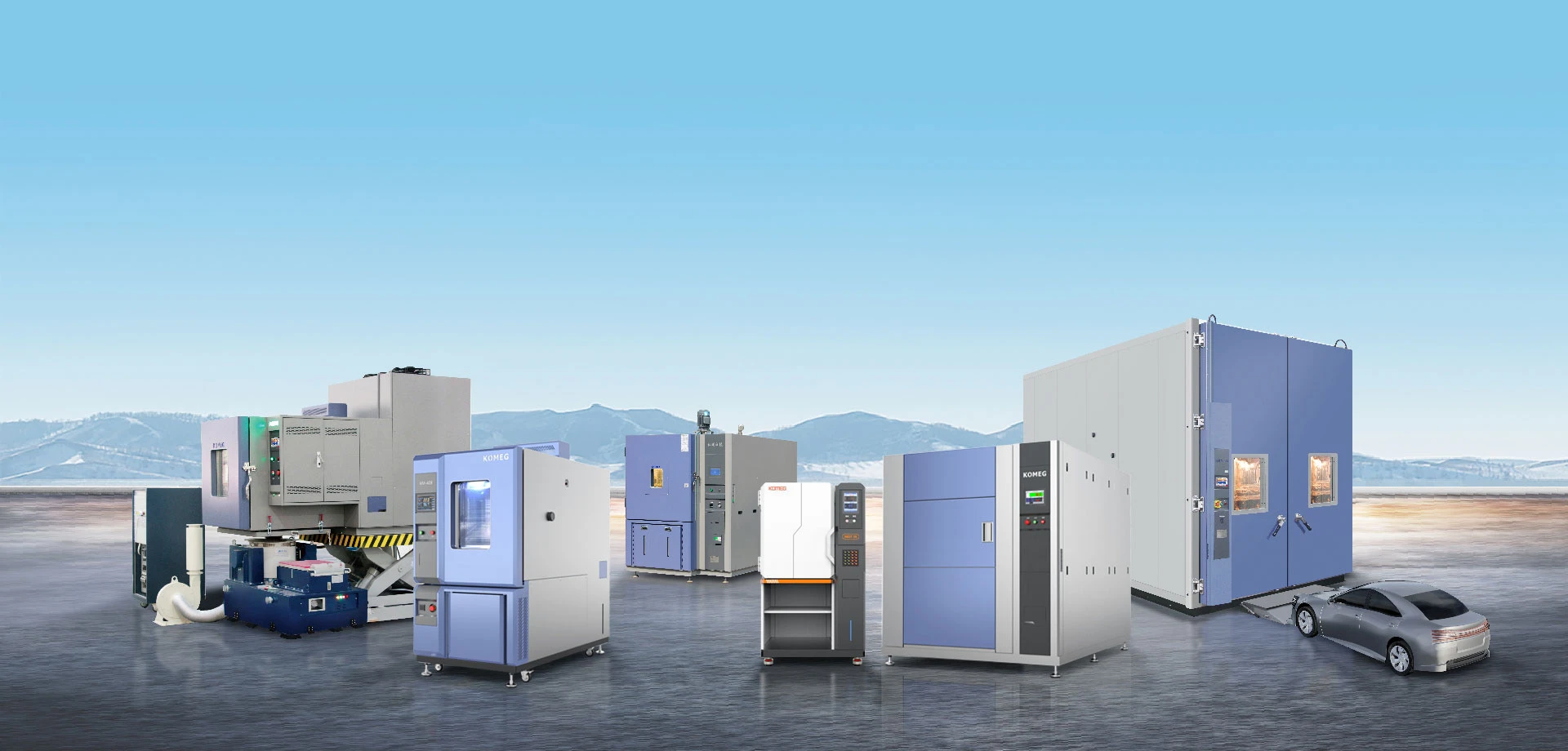
Battery Thermal Test Chambers (also known as Battery Environmental Test Chambers or Battery Thermal Cycling Chambers) are specialized, high-precision environmental simulation devices designed specifically for testing the thermal performance, safety, and reliability of various types of batteries. Unlike general-purpose environmental test chambers, they are engineered to address the unique testing requirements of batteries—including lithium-ion, lithium-polymer, lead-acid, and nickel-based batteries—by providing precise, controllable, and safe thermal conditions, which is critical for ensuring battery performance, longevity, and safety in real-world applications.
The core functions of Battery Thermal Test Chambers revolve around thermal performance testing, safety testing, thermal cycle testing, and long-term stability testing. These chambers are capable of simulating a wide range of thermal environments that batteries may encounter during production, storage, transportation, and operation—such as extreme high temperatures, low temperatures, rapid temperature fluctuations, and constant temperature conditions. They are specifically designed to evaluate how batteries perform under these thermal stresses, including changes in capacity, internal resistance, charge-discharge efficiency, and cycle life. Additionally, they play a vital role in battery safety testing, as they can simulate thermal abuse conditions (e.g., overheating, thermal runaway) to assess battery safety performance and identify potential risks, ensuring compliance with safety standards.
In terms of technical performance, Battery Thermal Test Chambers are optimized for the unique characteristics of battery testing. The temperature range typically spans from -40°C to +150°C (or wider for specialized high-temperature models), with a temperature precision of ±0.1°C to ±0.3°C and temperature uniformity of ≤±0.5°C within the test chamber—critical for ensuring consistent test conditions, as even minor temperature variations can significantly affect battery performance data. Many models support rapid temperature transition rates (up to 5°C to 20°C per minute) for thermal cycle testing, allowing for efficient evaluation of battery performance under repeated temperature changes. The chamber capacity varies based on test needs, ranging from small benchtop models (suitable for coin cells or small pouch batteries) to large floor-standing or walk-in models (for testing battery modules, packs, or even electric vehicle battery systems).
A standard Battery Thermal Test Chamber consists of four key integrated systems, each tailored to meet the specific demands of battery testing. The chamber body adopts a robust, double-layered structure with a SUS304 stainless steel interior (resistant to corrosion, high temperatures, and potential battery leakage), a rugged exterior (usually made of cold-rolled steel with anti-corrosion coating), and high-density polyurethane insulation. This design minimizes heat loss, maintains energy efficiency, and prevents external temperature interference, ensuring stable internal thermal conditions. The air circulation system is equipped with high-efficiency fans and optimized ducting to achieve forced-air circulation, ensuring uniform temperature distribution throughout the chamber—essential for accurate testing of battery packs or multiple battery samples simultaneously.
The temperature control system is the core component of Battery Thermal Test Chambers, featuring high-power nickel-chromium electric heaters for rapid heating and high-efficiency hermetic compressors (with cascade refrigeration systems for ultra-low temperature models) for precise cooling. This system enables rapid and stable temperature adjustment, even during thermal cycle testing. The control system is equipped with a high-performance microprocessor (PLC) and a user-friendly touchscreen interface, adopting advanced PID algorithms for closed-loop control to precisely regulate temperature, test duration, and cycle parameters. It supports programmable test profiles, allowing users to set custom thermal cycles (e.g., number of cycles, high/low temperature set points, transition rates) and integrate with battery test equipment (e.g., charge-discharge testers) for synchronized data collection. Additionally, the control system includes comprehensive safety features, such as over-temperature protection, over-pressure protection, and gas detection (for lithium-ion battery testing) to prevent accidents during thermal abuse or battery leakage.
Battery Thermal Test Chambers are highly customizable to accommodate different battery types and testing requirements. Common configurations include temperature-only models (for basic thermal performance testing), thermal cycle models (for evaluating battery durability under temperature fluctuations), and combined environmental models (integrating humidity control for testing battery performance in humid environments). Specialized models may also include features such as explosion-proof enclosures (for high-energy battery testing), gas purge systems (to prevent thermal runaway), and sample holders designed to securely fix battery cells, modules, or packs during testing. Many chambers also support remote monitoring and data logging, enabling convenient test management and post-test analysis.
These specialized test chambers are widely used across industries involved in battery research, development, and production. In the consumer electronics industry, they are used to test batteries for smartphones, laptops, tablets, and wearable devices, ensuring their performance and safety under various thermal conditions. In the automotive industry, they are critical for testing electric vehicle (EV) battery cells, modules, and packs, evaluating their thermal performance, cycle life, and safety under extreme temperatures (e.g., cold winter or hot summer conditions) and rapid temperature changes during vehicle operation.
In the energy storage industry, Battery Thermal Test Chambers are used to test large-scale energy storage batteries (e.g., lithium-ion battery packs for grid storage), ensuring their reliability and longevity under long-term operation and varying thermal environments. In the aerospace and defense sector, they test batteries used in aircraft, satellites, and military equipment, verifying their performance under harsh thermal conditions (e.g., high-altitude low temperature). Additionally, in battery research and development laboratories, these chambers are used to optimize battery design, improve thermal management systems, and develop new battery materials, providing critical data for advancing battery technology.
To ensure the accuracy, reliability, and safety of battery testing, Battery Thermal Test Chambers are designed to comply with major international standards, including IEC 62133 (Safety requirements for secondary lithium cells and batteries), UN 38.3 (Transportation of dangerous goods), MIL-STD-810 (U.S. Military), and Chinese National Standards such as GB/T 31484 (Lithium-ion batteries for electric vehicles) and GB/T 31486 (Safety requirements for lithium-ion batteries for electric vehicles). Compliance with these standards ensures that test results are recognized globally, providing a reliable basis for battery quality evaluation, safety certification, and market access. The design and manufacturing of these chambers also adhere to strict safety and quality control standards to ensure operational safety during battery testing, especially for high-energy and high-risk battery types.