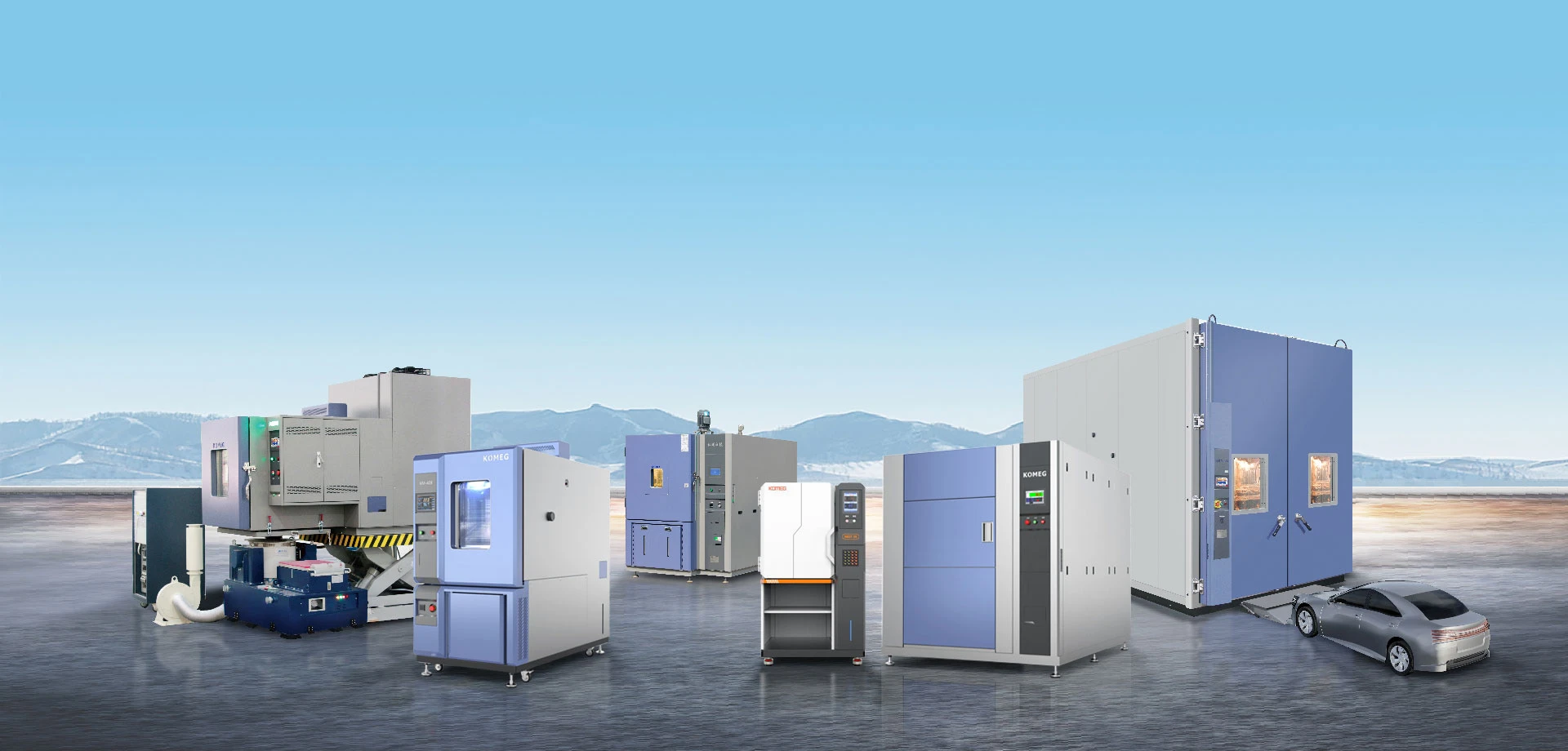
1. Market Overview & Size
1.1 Global Market
In 2025, the global market size of walk-in environmental chambers reached approximately USD 410 million (RMB 2.964 billion), with a total output of 12,813 units and an average price of about USD 32,000 per unit. The industry gross margin ranges from 20% to 40%. From 2026 to 2032, the market is expected to grow steadily at a CAGR of 3.8%–4.0%, reaching USD 545 million (RMB 3.883 billion) by 2032.
1.2 Regional Market Structure
- China: The world’s largest single market, accounting for 30%–40% of global share. In 2025, its market size was about RMB 2.86–4.8 billion, with a projected CAGR of 9.2%–9.7% from 2026 to 2030, growing significantly faster than the global average.
- Europe & North America: Dominated by high-end demand, focusing on high-precision and multi-physics integrated testing systems.
- Rest of Asia Pacific: Rapid demand growth driven by the transfer of electronics and new energy industries in South Korea, Southeast Asia, and India.
1.3 Capacity & Pricing
Global capacity is around 16,000 units, mainly concentrated in China, Japan, Germany, and the U.S. The average unit price is USD 32,000, while high-end customized models can exceed USD 100,000.
2. Core Driving Factors
- Reliability Demand in High-End ManufacturingBooming requirements for large-scale and full-product environmental testing in new energy vehicles, energy storage, semiconductors, aerospace, and biomedicine have made walk-in chambers essential equipment.
- Standards & Policy PromotionUpgraded standards, including IEC60068, GB/T10586-2025, and ICH Q1A, strengthen requirements for accuracy and compliance. Global equipment renewal policies also support the purchase of testing instruments.
- Accelerated Domestic SubstitutionThe share of imported equipment decreased from 41% in 2024 to 36%. Localization in the mid-end market exceeds 65%, and the high-end market is rising from 20% to 35%.
- Technology & Service UpgradingLarge volume, high precision, multi-parameter coupling, intelligence, and energy efficiency have become standard features, with growing demand for customization and total solutions.
3. Technology Trends in 2026
3.1 Extreme Performance
- Temperature control accuracy: ±0.01℃ for superconducting applications, ±0.3℃ for semiconductors.
- Temperature change rate: ≥15℃/min for rapid thermal cycling models.
- Internal volume: up to hundreds of cubic meters for full-vehicle and large-scale energy storage testing.
- Stability: MTBF over 50,000 hours with oil-free refrigeration systems.
3.2 Intelligence & Digitization
IoT remote monitoring, AI fault diagnosis, digital twin, and LIMS connectivity become standard for mid-to-high-end models. Edge computing enables microsecond-level response for multi-physics combined testing (temperature + humidity + vibration + low pressure + salt spray).
3.3 Green & Energy-Saving
Variable-frequency compressors, CO₂ eco-friendly refrigerants, heat recovery, and intelligent PID control reduce energy consumption by 20%–50%. Low-carbon policies in the EU and China drive demand for high-efficiency equipment.
3.4 Customization & Integration
Modular assembly, heavy-duty flooring, explosion-proof, cleanroom, and multi-chamber linkage designs are widely applied. The industry shifts from single equipment sales to turnkey testing solutions, joint laboratories, and data services.
4. Competitive Landscape
4.1 International Brands (High-End Dominance)
- Leading players: ESPEC (Japan), Thermotron (USA), Weiss Technik (Germany), Angelantoni (Italy), Climats (France).
- Strengths: deep technical accumulation, high precision, strong stability, and advanced multi-physics integration.
- Price: 3–5 times that of domestic brands.
4.2 Chinese Brands (Mid-to-High End Breakthrough)
- Top manufacturers: KOMEG, Sushi Test, Guangzhou 5th Institute, Shanghai BoYi, Xiamen Shockley.
- Mid-tier manufacturers: focus on cost performance.
- Strengths: price only 1/3–1/5 of imports, shorter delivery, fast customization, and extensive after-sales network.
- Structure: foreign brands still lead the high-end market; domestic substitution accelerates in the mid-to-high end; industry concentration rises with small manufacturers exiting.
5. Downstream Application Fields
- New Energy Vehicles & Energy Storage: Testing of battery packs, motors, ECU, and full vehicles under high/low temperature and humidity.
- Semiconductors & Electronics: High-precision temperature control for chips, servers, and communication equipment.
- Aerospace & Defense: Extreme environment reliability verification for satellite components and airborne equipment.
- Biomedicine: Drug stability (ICH Q1A) and medical device GMP compliance testing.
- Automotive Parts & Building Materials: Weathering and aging testing of interiors, lighting, and composite materials.
- Emerging Fields: Hydrogen energy, quantum chips, 6G communications, organoid culture, and customized multi-physics testing.
6. Challenges & Risks
- Dependence on imported core components such as high-end compressors, sensors, and controllers brings supply chain risks.
- Technical gaps in extreme-condition stability, multi-physics coupling, and ultra-precision control compared with international leaders.
- Price competition and product homogenization in the low-end market compress profit margins.
- High thresholds for international certifications (FDA, ATEX, aerospace & military qualifications).
7. 2026 Development Outlook
- Market: China maintains high growth; the global market expands steadily with rising Chinese brand share.
- Technology: Intelligence, energy saving, extreme performance, and customization become mainstream.
- Competition: Top domestic brands penetrate the high-end market; international brands strengthen localization.
- Business Model: Equipment sales + leasing + shared laboratories + total solutions will dominate.
8. Conclusion
In 2026, the global walk-in environmental chamber industry is in a key stage of accelerated domestic substitution, technological upgrading, and diversified demand. China is the core growth engine. Chinese brands are rapidly rising with cost efficiency, customization, and service advantages, forming stratified competition with international players. The industry will continue moving toward high precision, intelligence, green development, and system integration. Enterprises with core technologies and full-process service capabilities will lead the market.