In our daily lives, almost every product is affected by temperature and humidity.
For example, the active ingredients in medicine can change when exposed to moisture, and the insulation performance of electronic products may decrease under high-temperature conditions.
To avoid these issues, the temperature and humidity test chamber becomes especially important.
So, what exactly is a temperature and humidity test chamber?
And with so many models on the market, how do you choose the right one for your testing needs?
Keep reading, and you'll find the answers.
Part 1: What Is a Temperature and Humidity Test Chamber?
A temperature and humidity test chamber, also known as an environmental testing chamber, is a device used to evaluate the heat resistance, cold resistance, dryness resistance, and humidity resistance of various materials.
It is widely used for quality testing across industries such as electronics, electrical appliances, telecommunications, instrumentation, automotive, new energy, plastics, metals, chemicals, building materials, medical devices, and aerospace.
Part 2: Types of Temperature and Humidity Test Chambers
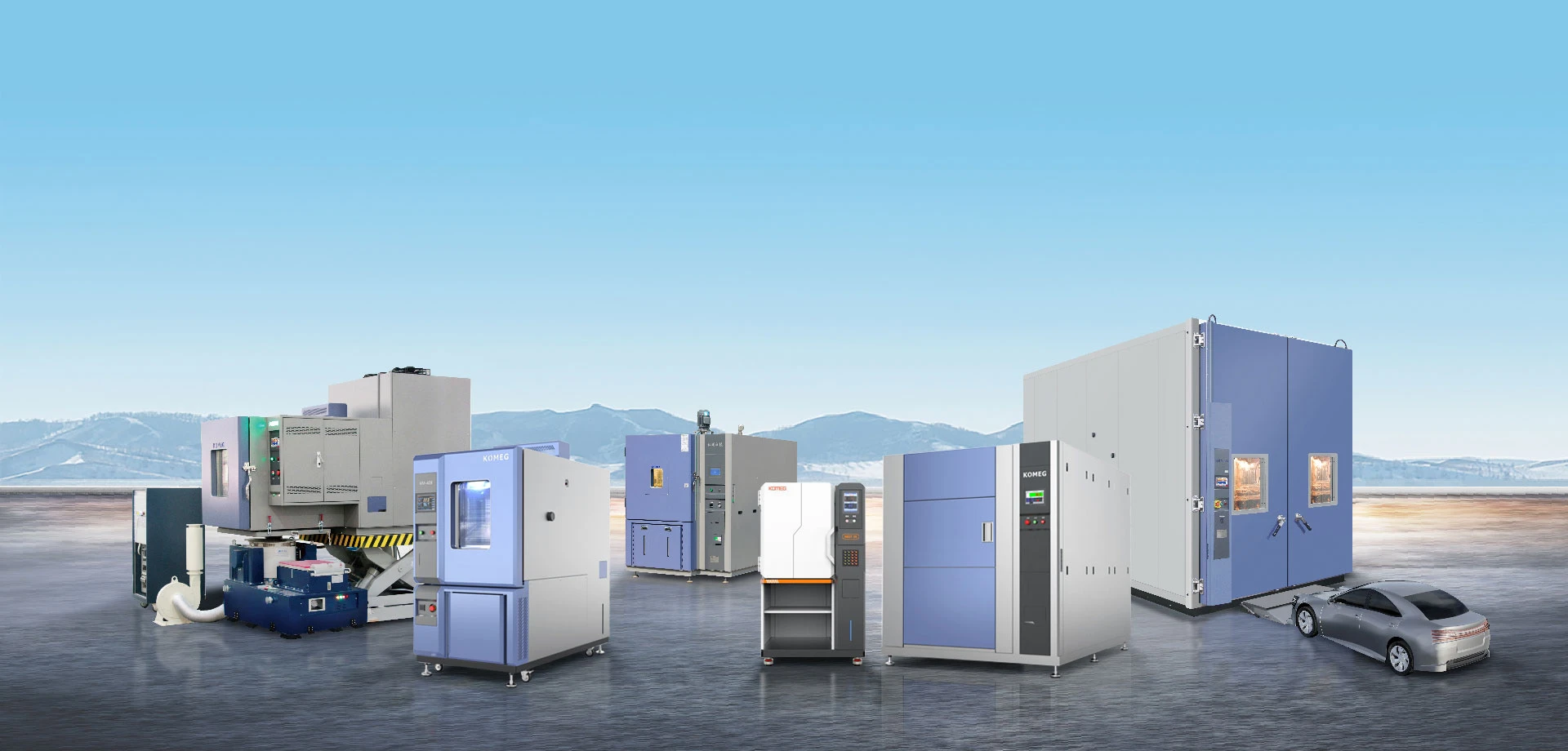
Based on size, temperature and humidity test chambers can be divided into three types: benchtop, walk-in, and drive-in.
These three types differ significantly in capacity and applicable products.
1. Benchtop Temperature and Humidity Test Chamber
Benchtop chambers are compact and space-saving, typically placed on a lab table.
They are suitable for environmental testing of small electronic components such as PCBs and connectors.
Compared to larger chambers, benchtop models have lower space requirements, making them ideal for companies with limited testing space.
2. Walk-in Temperature and Humidity Test Chamber
Walk-in chambers have a large capacity and spacious interior.
Although they require more space than benchtop models, they can meet the environmental simulation needs of batch testing or complete equipment.
3. Drive-in Temperature and Humidity Test Chamber
Drive-in chambers have the largest capacity among the three types.
Their spacious interior can accommodate entire vehicles or large industrial products for environmental testing.
They also have the highest requirements for installation space, so it's important to plan the site in advance before purchasing to ensure smooth testing.
Part 3: How to Choose the Right Temperature and Humidity Test Chamber?
To select a suitable temperature and humidity test chamber, follow these steps:
1. Define Your Test Object
Before making a purchase, you need to determine what product you will be testing.
Common test objects include electronic components, new energy batteries, and automotive parts.
Defining your test object helps determine the required chamber size and provides a basis for selecting technical parameters.
2. Understand Whether Relevant Standards or Regulations Apply
Testing standards and regulations are also important considerations.
Most countries and regions have strict laws and market access systems for product sales.
For example, products exported to the EU typically need CE certification, while those exported to the US must meet specific requirements. Failure to comply may result in product rejection or detention.
3. Determine the Temperature Range
The temperature range is one of the most critical parameters of a temperature and humidity test chamber.
The typical range is -70°C to 150°C, with some advanced models extending to -40°C to 180°C.
Choose based on your actual testing needs.
4. Determine the Humidity Range
Most applications require a humidity range of 20% to 98% RH.
When selecting a model, consider the actual test conditions to ensure consistent and reliable results.
5. Clarify Any Special Testing Requirements
After determining the basic parameters, you should also confirm whether there are any special testing requirements.
If so, it's best to state them clearly at the early stage of selection. This helps ensure you choose a model that can be customized as needed, avoiding issues later where insufficient equipment capability affects test results.
Part 4: Why Are Temperature and Humidity Test Chambers Important?
1. Detect Potential Problems Early and Improve Product Quality
Using a temperature and humidity test chamber, you can conduct environmental tests under high/low temperature and humidity cycling conditions.
These tests can quickly reveal potential issues such as material aging or structural deformation.
Addressing these problems before product delivery helps improve overall quality.
2. Ensure Products Meet Relevant Standards
Many countries and regions have strict regulations and standards for products.
For example, pharmaceuticals exported to Asia, Europe, and the Americas must comply with ICH, GMP, and USP standards. Electronic products entering international markets must meet IEC and ISO standards.
Testing in a temperature and humidity chamber allows companies to verify product performance under various conditions, ensuring compliance with international standards and facilitating successful market entry.
3. Speed Up the Testing Process
Testing product performance under high temperature, high humidity, or dry conditions can be time-consuming without the right equipment.
A temperature and humidity chamber allows companies to quickly recreate these environmental conditions in the lab, significantly accelerating the testing process.
Part 5: Frequently Asked Questions
1. What is the temperature range of a temperature and humidity test chamber?
The temperature range is typically -70°C to 150°C, with some advanced models extending to -40°C to 180°C. Choose according to your specific testing needs.
2. Is a faster heating and cooling rate always better?
Not necessarily. The appropriate rate should be selected based on your testing requirements.
While a faster rate can improve testing efficiency, an improperly chosen rate may damage the samples.
3. How do I choose the right chamber size?
The size should be selected based on the dimensions and quantity of your test samples.
As a general rule, the sample volume should not exceed one-third of the chamber's internal volume.
4. Should I choose a standard or customized model?
If your testing needs are relatively standard, a standard model is usually sufficient.
However, if you have additional requirements — such as specific temperature and humidity profiles or extra test ports — a customized model will be more suitable.
5. How much does a temperature and humidity test chamber cost?
Prices typically range from $8,000 to $75,000, depending on parameters such as chamber size and temperature/humidity range.