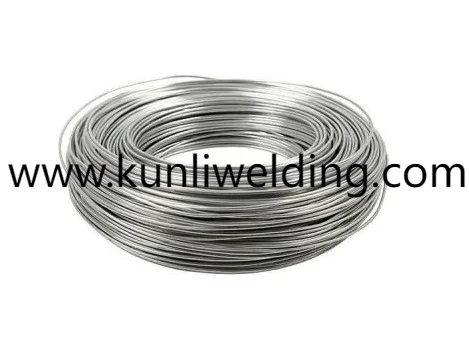
Welders and fabrication engineers increasingly ask how Aluminum Welding Wire ER4943 helps mitigate hot cracking in 6000 series aluminum alloys. This question sits at the intersection of metallurgical reality and practical shop performance as designers push for lighter structures across transport and construction sectors. The filler wire that harmonizes with base alloy behavior during solidification, while offering predictable molten flow, becomes a practical tool to reduce the incidence of hot cracking in demanding welds.
Hot cracking is fundamentally about how a weld metal solidifies and how stresses develop while that metal still contains a semi liquid film along grain boundaries. A filler wire that narrows the solidification range and promotes uniform flow into the joint reduces the risk of liquid film rupture under thermal contraction. In practice this means matching filler composition and melting behavior to the 6000 series substrate and ensuring good weld pool wetting so that thin interdendritic films do not form in critical locations. The right filler also helps the joint tolerate residual stresses that arise during rapid cycles common in automated production.
ER4943 type fillers address these issues by delivering a composition and fluidity profile that encourages smooth fusion without introducing elements that widen the solidification range. That controlled flow lowers the likelihood of shrinkage related defects in thin sections and lap joints common to vehicle bodies and cladding assemblies. When fabricators use a filler that produces stable pool geometry and easy slag removal they face fewer interruptions and less rework in continuous manufacturing. These practical outcomes have driven interest in this filler among manufacturers seeking consistent weld performance.
Current market forces amplify the relevance of reliable filler choice. As projects prioritize lightweight materials while also demanding reduced maintenance and long service life, weld integrity becomes a central procurement consideration. In automated settings where cycle time and repeatability are essential, the combination of a filler that welds predictably and process stability at the welder station translates into measurable workflow gains. For teams handling thin gauge panels or mixed alloy assemblies, selection of a filler that resists hot cracking reduces the frequency of joint failure under vibratory or thermal loading.
Practical welding technique and joint design also matter alongside filler selection. Proper fit up to minimize restraint, controlled heat input to avoid overly rapid cooling gradients, and pre weld cleaning to remove oxides and contaminants all reduce hot cracking susceptibility. When ER4943 style filler is paired with disciplined procedure and qualified parameters, shops often see fewer instances of hot crack initiation in long weld runs and complex assemblies. This synergy between material choice and process control makes improved outcomes repeatable across batches.
Quality assurance and traceable production practices reinforce confidence in filler performance. Suppliers that document alloy composition and offer guidance on application parameters help fabricators align welding plan and inspection criteria. In many production chains, easy access to technical support and consistent spool quality are practical signals that a filler will behave as expected once installed on the production line. Such operational clarity helps fabricators avoid costly pauses for troubleshooting and reduces variability from lot to lot.
Environmental and lifecycle considerations are also part of the calculation. Fillers that promote durable joints contribute to lower repair rates and extend the service life of assembled components. This outcome supports broader sustainability objectives by limiting material waste and repair related emissions across product lifecycles. In sectors that face increasing pressure to demonstrate greener practices, choices that lower rework and extend the time between maintenance events have strategic value.
When evaluating filler options for 6000 series applications, procurement teams should request clear documentation on recommended parameters and real world application notes for thin gauge joining and structural assemblies. A productive selection process examines how the filler behaves under automated deposition, its slag and spatter characteristics during welding, and how it affects downstream finishing and corrosion performance. These practical factors determine whether a filler will reduce hot cracking incidents in the context of the shop environment.
For fabricators seeking a pragmatic path to fewer hot cracking failures in 6000 series structures, studying product guidance and production examples provides a fast way to assess fit. For those interested in application notes and product details that illustrate how a suitable filler supports reliable fusion and reduced defect rates visit www.kunliwelding.com .