Traumatic experiences can leave deep psychological imprints that continue to influence daily life long after the event has passed. These memories often remain “stuck” in the mind, resurfacing as anxiety, fear, intrusive thoughts, or physical discomfort. Eye Movement Desensitisation and Reprocessing (EMDR) is a highly recognised therapeutic approach designed to address such unresolved distress and promote long-term emotional healing.
At Matters of the Mind, Windsor, Berkshire, EMDR is delivered by Dr Kavita — a clinical psychologist with over 20 years of experience — ensuring evidence-based, compassionate, and tailored psychological care for individuals seeking relief from trauma-related symptoms.
What Is EMDR and How Does It Work?
EMDR is a structured psychotherapy approach that helps the brain reprocess distressing memories so they no longer trigger intense emotional or physiological reactions. Instead of discussing the trauma in extensive detail, EMDR uses bilateral stimulation — often through guided eye movements — to activate the brain’s natural healing mechanisms.
This method allows previously unprocessed memories to be integrated in a healthier and more adaptive way. Over time, the emotional charge connected to those memories reduces, enabling individuals to regain balance, clarity, and a stronger sense of safety.
At Matters of the Mind, EMDR sessions are carried out in a supportive, safe, and professionally guided environment where each client’s pace and emotional readiness are prioritised throughout the therapeutic process.
The Eight-Phase EMDR Treatment Framework
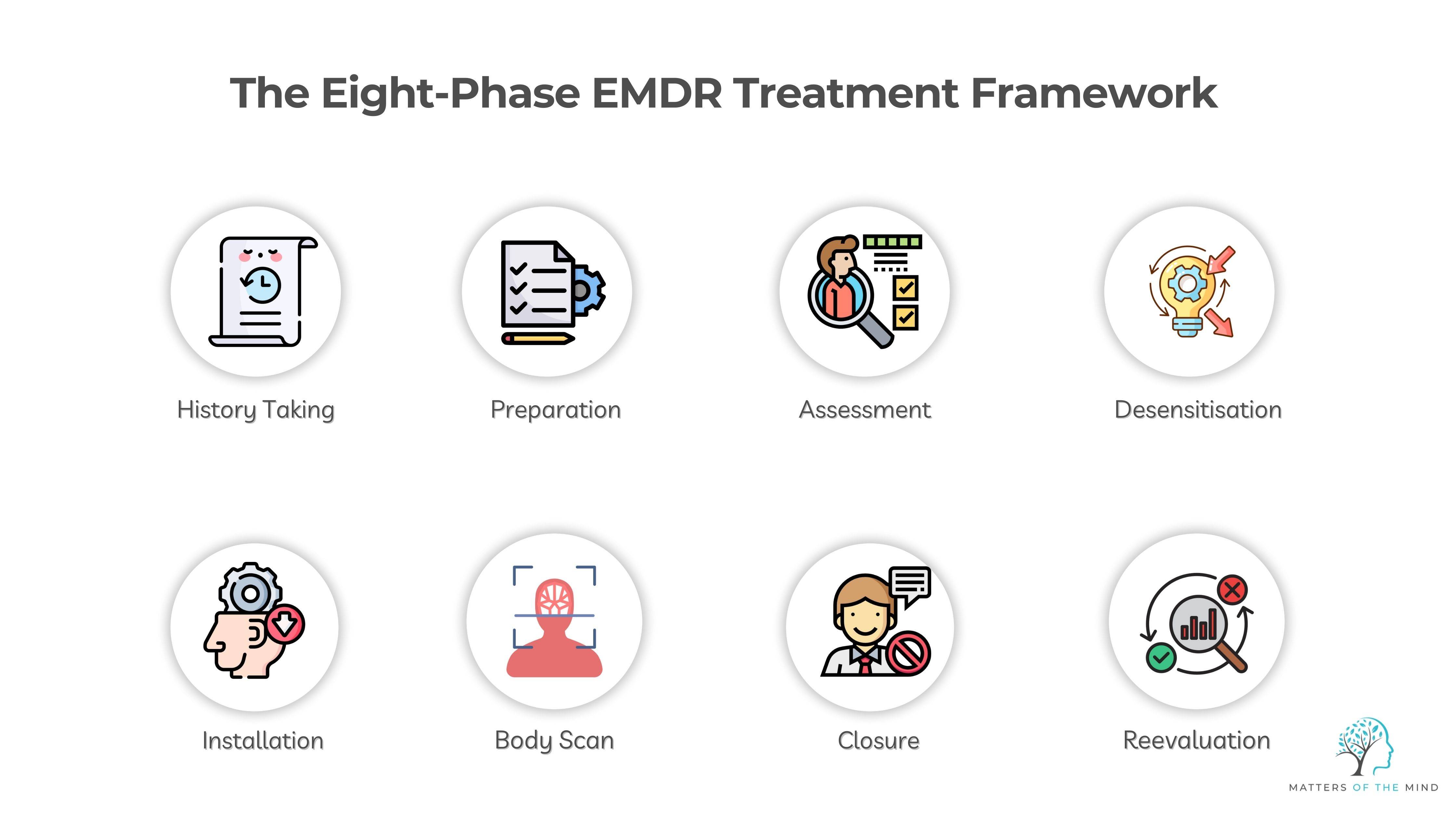
EMDR therapy follows an established eight-phase model that ensures both structure and psychological safety:
1. History Taking
A detailed understanding of your experiences, symptoms, and emotional patterns is formed. This helps identify the specific memories or concerns that will be addressed through EMDR.
2. Preparation
Individuals learn grounding techniques and emotional regulation strategies to ensure they feel supported and stable before trauma work begins. At Matters of the Mind, this phase is tailored to your comfort and resilience level.
3. Assessment
Specific memories are identified alongside the negative beliefs and sensations tied to them. A more positive, alternative belief is also selected to guide the reprocessing work.
4. Desensitisation
Through bilateral stimulation (eye movements, taps, or alternating sounds), you focus on the distressing memory while your brain gradually reduces its emotional intensity.
5. Installation
A new, healthier belief replaces the old narrative linked to the trauma (e.g., replacing “I am powerless” with “I am capable and safe”).
6. Body Scan
Your therapist helps you notice any lingering physical tension, ensuring both mind and body are fully integrated in the healing process.
7. Closure
Each session ends with grounding and stabilisation to help you return to a centred emotional state.
8. Reevaluation
At the start of subsequent sessions, progress is reviewed to determine whether additional reprocessing is required.
This structured approach allows for thorough, compassionate, and clinically grounded healing, principles central to therapeutic practice at Matters of the Mind.
Why EMDR Is Effective for Trauma and Anxiety
EMDR is widely recognised by international psychological and clinical bodies, including the NHS, WHO, and APA, for its effectiveness in treating trauma-related difficulties. Research suggests that EMDR activates similar neurological processes to those used during REM sleep, enabling the brain to reorganise and integrate distressing memories in a healthier way.
Clients often report:
-
Reduced emotional intensity linked to traumatic memories
-
Lower levels of anxiety and hypervigilance
-
Improved sleep and mood regulation
-
Enhanced self-esteem and emotional resilience
At Matters of the Mind, EMDR therapy is not only applied to trauma but also conditions such as phobias, panic attacks, anxiety disorders, and grief — always ensuring that treatment aligns with evidence-based best practices.
How EMDR Supports Different Individual
EMDR is suitable for individuals affected by:
-
Post-Traumatic Stress Disorder (PTSD)
-
Childhood trauma
-
Anxiety and panic
-
Grief and loss
-
Relationship or attachment trauma
-
Workplace trauma
-
Phobias and specific fears
If you’ve experienced events that still influence your emotional well-being, EMDR may help you regain a sense of control and calm. At Matters of the Mind, every treatment plan is personalised, ensuring each client receives the most suitable and compassionate form of support.
EMDR at Matters of the Mind, Windsor, Berkshire
Under the clinical leadership of Dr Kavita Deepak-Knights, Matters of the Mind provides trusted, high-quality psychological therapy backed by over two decades of expertise. The practice is recognised by major health insurance providers and welcomes both self-funding and insured clients.
Each EMDR session is delivered with professionalism, empathy, and an unwavering commitment to ethical and trauma-sensitive practice. Clients are supported at every stage, ensuring safety, confidentiality, and a therapeutic environment that fosters long-term healing.
Final Thoughts
EMDR is a powerful and scientifically supported therapeutic approach that helps individuals move beyond distressing memories and reclaim emotional balance. If trauma, anxiety, or unresolved experiences are affecting your daily life, EMDR may offer a path towards clarity, resilience, and psychological freedom.
For those in Windsor, Berkshire, Matters of the Mind is dedicated to delivering effective, compassionate, and evidence-based EMDR therapy that helps you heal at your own pace — with expert guidance every step of the way.