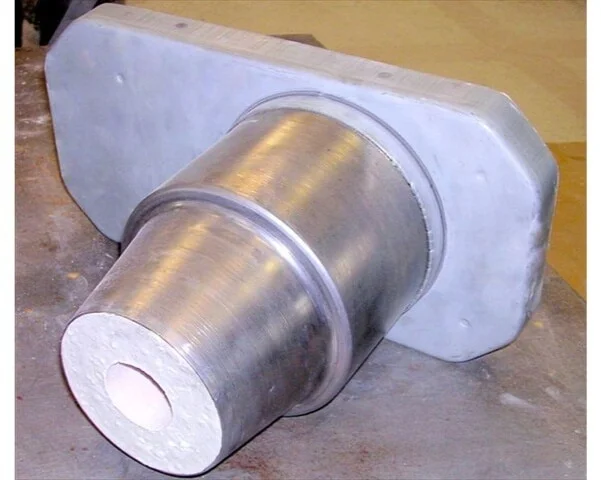
The slide gate plate is a critical functional refractory component widely applied in modern steelmaking for the precise control of molten steel flow from the ladle or tundish. It operates in combination with a nozzle system, stopper rod or ladle shroud, and a complete slide gate mechanism. As steelmaking processes become more automated, high-speed, and quality-oriented, the performance of slide gate plates has become indispensable to ensure safe casting, stable flow rate, long service life, and consistent steel quality.
Because slide gate plates must withstand extremely aggressive conditions—thermal shock, severe abrasion, steel oxidation, chemical corrosion, and mechanical stress—the selection of their materials, design, and manufacturing processes plays a decisive role in casting stability. This article provides a detailed technical overview suitable for metallurgical engineers, refractory specialists, and casting operators who require deep understanding of slide gate plate technology.
1. Definition and Function of the Slide Gate Plate
A slide gate plate is a shaped refractory element installed in a ladle or tundish slide gate system that controls the opening and closing of molten steel. It typically consists of two or three plates:
-
Upper Plate – fixed to the ladle bottom or tundish bottom nozzle housing.
-
Lower Plate – movable plate that slides horizontally to adjust the area of the flow opening.
-
Middle Plate (for 3QC systems) – used in triple-plate mechanisms for improved thermal insulation and sealing.
The slide gate plates form a sealed interface with the nozzle. During steel tapping and continuous casting, the operator adjusts the gate position to regulate the steel flow rate, ensuring casting stability and avoiding turbulence, oxidation, and inclusion entrainment.
Primary Functions
-
Flow Control: Regulates molten steel discharge from ladle/tundish during casting.
-
Sealing: Provides reliable contact surfaces that prevent steel leakage and air ingress.
-
Wear Resistance: Withstands high erosive forces from flowing steel, refractories, and steel inclusions.
-
Thermal Shock Resistance: Maintains mechanical integrity despite rapid temperature changes (from ambient to >1600°C).
-
Operational Safety: Prevents catastrophic leakage that could lead to equipment damage or operator risk.
Without a properly designed and maintained slide gate plate system, casting efficiency, product quality, and plant safety would be significantly compromised.
2. Types of Slide Gate Plate Systems
Slide gate plate configurations vary according to the number of plates and mechanism design. The most common systems include:
2QC (Two-Plate System)
-
Upper stationary plate
-
Lower movable plate
This is the most common design for ladles and tundishes due to its structural simplicity and reliable sealing surface.
3QC (Three-Plate System)
-
Upper plate
-
Middle plate
-
Lower plate
The additional plate improves thermal insulation, enhances sealing during long casting durations, and reduces wear. Common in high-productivity continuous casting.
CS-Series Plates (e.g., CS60, CS80)
These are specialized composite systems with enhanced anti-erosion and thermal shock resistance using carbon-bonded materials.
Flocon, LS70, LG21, LG22 and other branded systems
Widely used in global steel plants, each series features different combinations of alumina-carbon, zirconia-bonded alumina, or spinel-bearing matrixes designed for specific casting grades such as ultra-low-carbon steels, high-Al steels, or stainless steel grades.
3. Material Composition of Slide Gate Plates
Slide gate plates are made from high-performance refractories engineered to withstand steelmaking conditions. The most common material systems are:
3.1 High Alumina-Carbon (Al₂O₃-C) Plates
-
Alumina content: 85–95%
-
Carbon content: 8–15%
-
Additives: Si, SiC, antioxidants, metal additives
-
Advantages: Excellent thermal shock resistance, moderate cost
-
Applications: General carbon steel and alloy steel casting
3.2 Zirconia-Enhanced Alumina Plates
-
ZrO₂ content: 5–20%
-
Alumina matrix strengthened by zirconia grains
-
Advantages: High abrasion resistance, superior corrosion resistance
-
Applications: High wear segments, SS and high-Al steel grades
3.3 Magnesia-Carbon (MgO-C) Plates
-
Used mainly where slag attack is a major factor
-
Superior corrosion resistance to basic slags
-
Applications: Special ladle metallurgy or secondary refining
3.4 Spinel-Based Slide Plates (MgAl₂O₄)
-
Improved corrosion resistance and reduced steel reactivity
-
Increasingly used for clean steel production
-
Applications: Ultra-low-oxygen steel, stainless steel, and automotive steel grades
3.5 Composite Layered Plates
-
Multi-layer design: wear zone + insulation zone + structural zone
-
Benefits: Prolonged service life and reduced risk of thermal cracking
The correct material selection is determined by casting time, steel grade, tundish temperature, flow rate, and your plant’s operational conditions.
4. Manufacturing Processes
To achieve the necessary density and microstructure, slide gate plates undergo advanced refractory manufacturing:
4.1 Raw Material Selection
-
High-purity alumina, synthetic spinel, zirconia
-
Graphite flakes (high purity, controlled particle size)
-
Anti-oxidants: Si, Mg, Al
-
Resin or pitch binders
4.2 Mixing and Kneading
-
Homogeneous dispersion of carbon
-
Controlled temperature to avoid premature resin curing
4.3 Forming Methods
-
Cold Isostatic Pressing (CIP) – Ensures uniform density, preferred for premium plates
-
Uniaxial Hydraulic Pressing – Standard manufacturing route
-
Vibration or Vacuum Forming – Used in composite plates
4.4 Drying and Curing
-
Controlled heat treatment cycles
-
Stabilizes resin bonding and carbon distribution
4.5 High-Temperature Firing
Typical firing temperatures range from 1300–1650°C, depending on material type.
4.6 Final Machining
-
Precision grinding of sliding surfaces
-
Dimensional accuracy ensures proper fit with slide gate mechanism
Manufacturing quality directly influences plate life and sealing performance.
5. Working Conditions and Failure Mechanisms
Slide gate plates suffer simultaneous attack from molten steel flow, thermal shock, oxidation, and mechanical friction. Major failure modes include:
5.1 Erosion and Abrasion
-
High-velocity steel jets carrying inclusions erode the flow channel
-
Excessive erosion leads to leakage or unstable flow
5.2 Thermal Shock Cracking
-
From ambient temperature to 1600°C within minutes
-
Carbon provides flexibility; insufficient carbon increases cracking risk
5.3 Oxidation of Carbon
-
Oxygen penetration burns carbon, weakening structure
-
Results in surface spalling and increased sliding friction
5.4 Steel Infiltration
-
Molten steel penetrates micro-cracks
-
Causes swelling, crack propagation, or plate jamming
5.5 Chemical Corrosion
-
Aggressive slags attack alumina or magnesia phases
-
Zirconia additions help resist chemical degradation
5.6 Mechanical Wear
-
The sliding surfaces undergo friction during gate operation
-
Poor lubrication or misalignment accelerates wear
Understanding failure mechanisms is crucial for designing long-life plate systems.
6. Performance Requirements of Slide Gate Plates
A high-quality slide gate plate must deliver:
1. Excellent thermal shock resistance
To survive repeated opening/closing cycles and rapid heating.
2. Low sliding friction
Smooth movement ensures stable flow control.
3. High mechanical strength
Prevents breakage during clamping and operation.
4. High corrosion and erosion resistance
Especially in the bore or wear zone.
5. Precise dimensional control
Ensures perfect sealing and alignment.
6. Resistance to steel infiltration
Critical to avoid sticking, swelling, or leakage.
7. Applications in Modern Steelmaking
Slide gate plates are used throughout the steelmaking process:
Ladle Slide Gate Systems
-
Installed at ladle bottom
-
Must withstand long casting sequences (often >2 hours)
-
Higher thermal and mechanical load than tundish plates
Tundish Slide Gate Systems
-
Used to regulate flow to the mold
-
Exposure to lower temperatures but require high stability for precision casting
Specialty Applications
-
Ultra-clean steel production
-
High-aluminum steels (require anti-corrosion systems)
-
Stainless steel (requires zirconia-bearing plates)
8. Technical Improvement Trends
Modern slide gate plate technology continues to evolve:
8.1 Nano-reinforced matrix systems
Improved crack resistance and longer plate life.
8.2 Ultra-high-density forming
Cold isostatic pressing creates smaller pore structures and better wear resistance.
8.3 Non-carbon bonded systems
Used for ultra-low-oxygen steel grades.
8.4 Composite multi-layer engineered plates
Optimized for extreme erosion zones while reducing cost in non-critical zones.
Conclusion
The slide gate plate is a sophisticated refractory component responsible for precise flow control and operational safety in ladle and tundish systems. Its reliability directly influences casting performance, product quality, and plant productivity. With advanced material systems such as alumina-carbon, zirconia-enhanced alumina, spinel composites, and engineered layered structures, slide gate plates continue to evolve to meet the demands of high-speed, clean-steel production.