North America Pasta Market Size and Forecast 2025–2033
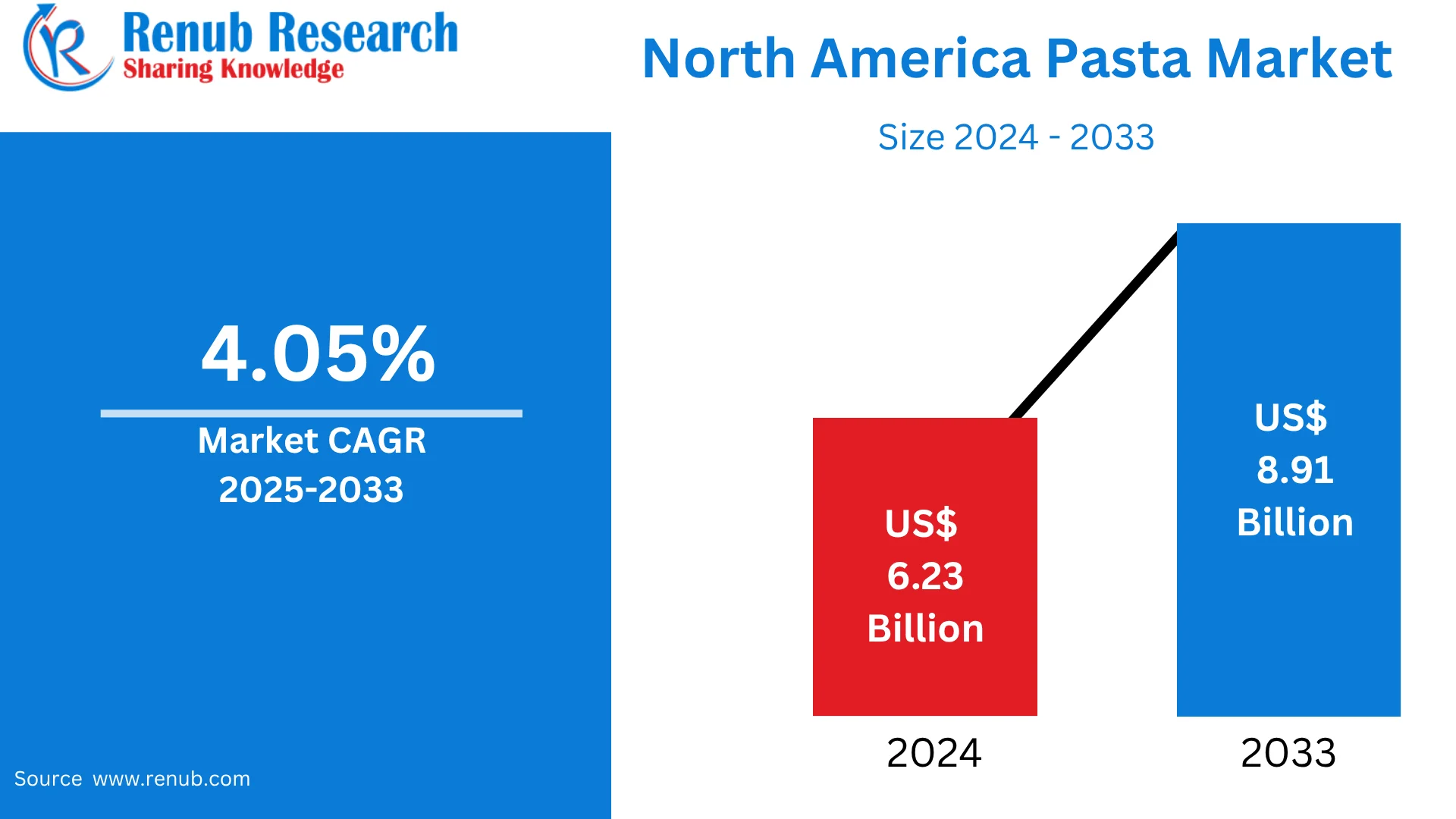
According to Renub Research North America pasta market is on a steady growth trajectory, supported by evolving consumer lifestyles, increasing demand for convenient foods, and rising health awareness. The market is projected to grow from USD 6.23 billion in 2024 to USD 8.91 billion by 2033, expanding at a CAGR of 4.05 percent between 2025 and 2033. Pasta has become a widely accepted everyday food choice across North America due to its versatility, affordability, quick preparation time, and adaptability to diverse dietary preferences. As consumers increasingly balance convenience with nutrition, pasta continues to evolve through new product innovations, healthier formulations, and premium culinary offerings.
North America Pasta Market Outlook
Pasta has firmly secured its place in North American food culture far beyond its Italian origins. It is valued for its ability to pair with numerous sauces, vegetables, meats, and plant-based proteins, making it suitable for both quick meals and gourmet dining experiences. During the pandemic, increased home cooking reignited consumer interest in pasta recipes, boosting household consumption and accelerating product experimentation. North America’s multicultural culinary landscape has further fueled fusion recipes and specialty pasta varieties, ensuring pasta remains relevant to both traditional preferences and modern dietary trends.
Key Growth Drivers in the North America Pasta Market
Rising Demand for Convenient and Ready-to-Cook Foods
Busy lifestyles among working professionals, students, and urban households continue to fuel demand for fast, easy-to-prepare foods. Pasta fits this requirement as a versatile, affordable, and quick meal option. The availability of instant, pre-cooked, and microwaveable pasta formats further enhances convenience. Ready-to-eat pasta meals with clean labels, high fiber, and gluten-free characteristics are particularly gaining traction among health-conscious consumers.
Product Innovation and Health-Focused Pasta Varieties
Health awareness is prompting consumers to explore alternatives to traditional refined wheat pasta. Manufacturers are launching whole grain, organic, gluten-free, protein-enriched, and plant-based pasta made from chickpeas, lentils, quinoa, brown rice, and other nutrient-dense ingredients. Clean-label trends, functional additives, and fortified pasta with vitamins and minerals expand consumer choice. Premium innovation, creative pasta shapes, and artisanal offerings also appeal to food enthusiasts seeking authenticity and novelty.
Expansion of Retail and Online Distribution Channels
A strong retail network—comprising supermarkets, hypermarkets, specialty grocery stores, and discount retailers—continues to anchor pasta sales. Meanwhile, rising e-commerce adoption, online grocery platforms, meal kit services, and brand-direct channels are significantly boosting accessibility. Digital marketing, influencer partnerships, and recipe-driven campaigns enhance consumer engagement and brand loyalty, contributing to sustained demand growth.
Download Free Sample Report:https://www.renub.com/request-sample-page.php?gturl=north-america-pasta-market-p.php
Challenges Facing the North America Pasta Market
Price Sensitivity and Competitive Pressure
The North America pasta market is highly competitive, with numerous domestic and international brands vying for consumer attention. Many consumers remain price-sensitive, favoring private-label options or discounted offerings. Fluctuations in wheat and durum semolina prices add cost pressure on manufacturers while retailers often demand promotional pricing, challenging profit margins and differentiation.
Carb-Conscious Diet Trends
Growing interest in low-carb, ketogenic, and high-protein diets has affected traditional pasta consumption. Although healthier pasta alternatives exist, price differences and taste or texture variations can discourage mainstream adoption. Manufacturers must balance innovation with effective consumer education to reinforce pasta’s role in balanced diets.
Segment Insights
North America Dried Pasta Market
Dried pasta remains the dominant market segment thanks to its long shelf life, affordability, and robust availability. It is a staple product in households and foodservice industries, supported by diverse shapes and widespread distribution. Value-added innovations such as fortified and whole-grain dried pasta support continued growth.
North America Chilled/Fresh Pasta Market
Fresh pasta appeals to consumers seeking gourmet quality and restaurant-style dining at home. Advancements in packaging and cold-chain logistics have extended product shelf life, boosting retail availability. Rising disposable incomes, premiumization trends, and meal kit consumption are strengthening this segment.
Semolina and Refined Flour Pasta Market
Semolina pasta remains a cornerstone of North American pasta consumption due to its firm texture and cooking resilience. Refined flour pasta continues to dominate the budget and institutional segments, although nutritional concerns are driving trends toward fortified alternatives.
Distribution Channel Trends
Supermarkets remain the primary pasta distribution channel, supported by variety, competitive pricing, and extensive shelf presence. Hypermarkets and independent grocers continue to serve regional consumer bases. Meanwhile, online channels are growing rapidly, enabling easier access to specialty, imported, and niche pasta varieties, complemented by subscription boxes and bulk purchasing.
Regional Pasta Market Outlook
United States Pasta Market
The U.S. pasta market remains highly developed, characterized by strong local production, innovation, and diverse consumption patterns. Demand for gluten-free, high-protein, whole-grain, and organic pasta continues to rise alongside convenience-driven ready-to-eat options. Premium Italian brands and artisanal pasta are also gaining popularity among urban consumers.
California Pasta Market
California’s market reflects the state’s trendsetting consumer behavior, emphasizing organic, plant-based, and health-focused products. Its multicultural demographics, strong food culture, and high disposable incomes support innovation and premium pasta demand.
Canada Pasta Market
Canada’s pasta market continues to expand steadily, driven by diverse dietary preferences, rising urbanization, and strong domestic durum wheat production. Growing interest in gluten-free, whole-grain, and protein-enriched pasta supports premium and health-oriented categories.
Alberta Pasta Market
Alberta benefits from strong wheat supply chains and evolving consumer tastes favoring both traditional and innovative pasta offerings. Increasing urbanization, premium dining experiences, and diversified retail channels contribute to market growth.
Market Segmentation
By Type: Dried Pasta, Chilled/Fresh Pasta, Canned/Preserved Pasta, Others
By Raw Material: Semolina, Refined Flour, Others
By Distribution Channel: Supermarket, Hypermarket, Discounters, Independent Grocers, Online, Others
By Country: United States and Canada, including key U.S. states (California, Texas, New York, Florida, Illinois, Pennsylvania, Ohio, Georgia, New Jersey, Washington) and Canadian provinces (Alberta, British Columbia, Manitoba, New Brunswick, and others).
Competitive Landscape
Key companies operating in the North America pasta market include Ebro Foods, General Mills, Campbell Soup Company, Conagra Brands, Unilever, TreeHouse Foods, Nestlé, and Kraft Heinz. These companies focus on innovation, health-oriented portfolios, premiumization, and expanded retail and online distribution strategies to maintain competitiveness.
Future Outlook
The North America pasta market is expected to continue expanding through 2033 as consumer demand for convenient, versatile, and increasingly health-conscious food options intensifies. Ongoing innovation, premium experiences, digital retail adoption, and multicultural culinary influences will shape future market growth, reinforcing pasta’s strong and evolving position in North American food culture.