Urinary Tract Infection Treatment Market Size and Forecast 2025–2033
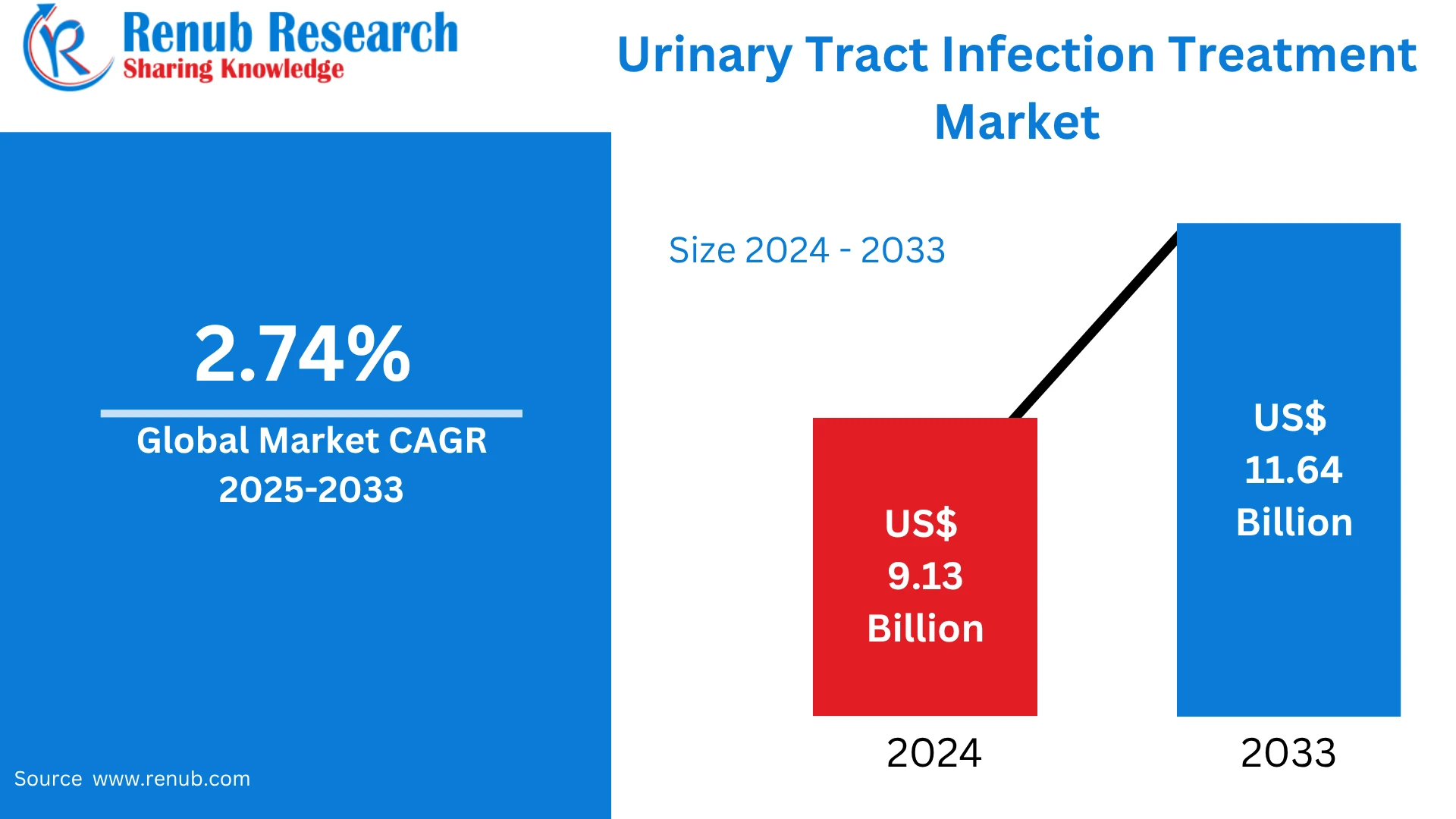
According to Renub Research global urinary tract infection (UTI) treatment market is experiencing steady growth, driven by the increasing prevalence of UTIs worldwide, the rising elderly population, increasing awareness about urinary health, and continuous advancements in antimicrobial therapies. The market is projected to grow from US$ 9.13 billion in 2024 to approximately US$ 11.64 billion by 2033, expanding at a CAGR of 2.74% from 2025 to 2033. Women, geriatric patients, and individuals with comorbidities such as diabetes remain the primary patient population, and the demand for effective treatment options, including novel antibiotics and advanced diagnostics, continues to strengthen the global market outlook.
Urinary Tract Infection Treatment Market Overview
Urinary tract infections are among the most common bacterial infections globally, affecting the kidneys, urethra, and bladder. Escherichia coli remains the most frequent causative pathogen, prompting the need for quick diagnosis and antibiotic therapy. Treatment strategies vary based on infection type, severity, patient health condition, and resistance profile. For mild UTIs, oral antibiotics remain the standard of care, while complicated and recurrent infections require stronger or prolonged therapies. Additionally, supportive treatments such as pain-relieving medications and hydration recommendations are common. Rapid and accurate diagnosis is essential to prevent kidney complications and reduce hospital admissions.
Urinary Tract Infection Treatment Industry Outlook
The increasing rate of UTI cases worldwide has brought the urinary tract infection treatment market into focus as a critical healthcare segment. With approximately 150 million UTI cases reported annually worldwide and rising infections observed especially among older adults and women, healthcare systems globally are strengthening their diagnostic and treatment frameworks. Between 1990 and 2019, UTI infections increased by more than 60%, highlighting an alarming public health burden. Sedentary lifestyles, compromised immunity, improper hygiene, and chronic medical complications such as diabetes further elevate infection risks. The demand for reliable and rapid treatment solutions continues to fuel research, innovation, and pharmaceutical investment.
Download Free Sample Report:https://www.renub.com/request-sample-page.php?gturl=urinary-tract-infection-treatment-market-p.php
Market Growth Drivers in the UTI Treatment Market
Rising prevalence of UTIs acts as a strong catalyst for market development, along with growing healthcare awareness and easier accessibility to medications. Aging populations significantly contribute to rising UTI cases, as urinary retention, hormonal changes, and reduced immunity elevate risks. Increased diagnosis rates, better screening initiatives, and awareness campaigns encourage early treatment, leading to higher therapy consumption. Urbanization, improved healthcare infrastructure, and educational initiatives about urinary health also stimulate demand.
Innovation in Antibiotic Therapies Strengthening Market Performance
Another major growth factor in the urinary tract infection treatment market is continued innovation in antibiotic therapies. Pharmaceutical companies are investing heavily in developing new drugs to combat antibiotic-resistant bacteria, which have emerged as a major healthcare challenge. Targeted antibiotic therapies, combination medicines, and improved drug delivery systems are enhancing treatment success rates. Recent approvals such as Orlynvah for uncomplicated UTIs and other advanced antibiotics underline ongoing pharmaceutical innovation. These advancements ensure better patient outcomes while addressing drug resistance challenges.
Increasing Awareness and Diagnostic Advancements Supporting Market Expansion
Greater public health awareness regarding urinary tract infections and their complications is resulting in more timely diagnosis and treatment, boosting the overall market. Technological progress in diagnostic solutions, including rapid urine testing, molecular diagnostics, and culture-based technologies, ensures faster detection and personalized antibiotic selection. Healthcare campaigns highlighting hygiene practices and early treatment needs have significantly supported market uptake. Many governments and health organizations are also launching campaigns promoting awareness, hydration, and preventive care, positively influencing treatment demand.
Regional Insights: United States Leads North America
The United States dominates the North American UTI treatment market due to its advanced healthcare infrastructure, high UTI incidence, strong diagnostic capabilities, and extensive access to antibiotics. Rising antibiotic resistance in the U.S. has triggered significant R&D efforts focused on new antimicrobial solutions. The introduction of Pivya, the first FDA-approved antibiotic for uncomplicated UTIs in more than two decades, marks a milestone development. Strong government initiatives addressing recurrent infections and antimicrobial stewardship also strengthen the country’s market leadership.
Germany and Europe UTI Treatment Market Trends
Germany remains a leading market in Europe owing to advanced healthcare frameworks, strong pharmaceutical capabilities, and increasing geriatric populations. The country places strong emphasis on diagnosis accuracy and antibiotic stewardship, thereby supporting high-quality clinical outcomes. Technological innovation and a focus on preventing drug resistance support Germany’s elevated market position. Additionally, digital health technologies, such as Vivoo’s digital UTI testing application, represent evolving approaches supporting preventive and personalized healthcare in Europe.
India and Asia-Pacific Market Opportunities
India represents one of the fastest-growing markets for UTI treatment in the Asia-Pacific region. A large population base, growing awareness of healthcare, enhanced diagnostics, and expanding hospital infrastructure contribute significantly to market growth. Rising antibiotic resistance in India has also led to increased focus on advanced drug combinations, including newly introduced Cefepime-Enmetazobactam for complicated UTIs. Public health campaigns emphasizing hygiene and medical consultation further strengthen growth opportunities. Other major countries such as China, Japan, South Korea, and Australia also present promising expansion prospects due to rising health awareness and improving healthcare systems.
Latin America and Middle East Market Outlook
Brazil stands out as the dominant UTI treatment market in Latin America owing to strengthening healthcare infrastructure, broader accessibility to medication, and rising awareness programs. Recurring infections and increased use of antibiotics highlight ongoing need for more advanced therapies. Saudi Arabia also represents a rapidly expanding market driven by enhanced healthcare investments, government initiatives, improved diagnostic access, and increasing adoption of targeted antibiotic therapies. With rising elderly populations and growing female healthcare focus, regional market performance is expected to remain strong.
Urinary Tract Infection Treatment Market Segmentation by Product Type
The urinary tract infection treatment market is segmented across multiple antibiotic categories including Penicillin and combinations, Quinolones, Cephalosporins, Aminoglycosides, Sulphonamides such as Trimethoprim-Sulfamethoxazole, Azoles, Amphotericin B, Tetracyclines including Doxycycline, Nitrofurans such as Nitrofurantoin, and other antibiotics. Nitrofurantoin and Trimethoprim-Sulfamethoxazole remain widely prescribed frontline treatments for uncomplicated UTI, while broader spectrum antibiotics are generally used for complicated or resistant infections.
Market Segmentation by Indication and End Users
Based on indication, the market is divided into complicated UTI and uncomplicated UTI. Complicated UTI requires specialized treatment approaches and extended therapy courses due to resistance, underlying conditions, or anatomical complications. End users influencing market dynamics include hospitals, urology and gynecology clinics, drug stores, retail pharmacies, and rapidly growing online drug platforms, enhancing accessibility and convenience.
Global Coverage Across 17 Major Countries
The urinary tract infection treatment market spans across major global regions including North America, Europe, Asia-Pacific, Latin America, and the Middle East & Africa, covering key economies such as the United States, Canada, the United Kingdom, Germany, France, Italy, Spain, Netherlands, China, Japan, India, South Korea, Australia, Brazil, Mexico, UAE, and South Africa. Regional healthcare investments, population demographics, and regulatory landscapes significantly influence market performance.
Competitive Landscape and Key Market Players
The competitive landscape of the UTI treatment market consists of leading pharmaceutical giants such as AstraZeneca, Bayer AG, GlaxoSmithKline, Johnson & Johnson, Novartis, Pfizer, Merck & Co., Bristol-Myers Squibb, and Dr. Reddy’s Laboratories. These companies are actively engaged in research, antibiotic innovation, strategic partnerships, and regulatory approvals to expand their market presence. Focus areas include resistance management, safer treatment profiles, improved patient outcomes, and advanced formulation development.
Forecast Outlook and Future Opportunities
The forecast period of 2025 to 2033 highlights a promising yet cautiously progressive UTI treatment market outlook. The increasing aging population, persistent infection burden, technological advancements in diagnostics, and introduction of advanced antimicrobial drugs will continue to drive growth. Government policies encouraging antimicrobial stewardship and awareness programs will play a vital role in shaping treatment protocols. Meanwhile, pharmaceutical industry efforts toward novel antibiotics, digital health integration, telemedicine consultations, and home-testing solutions will create significant opportunities.
Conclusion
The urinary tract infection treatment market is poised for sustained growth driven by rising infection prevalence, robust pharmaceutical advancements, increasing healthcare awareness, and expanding diagnostic solutions. While resistance challenges remain, continuous innovation, strategic healthcare initiatives, and enhanced global healthcare infrastructure will support consistent market progress through 2033. With strong participation from leading pharmaceutical companies and expanding market penetration across emerging economies, the UTI treatment landscape is expected to witness strengthened treatment efficiency, improved patient care, and steady market expansion over the forecast period.