United States Manga Market Size and Forecast 2026–2034
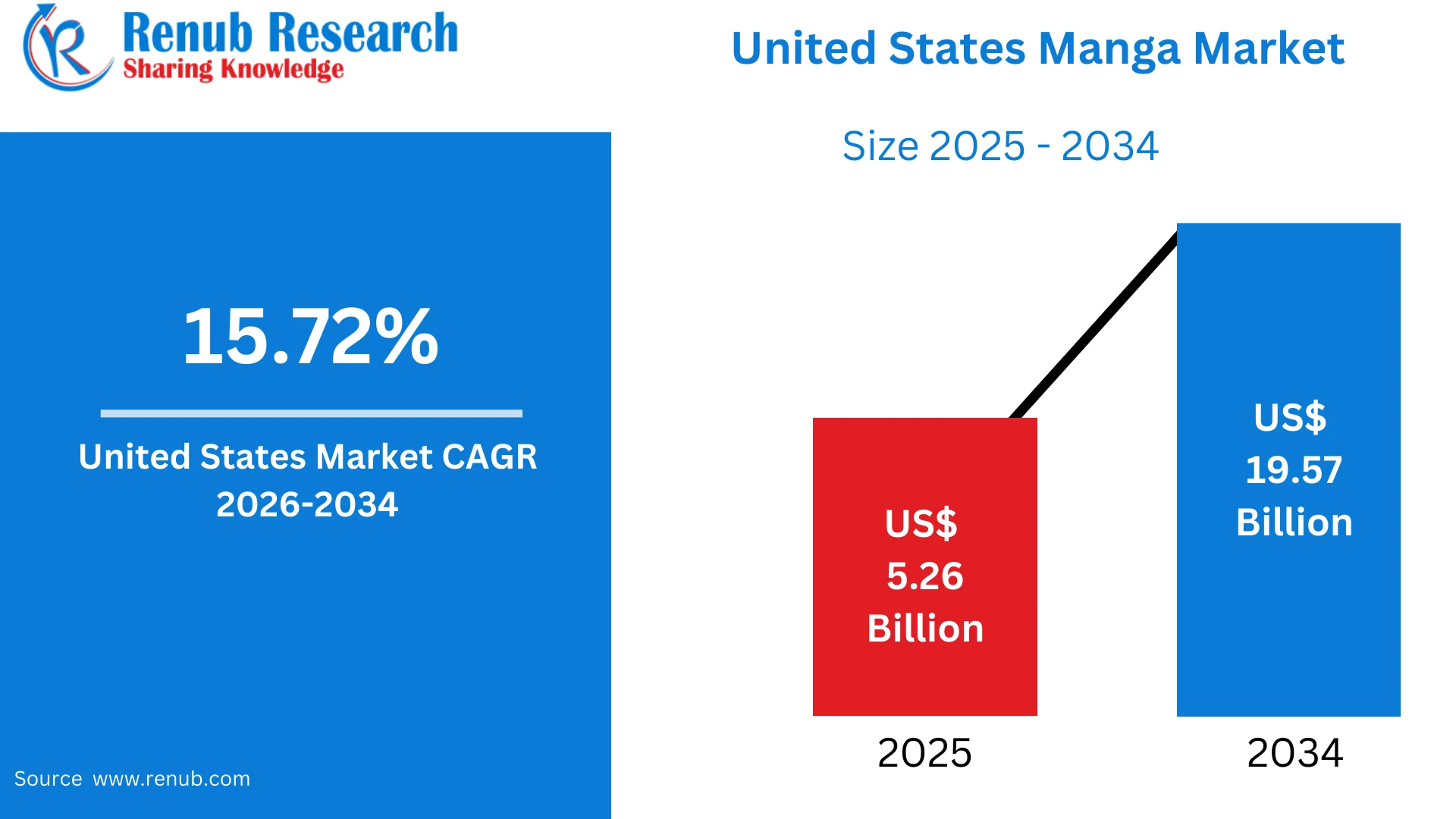
According To Renub Research United States manga market is undergoing a period of exceptional transformation, positioning itself as one of the fastest-growing segments within the global publishing and entertainment industries. Valued at approximately US$ 5.26 billion in 2025, the market is forecast to reach nearly US$ 19.57 billion by 2034, expanding at a robust CAGR of 15.72% during the 2026–2034 period. This growth highlights how manga has evolved from a niche import into a mainstream cultural and commercial force across the country. Increasing consumer acceptance, cross-media exposure, and strong participation from younger demographics are shaping a highly dynamic and competitive market environment.
Download Free Sample Report:https://www.renub.com/request-sample-page.php?gturl=united-states-manga-market-p.php
United States Manga Market Outlook
Manga refers to Japanese comic books and graphic novels that span a vast range of genres, including action, fantasy, romance, science fiction, horror, sports, and slice-of-life narratives. Distinguished by expressive artwork, serialized storytelling, and right-to-left reading orientation, manga appeals to readers of all ages. Unlike many traditional Western comics, manga frequently explores emotional depth, moral complexity, and long-term character development, making it attractive to children, teenagers, and adults alike.
In the United States, manga has steadily shifted from a subculture interest to a mainstream reading format. Large bookstore chains, independent retailers, libraries, and digital platforms now prominently feature manga titles. Readers are increasingly drawn to the immersive storytelling and visual accessibility that manga offers, particularly in comparison to text-heavy formats. As manga continues to integrate with other entertainment forms such as animation, gaming, and merchandising, its presence in the U.S. entertainment ecosystem continues to strengthen.
Growth Drivers in the United States Manga Market
Rising Popularity of Anime and Cross-Media Adaptations
One of the most influential drivers behind the U.S. manga market’s growth is the rising popularity of anime and related cross-media adaptations. Streaming platforms have made anime widely accessible, introducing millions of American viewers to Japanese storytelling styles. This exposure often leads audiences to seek out original manga source material, either to explore storylines in greater depth or to stay ahead of animated adaptations.
Cross-media ecosystems amplify this demand by extending manga narratives into films, video games, and licensed merchandise. Fan conventions, cosplay events, and online fan communities further reinforce engagement, turning casual viewers into long-term readers and collectors. As anime adaptations continue to achieve global recognition, manga benefits from sustained interest and repeat consumption across multiple formats.
Expanded Retail Availability and Strong Collector Culture
Retail expansion has significantly reshaped manga accessibility in the United States. Manga is no longer limited to specialty comic stores; it is now widely available in bookstores, mass-market retailers, online platforms, and public libraries. Dedicated manga sections, eye-catching displays, and curated recommendations encourage discovery among new readers.
Collector culture plays a crucial role in sustaining market momentum. Limited editions, premium hardcovers, box sets, and anniversary releases generate repeat purchases and higher average spending per consumer. Manga’s physical format holds strong aesthetic and sentimental value, making printed editions desirable collectibles. As retail availability continues to expand, manga increasingly competes alongside mainstream books and graphic novels.
Growing Digital Adoption and Youth Engagement
Digital adoption is a key catalyst for market expansion, particularly among younger audiences. Mobile apps and digital manga platforms offer instant access to extensive libraries, eliminating physical storage concerns and reducing entry barriers for new readers. Gen Z and teenage consumers favor digital formats for their convenience, affordability, and portability.
Social media trends, including viral recommendations and fan-driven discussions, accelerate title discovery and popularity. Simultaneous digital releases with Japan help reduce piracy and ensure timely access for English-speaking audiences. With internet access widespread across the United States, digital manga consumption continues to widen the demographic base and drive rapid growth.
Challenges in the United States Manga Market
Supply Chain Constraints and Physical Book Shortages
Despite strong demand, the U.S. manga market faces persistent supply chain challenges. High demand for printed volumes often exceeds printing capacity, resulting in shortages and delayed restocks. Rising paper costs, printing bottlenecks, and international shipping complexities add pressure to physical distribution.
Retailers frequently struggle to keep complete series in stock, which can frustrate collectors and discourage new readers. Smaller publishers face additional hurdles securing printing slots and managing costs. While digital formats help offset these challenges, maintaining a stable physical supply remains critical for long-term market balance.
Competition from Piracy and Free Online Scans
Manga piracy continues to pose a significant challenge to revenue generation. Unauthorized online scans provide free access to new chapters, often shortly after release, undermining official distribution channels. This practice reduces earnings for creators and publishers, limiting reinvestment in new titles, translations, and production.
To counter piracy, publishers are accelerating official digital releases, improving platform usability, and increasing awareness of legal alternatives. While these measures have shown progress, piracy remains a barrier to maximizing market potential and protecting intellectual property rights.
United States Printed Manga Market
Printed manga remains the backbone of U.S. consumption, driven by collectors, libraries, and readers who value physical ownership. High-quality artwork, tangible presentation, and shelf appeal give printed editions a lasting advantage over digital formats. Bookstores and comic shops play a vital role in promoting discovery through prominent displays and curated selections.
Premium formats such as hardcover editions, box sets, and omnibus collections attract dedicated fans and increase transaction value. Although supply disruptions occasionally impact availability, printed manga continues to symbolize authenticity, collectibility, and long-term cultural value within the market.
United States Action and Adventure Manga Market
Action and adventure manga dominate the U.S. market, appealing to readers with fast-paced storytelling, epic conflicts, and imaginative worlds. These titles often serve as entry points for new readers introduced through anime adaptations. Themes such as heroism, fantasy quests, supernatural battles, and futuristic warfare resonate across age groups.
The genre’s cinematic artwork and serialized narratives encourage long-term engagement, making action and adventure manga a consistent top seller in both print and digital formats. Cross-media adaptations further reinforce its popularity, ensuring sustained demand and high visibility in retail and online channels.
United States Sports Manga Market
Sports manga is steadily gaining traction in the United States, appealing to readers seeking inspirational, character-driven stories. These narratives focus on teamwork, perseverance, rivalry, and personal growth, often grounded in realistic challenges. Sports manga attracts young readers, athletes, and fans of emotionally engaging storytelling.
As sports-themed anime adaptations gain popularity, manga sales follow suit. Schools and libraries increasingly adopt sports manga due to its motivational themes and educational value. Although smaller than action genres, this segment continues to expand as readers diversify their preferences.
United States Manga Children and Kids Market
The children’s manga segment is growing as parents and educators recognize manga’s ability to encourage reading habits. Kid-friendly titles feature accessible language, visual storytelling, and positive themes such as friendship and problem-solving. Manga’s format appeals particularly to reluctant readers and supports visual literacy development.
Schools and libraries actively expand their manga collections to meet rising demand among younger audiences. Age-rated editions and carefully curated content reassure parents, contributing to steady growth within this segment as manga becomes a normalized part of children’s reading culture.
United States Male Manga Market
Male readers represent a significant portion of the U.S. manga audience, particularly within action, fantasy, sci-fi, horror, and seinen genres. These titles often emphasize complex world-building, strategic conflicts, and mature themes. Male readership is strongly influenced by anime-first discovery, where viewers transition into manga to explore deeper story arcs.
Collector behavior is prominent among male consumers, driving demand for long-running series, premium editions, and box sets. Online communities, gaming culture, and conventions further reinforce engagement, making male readership a major contributor to overall market revenue.
United States Adult Manga Market
The adult manga segment caters to readers seeking sophisticated narratives, psychological depth, and nuanced storytelling. Genres such as seinen and josei explore themes including historical fiction, workplace dynamics, romance, and philosophical inquiry. Adult readers appreciate manga’s literary complexity and character-driven plots.
As manga gains broader recognition within mainstream literature, bookstores increasingly position adult-oriented titles alongside graphic novels. Digital platforms also enable discreet exploration of mature genres, supporting continued expansion of this segment.
United States Online Manga Market
The online manga market is one of the fastest-growing segments, driven by convenience, affordability, and instant access. Subscription models, mobile-friendly interfaces, and simultaneous global releases attract younger readers and reduce piracy incentives. Digital platforms allow niche and independent titles to reach broader audiences.
For publishers, online distribution offers real-time analytics, faster release cycles, and lower logistical costs. As digital literacy and mobile usage continue to rise, online manga consumption is expected to remain a primary driver of overall market growth.
Regional Insights in the United States Manga Market
California Manga Market
California stands as one of the most influential manga markets in the United States, supported by a large population, strong anime culture, and extensive retail infrastructure. Major metropolitan areas foster high demand through bookstores, conventions, and libraries. Tech-savvy consumers and cultural diversity further accelerate both print and digital consumption.
New York Manga Market
New York represents a highly active manga market, driven by dense urban populations, cultural diversity, and strong retail networks. High library circulation, frequent cultural events, and enthusiastic youth readership contribute to consistent demand across formats.
Washington Manga Market
Washington State benefits from a tech-oriented population, strong digital adoption, and vibrant pop culture communities. Universities, libraries, and independent bookstores support steady growth, while consumer preferences lean toward sci-fi, fantasy, and slice-of-life genres.
United States Manga Market Segmentation Overview
The market is segmented by type into printed and digital formats. By genre, it includes action and adventure, sci-fi and fantasy, sports, romance and drama, and others. Audience segmentation covers children, teenagers, and adults, while gender segmentation includes male and female readers. Distribution channels are divided into offline and online, with significant regional contributions from major U.S. states.
Competitive Landscape and Company Analysis
The competitive landscape features a mix of established Japanese publishers and international distributors. Companies are analyzed across multiple viewpoints, including overviews, key leadership, recent developments, SWOT analysis, and revenue performance. Strategic partnerships, licensing agreements, and original content initiatives continue to shape competition and innovation within the U.S. manga market.