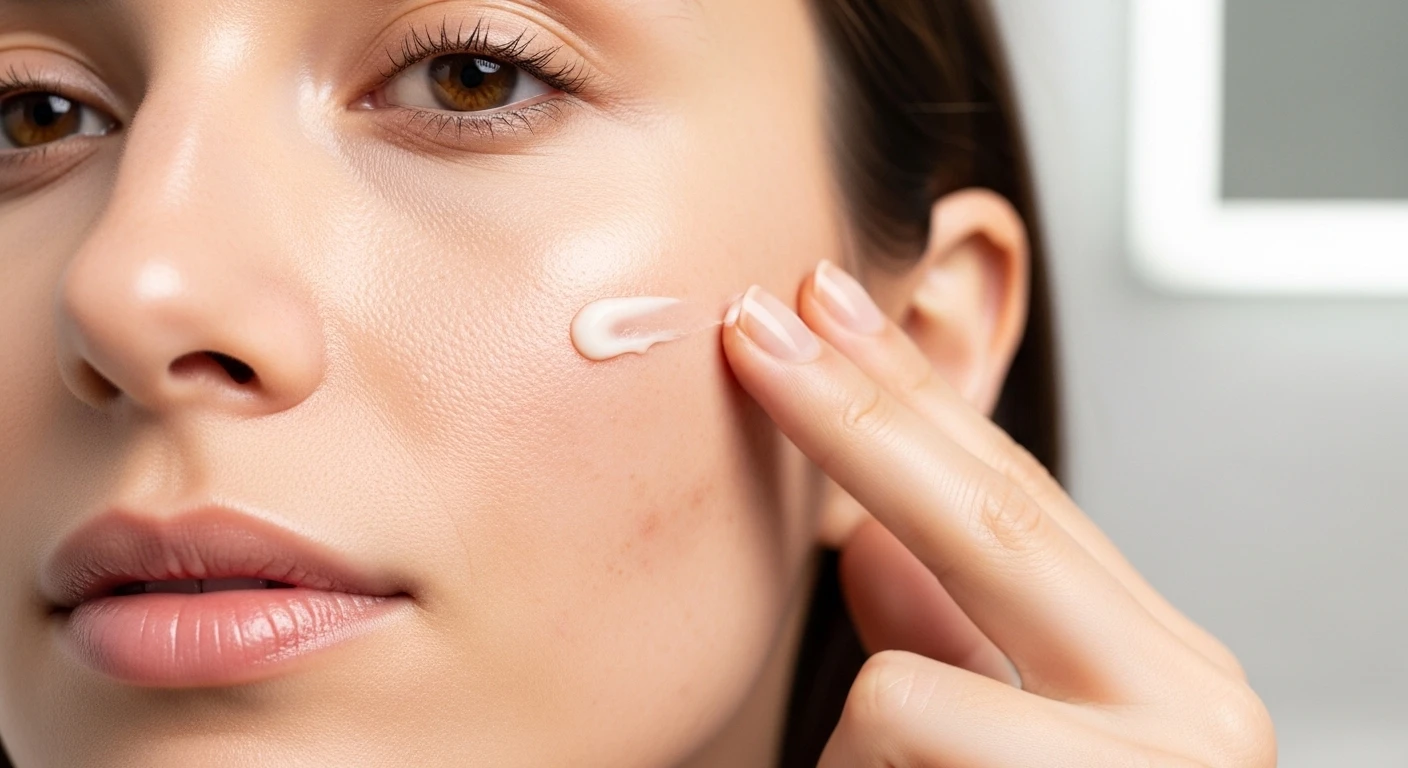
For many, the challenge of acne does not end when active breakouts subside. The skin's journey often continues with a different, more persistent concern—the marks and textural changes left behind. These scars can feel like a permanent footnote to a difficult chapter, affecting not just the appearance of the skin but also one's self-perception. Whether they appear as subtle dips, raised textures, or discolored patches, they serve as a constant reminder. This can lead individuals to feel their skin no longer reflects their true vitality, fostering a desire to finally close that chapter and reveal a smoother, more even complexion that aligns with how they feel inside.
Navigating the world of post-acne skincare can feel overwhelming. Countless creams and over-the-counter solutions promise results but often fall short of addressing the structural changes within the skin. This is because acne scars are not merely surface-level discolorations; they are often the result of altered collagen production during the skin's healing process. True improvement, therefore, requires a sophisticated approach that communicates with the skin's deepest layers. Modern dermatology has moved beyond one-size-fits-all solutions, embracing a nuanced philosophy that treats the individual story of each scar, offering a legitimate chance at renewal for those who thought their skin's story was permanently written.
Deciphering the Language of Your Skin's Texture
To effectively address scarring, one must first understand its unique vocabulary. Not all acne scars are created equal, and their physical characteristics dictate the most effective strategy for correction. The most common types are atrophic scars, which create depressions or pits in the skin. These are further categorized: icepick scars are deep and narrow, rolling scars create broad, wavy undulations, and boxcar scars have sharper, defined edges. Each type interacts with light differently, casting shadows that make them more visible. Conversely, some individuals develop hypertrophic scars or keloids, which are raised formations caused by an overproduction of collagen during healing.
Beyond textural changes, scars often have a pigmentary component. Post-inflammatory hyperpigmentation appears as flat, darkened spots where a blemish has healed, a particular concern in deeper skin tones. While not a true scar in terms of texture, it contributes significantly to an uneven complexion. Erythema, or persistent redness, is another vascular reminder of past inflammation. A professional evaluation carefully maps these variations—assessing depth, width, tissue quality, and color. This detailed analysis is the critical first step, transforming a general concern about "scars" into a specific, treatable diagnosis. Understanding this language is what allows for a targeted, effective plan rather than a guessing game with generic products.
The Foundational Principle of Collagen Remodeling
At the heart of most advanced scar revision lies a fundamental biological process: collagen remodeling. Collagen is the essential structural protein that gives skin its plumpness, strength, and smoothness. Inflammatory acne can damage this collagen network, leading to tissue loss (atrophic scars) or, less commonly, excessive buildup (hypertrophic scars). Therefore, the goal of treatment is to guide the skin to either rebuild lost collagen or reorganize excess collagen. This is not a passive process but an active conversation with the skin's fibroblast cells, encouraging them to produce new, healthy collagen in a controlled and organized manner.
This concept of controlled injury and precise regeneration forms the cornerstone of modern therapies. Treatments are designed to create a calculated micro-injury in the skin, triggering the body's innate wound-healing cascade. When directed expertly, this natural response can fill depressions with new tissue, smooth out raised areas, and improve overall skin texture and resilience. The art lies in selecting the right tool and technique to initiate this process at the correct depth and intensity for the specific scar type. This personalized biological approach is why many experts consider a tailored combination strategy, rather than any single standalone procedure, the best treatment for acne scars. It acknowledges that a complex problem often requires a multifaceted solution that works on multiple levels over time.
Laser Resurfacing: Precision and Power for Transformation
Laser technology represents one of the most powerful tools for skin remodeling, offering unparalleled precision. Lasers work by delivering concentrated light energy that is absorbed by specific targets in the skin, such as water or pigment. Ablative lasers, like carbon dioxide or erbium lasers, work by vaporizing microscopic columns of damaged skin tissue layer by layer. This direct removal of scarred tissue prompts a vigorous healing response, resulting in significant collagen production and dramatic smoothing of deeper scars. The trade-off is a longer recovery period, making it a commitment for substantial results.
For those seeking effective improvement with less downtime, non-ablative and fractional lasers provide an excellent alternative. These lasers create microscopic treatment zones beneath the skin's surface without disrupting the outer layer. They deliver thermal energy to the dermis, stimulating collagen contraction and new growth while leaving the surrounding tissue intact for faster healing. Some devices are particularly adept at targeting the red and brown pigment within scars, unifying skin tone. The choice between laser types depends entirely on the scar characteristics, skin type, and the individual's lifestyle and recovery goals. A thorough consultation determines which laser wavelength and delivery system will yield the optimal balance of efficacy and comfort for each unique case.
The Regenerative Potential of Microneedling and RF
For stimulating collagen without the focus on pigment or intense heat, microneedling has emerged as a profoundly effective treatment. This procedure uses a sterile device with fine needles to create hundreds of microscopic channels in the skin. These channels are not scars but controlled injuries that initiate the release of growth factors and the production of new collagen and elastin as they heal. The process encourages skin to regenerate from within, gradually filling in shallow to moderate atrophic scars and improving overall texture and firmness. It is especially valued for its safety across all skin tones.
The evolution of this technique is radiofrequency (RF) microneedling. This advanced modality combines the collagen-inducing effect of microneedles with the addition of bipolar radiofrequency energy delivered directly to the deep dermis. The heat from the RF further tightens existing collagen and provides an additional stimulus for new collagen synthesis. This synergistic approach can yield more pronounced results in fewer sessions for rolling and boxcar scars. Both traditional and RF microneedling offer a robust path to smoother skin with minimal social downtime, making them a cornerstone in progressive scar treatment protocols for a wide range of patients.
Specialized Solutions for Targeted Concerns
Certain scar types benefit from highly focused interventions. For deep, narrow icepick scars, a technique called TCA CROSS can be remarkably effective. This involves carefully applying a high-concentration trichloroacetic acid (TCA) solution directly into the base of each individual scar. This creates a controlled chemical wound that, as it heals, promotes collagen buildup from the bottom up, effectively elevating the scar floor to be level with the surrounding skin. It is a precise, spot-treatment technique that requires a skilled and experienced hand.
For raised hypertrophic or keloid scars, intralesional injections are often the first line of treatment. Small amounts of medication, such as corticosteroids, are injected directly into the scar tissue. This helps to soften, flatten, and reduce the redness of the scar by breaking down excess collagen fibers and reducing inflammation. These injections can be combined with other surface treatments like lasers for a comprehensive effect. Additionally, for the discoloration component of scars, specific topical prescriptions, chemical peels, or targeted light therapies can be integrated to fade unwanted pigment and redness, creating a more uniform complexion as the texture improves.
Crafting Your Personal Blueprint for Clearer Skin
The journey to improving acne scars is almost never about a single miracle treatment. It is a strategic process that builds over time. An effective plan typically involves a series of treatments spaced several weeks apart, allowing the skin to fully heal and produce new collagen between sessions. Most individuals will see progressive improvement with each treatment, with optimal results becoming apparent several months after a course is completed. Patience and consistency are key virtues, as the skin remodels itself gradually.
Just as critical as the in-office treatments is a dedicated, supportive home care regimen. This includes medical-grade skincare with ingredients like retinoids to promote continued cellular turnover, vitamin C for antioxidant protection and brightening, and consistent, broad-spectrum sunscreen. Sun protection is non-negotiable, as UV exposure can darken pigmented scars and degrade collagen, undermining the results of any procedure. This powerful combination of professional treatments and disciplined daily care creates a synergistic effect, protecting the skin's investment and paving the way for the most significant, long-lasting improvement possible.
Conclusion: Embracing a Future of Smoother Skin
The presence of acne scars need not be a life sentence for your complexion. While they may feel permanent, they are, in fact, treatable. The landscape of aesthetic medicine now offers a spectrum of sophisticated options that can profoundly improve skin texture, tone, and confidence. The path forward begins with knowledge—understanding your unique scar profile and the science of collagen remodeling. From there, it becomes a collaborative journey with a professional who can design a sequenced, multi-modal plan tailored to your specific goals.
This journey represents an investment in yourself and your well-being. It requires realistic expectations, a commitment to the process, and trust in expertise. By choosing a path that combines advanced technology with an understanding of skin biology, you open the door to meaningful change. The ultimate goal is not necessarily perfection, but rather a transformative improvement that allows your skin to feel healthy, resilient, and truly reflective of you. With today’s personalized approaches, the story of your skin can have a new chapter, one defined by renewal and a confidence that shines from within.