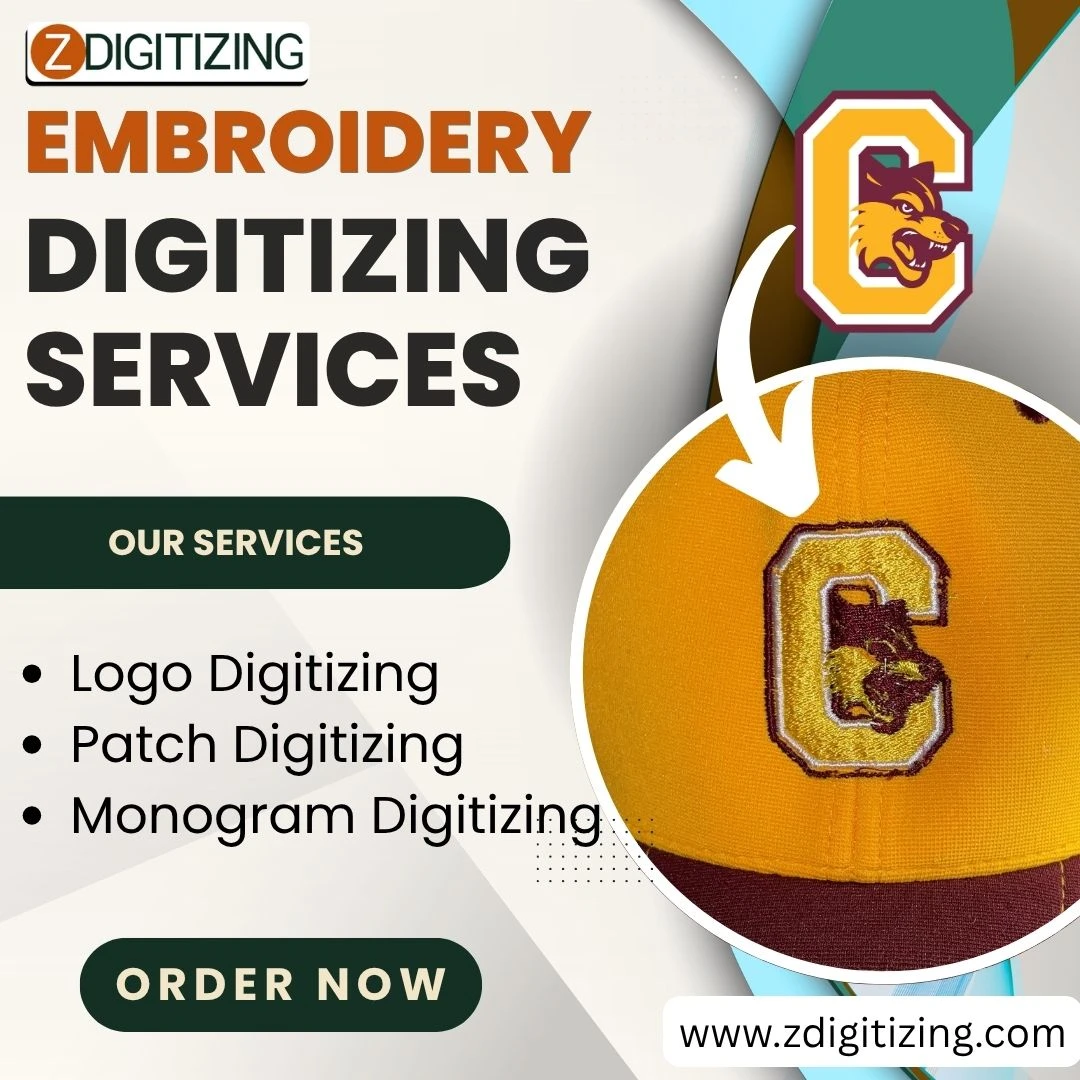
In branded apparel and promotional merchandise, embroidery remains one of the most reliable decoration methods. From uniforms and caps to jackets and corporate wear, an embroidered logo communicates professionalism and durability. However, before any design can be stitched onto fabric, it must go through a technical process known as logo digitizing for embroidery.
Logo digitizing is not a simple file conversion. It is a specialized process that converts artwork into a stitch file that embroidery machines can read and execute accurately. When done correctly, digitizing ensures clean stitching, consistent branding, and long-term durability.
What Is Logo Digitizing for Embroidery?
Logo digitizing for embroidery involves converting artwork files (such as JPG, PNG, AI, or PDF) into machine-readable embroidery formats like DST, PES, JEF, or EXP. These files contain detailed instructions that tell the machine:
- The type of stitches to use
- Stitch direction and sequence
- Thread color changes
- Stitch density and spacing
Unlike printing, embroidery requires physical thread interaction with fabric. Every stitch must be carefully programmed to prevent distortion, thread breaks, and uneven textures. This is why professional digitizing plays a critical role in the final result.
Why Professional Digitizing Matters
Many businesses assume embroidery machines automatically interpret artwork. In reality, the quality of the stitch file determines the outcome. Poor digitizing often leads to puckering, misaligned text, thread trimming issues, or bulky stitching.
Professional digitizing ensures:
- Clean, readable small text
- Balanced stitch density that avoids stiffness
- Smooth borders and sharp edges
- Proper underlay support for fabric stability
- Accurate thread pathing to reduce machine stops
Experienced digitizers understand how different fabrics behave, whether it’s structured caps, stretchy performance wear, or thick jackets. Adjustments are made accordingly to maintain design integrity.
Common Stitch Types Used in Logo Digitizing
Each part of a logo may require a different stitch style:
- Satin Stitch: Suitable for lettering and narrow shapes.
- Fill Stitch: Used for larger design areas.
- Run Stitch: Ideal for outlines and fine details.
Selecting the correct stitch type affects durability, clarity, and texture. An experienced digitizer chooses stitch styles based on logo structure and final size.
Benefits of Embroidered Logos for Business Branding
Embroidery offers long-term value compared to other decoration methods. It provides a textured, professional finish that holds up under repeated washing and regular wear.
Key advantages include:
- Long-lasting durability
- Professional appearance for staff uniforms
- Consistent branding across apparel types
- Resistance to fading and peeling
- Suitable for a wide range of materials
For organizations focused on quality presentation, embroidery remains a dependable option.
Common Challenges in Logo Digitizing
Not every logo translates perfectly into thread. Some common technical challenges include:
- Extremely small text
- Detailed gradients that cannot be replicated with thread
- Overlapping elements in compact areas
- Thin strokes that disappear when stitched
In such cases, slight refinements may be necessary. A skilled digitizer preserves brand identity while adapting the design for practical embroidery results.
Best Practices Before Digitizing Your Logo
To achieve accurate results and avoid delays:
- Provide high-resolution or vector artwork whenever possible.
- Specify the exact embroidery size.
- Mention the garment type (cap, polo, hoodie, etc.).
- Request a sample stitch-out for quality confirmation.
Clear communication reduces revisions and ensures production efficiency.
Manual vs. Auto Digitizing
Automatic digitizing software can generate quick files, but it often lacks precision. It does not properly account for fabric movement, stitch angles, or density compensation.
Manual digitizing remains the preferred approach for businesses that require consistent quality, especially for detailed logos and professional uniforms.
Conclusion
Logo digitizing for embroidery combines technical expertise with practical knowledge of fabrics and stitching behavior. It directly influences how a brand appears on apparel and promotional items. Investing in professional digitizing reduces production errors, protects brand consistency, and ensures clean, durable embroidery results.
For businesses seeking long-term branding solutions, properly digitized embroidery files provide reliability and measurable value.
Frequently Asked Questions (FAQs)
1. What file format is best for logo digitizing?
Vector files such as AI, EPS, or SVG are preferred because they maintain quality at any size. However, high-resolution PNG or PDF files can also be used.
2. How long does logo digitizing take?
Standard logo digitizing typically takes 12–24 hours, depending on design complexity and revision requirements.
3. Can any logo be embroidered?
Most logos can be embroidered, but highly detailed designs or gradient-heavy artwork may require simplification to ensure stitch clarity.
4. Why does embroidery look different from printed logos?
Embroidery uses thread instead of ink. Stitch angles, density, and fabric texture affect the final appearance, which creates a textured and dimensional finish.