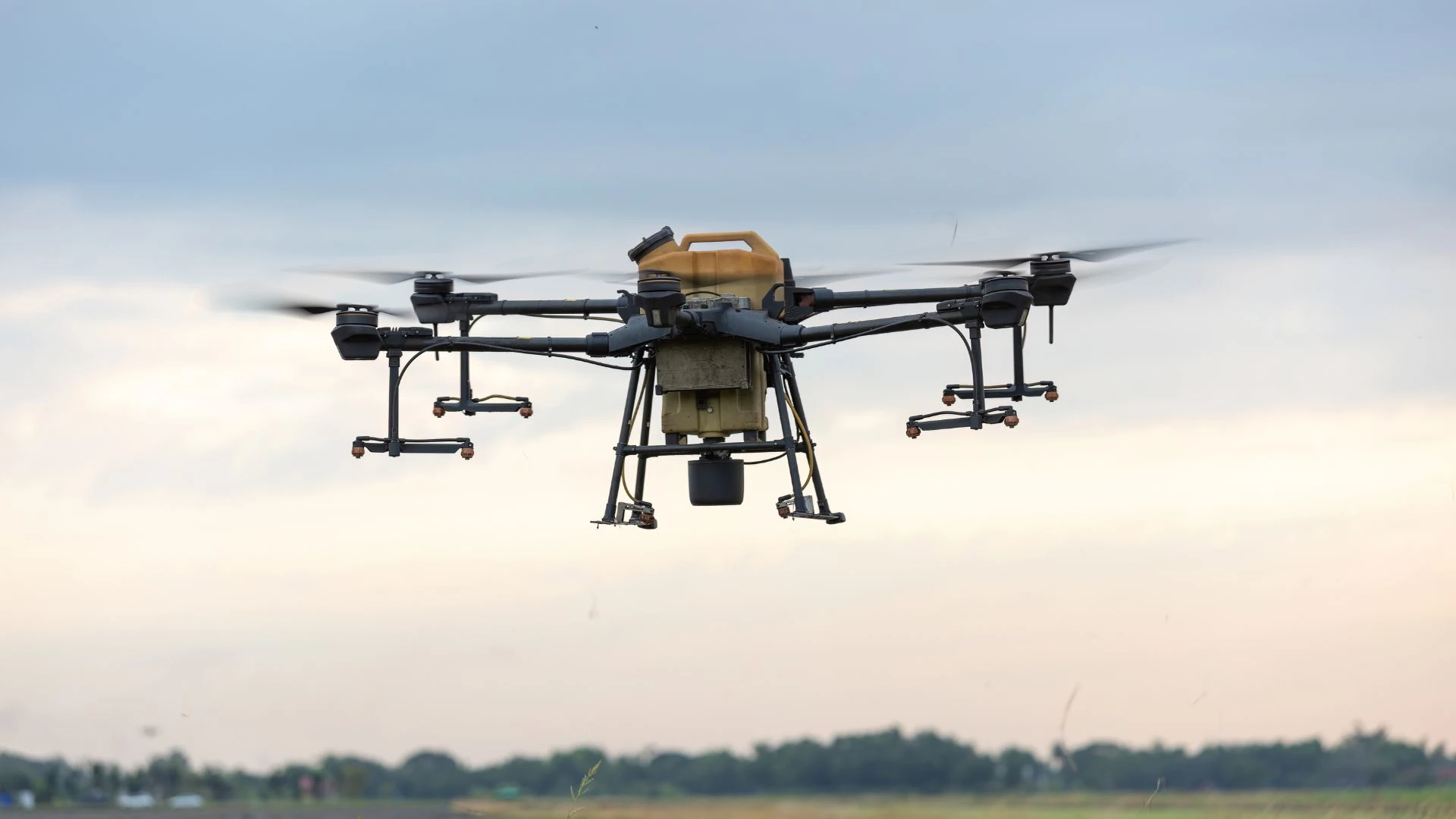
North America Drone Market Set to Reach New Heights by 2033
The North America drone market is entering a transformative decade marked by rapid technological advancement, regulatory support, and expanding commercial adoption. According to Renub Research, the market is projected to grow from US$ 11.20 billion in 2024 to US$ 26.90 billion by 2033, registering a compound annual growth rate (CAGR) of 10.22% from 2025 to 2033. This strong growth trajectory reflects how drones are evolving from niche tools into essential assets across industries such as agriculture, logistics, construction, and public safety.
As industries increasingly prioritize efficiency, automation, and real-time data, drones are becoming indispensable. North America—led by the United States—continues to dominate the global drone landscape due to its advanced infrastructure, strong defense spending, and progressive regulatory environment.
Download Free Sample Report:https://www.renub.com/request-sample-page.php?gturl=north-america-drone-market-p.php
Market Overview: A Decade of Transformation
Over the past ten years, the North American drone ecosystem has witnessed remarkable expansion. What was once largely confined to military applications has now penetrated a wide array of commercial sectors. From precision agriculture to aerial cinematography and emergency response, drones are redefining operational workflows.
The United States plays a central role in this growth story. A combination of innovation-driven companies, significant defense investments, and supportive policies from aviation authorities has created a fertile environment for drone adoption. The regulatory framework has gradually evolved to enable more complex operations, including beyond visual line of sight (BVLOS), which is critical for scaling commercial use cases.
Meanwhile, Canada and Mexico are also emerging as promising markets. Canada benefits from a structured regulatory approach and increasing investment in drone-based solutions, while Mexico is leveraging drones for agriculture, infrastructure monitoring, and law enforcement applications.
Technological advancements are further accelerating adoption. Improvements in battery life, artificial intelligence, sensors, and connectivity with cloud and IoT systems have significantly enhanced drone capabilities. Today’s drones are smarter, more autonomous, and capable of delivering actionable insights in real time.
Key Growth Drivers Shaping the Market
Expanding Commercial Applications
One of the most powerful drivers of the North America drone market is the rapid expansion of commercial use cases. Businesses across industries are integrating drones to streamline operations, reduce costs, and enhance safety.
In agriculture, drones are enabling precision farming by providing detailed insights into crop health, irrigation needs, and soil conditions. Farmers can monitor large areas quickly and make data-driven decisions that improve yield and reduce resource wastage.
Construction companies are using drones for site surveying, progress tracking, and safety inspections. This not only improves project efficiency but also minimizes risks associated with manual inspections.
In logistics, drones are transforming inventory management and last-mile delivery. Warehouses are increasingly adopting aerial systems to track goods, while delivery drones are being tested and deployed to enhance speed and reduce operational costs.
The energy sector is another major adopter, using drones to inspect pipelines, wind turbines, and power lines. These inspections are faster, safer, and more cost-effective compared to traditional methods.
Rise of Drone-as-a-Service (DaaS)
The emergence of Drone-as-a-Service (DaaS) is reshaping how organizations access drone technology. Instead of investing heavily in hardware, training, and compliance, businesses can now outsource drone operations to specialized service providers.
This model is particularly beneficial for small and medium-sized enterprises that may lack the resources to build in-house drone capabilities. DaaS providers offer end-to-end solutions, including data collection, analysis, and reporting.
By lowering the barriers to entry, DaaS is accelerating adoption across sectors such as mining, insurance, agriculture, and construction. Companies can access high-quality aerial data on demand, enabling faster decision-making and improved operational efficiency.
The integration of DaaS platforms with AI and cloud-based analytics further enhances their value proposition, making drone technology more scalable and accessible.
Integration with IoT and Smart Cities
Another major trend driving the market is the integration of drones with Internet of Things (IoT) systems and smart city infrastructure. Drones are increasingly being used as mobile data collection platforms within connected ecosystems.
In smart cities, drones support a wide range of applications, including traffic monitoring, environmental surveillance, infrastructure assessment, and emergency response. By transmitting real-time data to centralized systems, drones enhance situational awareness and enable more informed decision-making.
This integration also supports predictive maintenance and automation. For example, drones can detect early signs of infrastructure damage, allowing authorities to address issues before they escalate.
As urban areas continue to adopt smart technologies, drones are expected to play a crucial role in building safer, more efficient, and sustainable cities.
Challenges Hindering Market Growth
High Initial Costs
Despite the promising outlook, high initial costs remain a significant barrier to widespread adoption. Advanced drones equipped with high-resolution cameras, LiDAR sensors, and autonomous capabilities can be expensive.
In addition to hardware costs, businesses must also invest in software, training, maintenance, and insurance. For smaller organizations, these expenses can be prohibitive.
While DaaS models are helping to mitigate this challenge, affordability continues to be a concern. Achieving broader adoption will require ongoing innovation, cost reductions, and potential financial incentives.
Battery Life and Payload Limitations
Technical limitations related to battery life and payload capacity also pose challenges. Most commercial drones have flight times ranging between 20 to 45 minutes, which restricts their operational range.
Frequent battery changes or recharging can disrupt workflows, particularly in large-scale operations. Payload limitations further constrain the types of equipment drones can carry, impacting applications such as heavy-duty inspections or delivery services.
Weather conditions add another layer of complexity. Factors like strong winds, rain, and extreme temperatures can affect drone performance and reliability.
Addressing these limitations will require advancements in battery technology, materials, and drone design.
Country-Level Insights
United States: Market Leader
The United States remains the largest and most influential drone market in North America. Its leadership is driven by strong government support, a robust innovation ecosystem, and widespread adoption across industries.
Drones are extensively used in agriculture, logistics, infrastructure, and public safety. Regulatory advancements have enabled more complex operations, further boosting market growth.
However, challenges such as cybersecurity risks, privacy concerns, and airspace integration continue to require attention. Additionally, competition from international manufacturers has raised concerns about supply chain security.
Canada: Steady Growth and Innovation
Canada’s drone market is expanding steadily, supported by a favorable regulatory environment and growing investment in technology.
Drones are widely used for infrastructure inspection, agriculture, and delivery services. The country’s regulatory framework allows both commercial and recreational use, encouraging innovation.
Despite this progress, challenges such as data security, infrastructure investment, and regulatory complexities remain. Continued government support and technological advancements will be key to sustaining growth.
Mexico: Emerging Opportunities
Mexico is emerging as a high-growth market for drones, driven by increasing adoption across agriculture, energy, and infrastructure sectors.
Drones are helping businesses improve efficiency, reduce costs, and address operational challenges. The regulatory environment is evolving to align with global standards, supporting safe and effective drone operations.
While issues such as airspace integration and security concerns persist, the market is expected to grow steadily, supported by ongoing technological advancements and investments.
Market Segmentation Insights
The North America drone market is segmented based on application, type, and geography.
By application, key segments include construction, agriculture, energy, entertainment, law enforcement, and others. Each of these sectors is leveraging drones for specific use cases, from aerial mapping to surveillance and inspection.
By type, the market is divided into fixed-wing and rotary-wing drones. Fixed-wing drones are preferred for long-range operations, while rotary-wing drones offer greater flexibility and maneuverability.
Geographically, the market spans the United States, Canada, Mexico, and the rest of North America, each contributing uniquely to the overall growth.
Competitive Landscape
The market features a mix of established players and emerging innovators. Companies are focusing on research and development, strategic partnerships, and product innovation to maintain a competitive edge.
Key players include Drone Delivery Canada, AeroVironment Inc., UVify Inc., Intel Corporation, Alphabet Inc., Boeing Company, Teledyne FLIR LLC, and 3D Robotics Inc.
These companies are actively investing in advanced technologies such as AI, autonomous navigation, and enhanced imaging systems to expand their market presence.
Final Thoughts
The North America drone market is on a strong upward trajectory, driven by technological innovation, expanding commercial applications, and supportive regulatory frameworks. With Renub Research projecting the market to reach US$ 26.90 billion by 2033, the future of drones in the region looks exceptionally promising.
While challenges such as high costs and technical limitations persist, ongoing advancements and business model innovations like Drone-as-a-Service are helping to overcome these barriers.
As industries continue to digitize and demand real-time data, drones will play an increasingly central role in shaping the future of operations across North America. The coming years will not only witness market growth but also a deeper integration of drones into everyday business and public life, solidifying their position as a cornerstone of modern technology ecosystems.