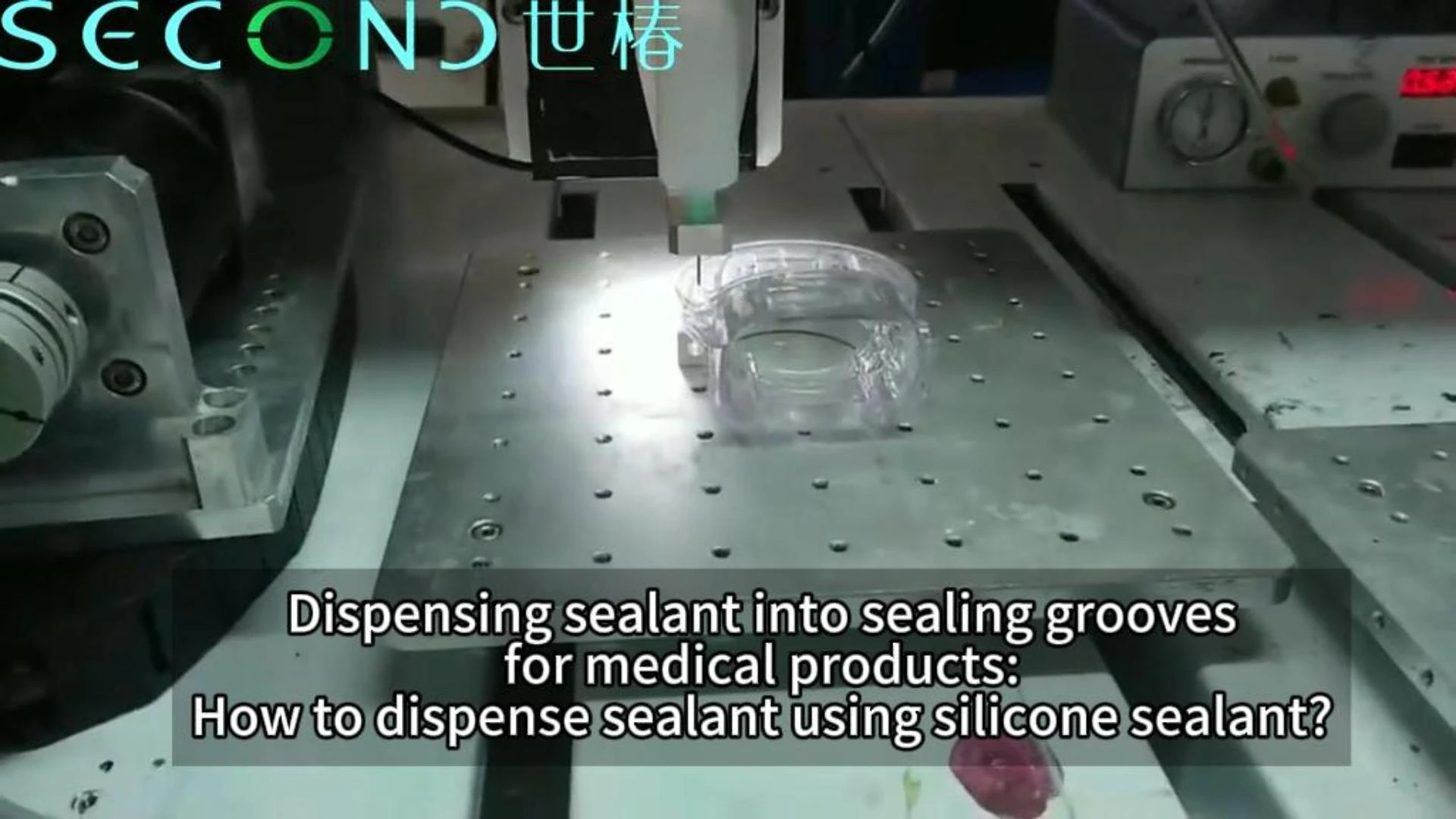
Applying sealant to the sealing grooves of medical products using sealing silicone is a technology with extremely high requirements for precision, cleanliness, and process stability. It’s not simply about injecting adhesive into the groove; it’s a systematic engineering project involving material selection, equipment configuration, process control, and environmental protection.
The following are the operational procedures and key technical points based on industry practice:
1.Core Material: Choosing the Right Sealing Silicone Liquid silicone rubber (LSR) is the preferred choice for sealing medical products. Unlike traditional solid silicone (which requires pre-molding), LSR is a two-component, flowable, heat-curing material that can be directly filled into the sealing groove and cure in situ to form a sealing ring.
Application Requirements/Dispensing Processes:
● Precision Dispensing: Recommended equipment: High-precision adhesive dispensing machine. Key parameters/functions: Dispensing time accurate to 0.0001 seconds, provides constant air pressure output, ensuring consistent glue volume at micro-levels, unaffected by glue viscosity variations.
● Micro-dispensing: Recommended equipment: Micro-dot Needle glue dispensing Valve. Key parameters/functions: Can dispense glue dots as small as 150 µm in diameter, suitable for precision sealing grooves in micro-medical devices.
Desktop glue dispensing machine robot SEC-E480SV
The Second Intelligent SEC-E480SV desktop computer adopts a high-precision servo motor and ground ball screw, ensuring accuracy while also offering better cost performance. It is equipped with CCD vision height measurement, resulting in faster programming efficiency and higher accuracy. This desktop computer features an aerospace-grade aluminum alloy die-cast unibody design, making it more robust and stable. It also boasts dual rotary stations, making it compact and flexible.
https://secondintelligent.com/industry-news/dispense-sealant-using-silicone-sealant/